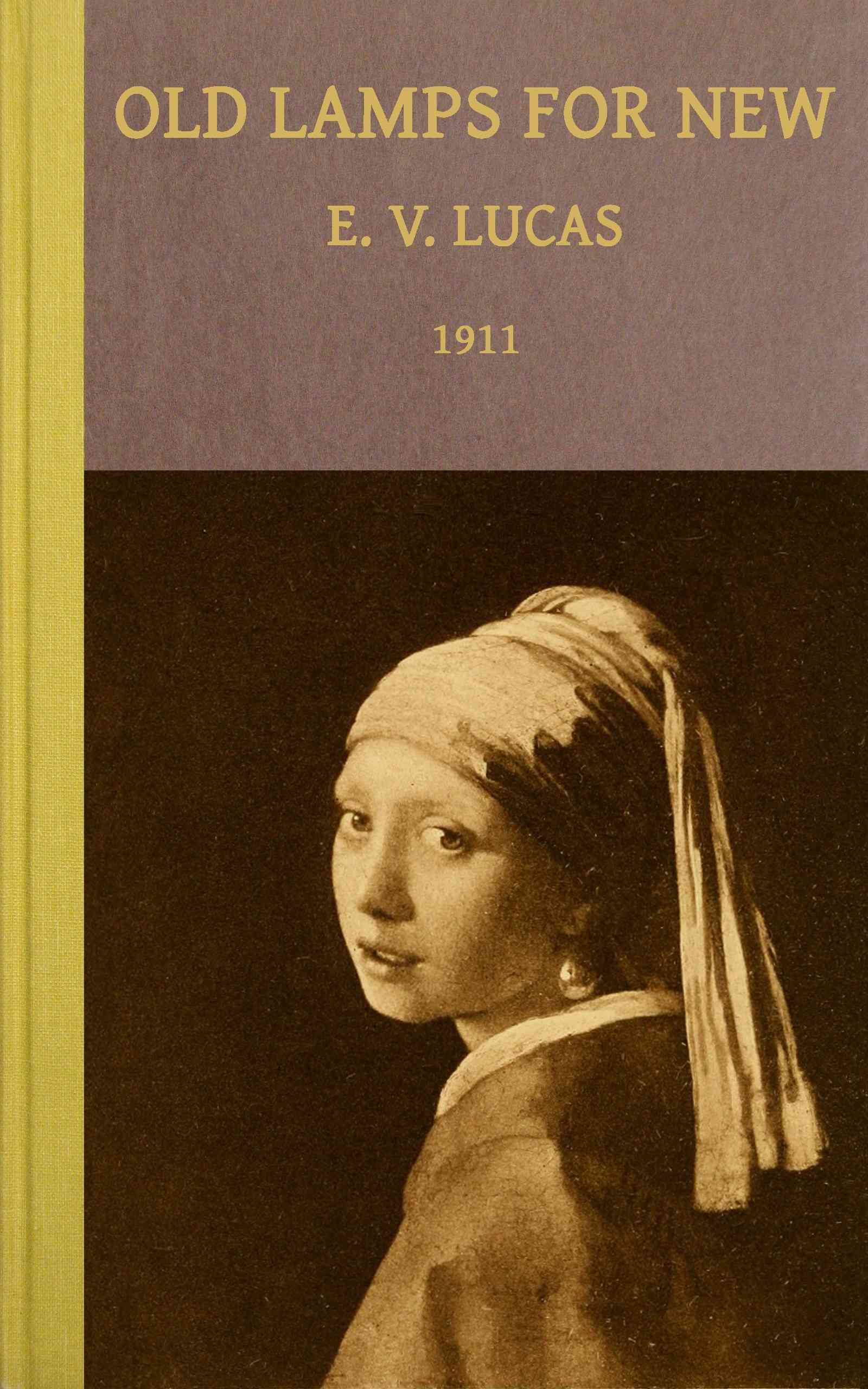
Old Lamps for New
1911
E.V. Lucas's 1911 collection opens with one of the most quietly radical premises in early educational literature: a school where children take turns experiencing blindness, disability, and hardship so that they might develop genuine sympathy for those who suffer. The narrator visits Miss Beam's school and encounters a little girl on her "blind day" - a moment of quiet poignancy that crystallizes Lucas's belief in experiential learning. The remainder of the collection branches into essays on English countryside, literary figures, and the small observances of daily life, written with a gentle humor and precise eye for detail that recalls Hazlitt at his most approachable. Lucas is not a reformer shouting from a platform; he is a quiet essayist who believes that kindness must be practiced, not merely praised, and that the cultivation of imagination in children is a serious undertaking. The book endures because it asks us to consider what we owe to those whose struggles we cannot see, and it does so without a whisper of moralizing. For readers who delight in early 20th-century essay collections that treat ordinary life as worthy of genuine attention.
Editions

Link to this book
Add a free, dofollow link to Lex on your blog, forum, syllabus, or reading list.

<a href="https://lex-books.com/book/old-lamps-for-new-19d4b627-3a22-45c4-95d1-9f819bc4a0a2"><img src="https://lex-books.com/badges/read-on-lex.svg" alt="Read Old Lamps for New by E. V. Lucas free on Lex" width="160" height="40"></a>[](https://lex-books.com/book/old-lamps-for-new-19d4b627-3a22-45c4-95d1-9f819bc4a0a2)[url=https://lex-books.com/book/old-lamps-for-new-19d4b627-3a22-45c4-95d1-9f819bc4a0a2][img]https://lex-books.com/badges/read-on-lex.svg[/img][/url]Read Old Lamps for New by E. V. Lucas free on Lex: https://lex-books.com/book/old-lamps-for-new-19d4b627-3a22-45c4-95d1-9f819bc4a0a2Cite this book
Reading this edition for a paper or guide? Copy a citation.
Lucas, E. V.. Old Lamps for New. Lex, lex-books.com/book/old-lamps-for-new-19d4b627-3a22-45c4-95d1-9f819bc4a0a2.Lucas, E. V. (1911). Old Lamps for New. Lex. https://lex-books.com/book/old-lamps-for-new-19d4b627-3a22-45c4-95d1-9f819bc4a0a2Lucas, E. V.. Old Lamps for New. Lex. https://lex-books.com/book/old-lamps-for-new-19d4b627-3a22-45c4-95d1-9f819bc4a0a2.