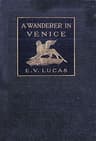
A Wanderer in Venice
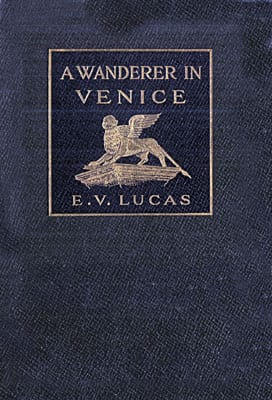
This is travel writing as it used to be written, before guidebooks became checklists and travel became logistics. E.V. Lucas approaches Venice the way pilgrims approached Rome: slowly, reverently, with all senses primed for revelation. The genius of this book lies in its insistence that how you arrive matters as much as where you're going. Lucas advocates entering Venice by water from Chioggia, letting the city's silhouette emerge from mist and tide like a fever dream. This is Venice before mass tourism, before cruise ships dwarfed the palazzi, written in an age when a thoughtful person could still find solitude in St. Mark's Square. The narrative moves through Venice's landmarks, but these are not mere destinations. Lucas transforms St. Mark's Basilica, the Grand Canal, and the Doges' Palace into meditations on time, beauty, and the peculiar magic of a city built on water. His prose carries the cadences of Edwardian essayists: polished, witty, never distant. When he writes about Venice, you feel his wonder. For modern readers disillusioned by package tours and optimized destinations, this book offers something precious: permission to be awed.
Editions
Link to this book
Add a free, dofollow link to Lex on your blog, forum, syllabus, or reading list.

<a href="https://lex-books.com/book/a-wanderer-in-venice-e10d7951-7c42-4ed9-abd7-23431cd433ca"><img src="https://lex-books.com/badges/read-on-lex.svg" alt="Read A Wanderer in Venice by E. V. Lucas free on Lex" width="160" height="40"></a>[](https://lex-books.com/book/a-wanderer-in-venice-e10d7951-7c42-4ed9-abd7-23431cd433ca)[url=https://lex-books.com/book/a-wanderer-in-venice-e10d7951-7c42-4ed9-abd7-23431cd433ca][img]https://lex-books.com/badges/read-on-lex.svg[/img][/url]Read A Wanderer in Venice by E. V. Lucas free on Lex: https://lex-books.com/book/a-wanderer-in-venice-e10d7951-7c42-4ed9-abd7-23431cd433caCite this book
Reading this edition for a paper or guide? Copy a citation.
Lucas, E. V.. A Wanderer in Venice. Lex, lex-books.com/book/a-wanderer-in-venice-e10d7951-7c42-4ed9-abd7-23431cd433ca.Lucas, E. V. (n.d.). A Wanderer in Venice. Lex. https://lex-books.com/book/a-wanderer-in-venice-e10d7951-7c42-4ed9-abd7-23431cd433caLucas, E. V.. A Wanderer in Venice. Lex. https://lex-books.com/book/a-wanderer-in-venice-e10d7951-7c42-4ed9-abd7-23431cd433ca.