Never Split the Difference (Comprehensive Summary)
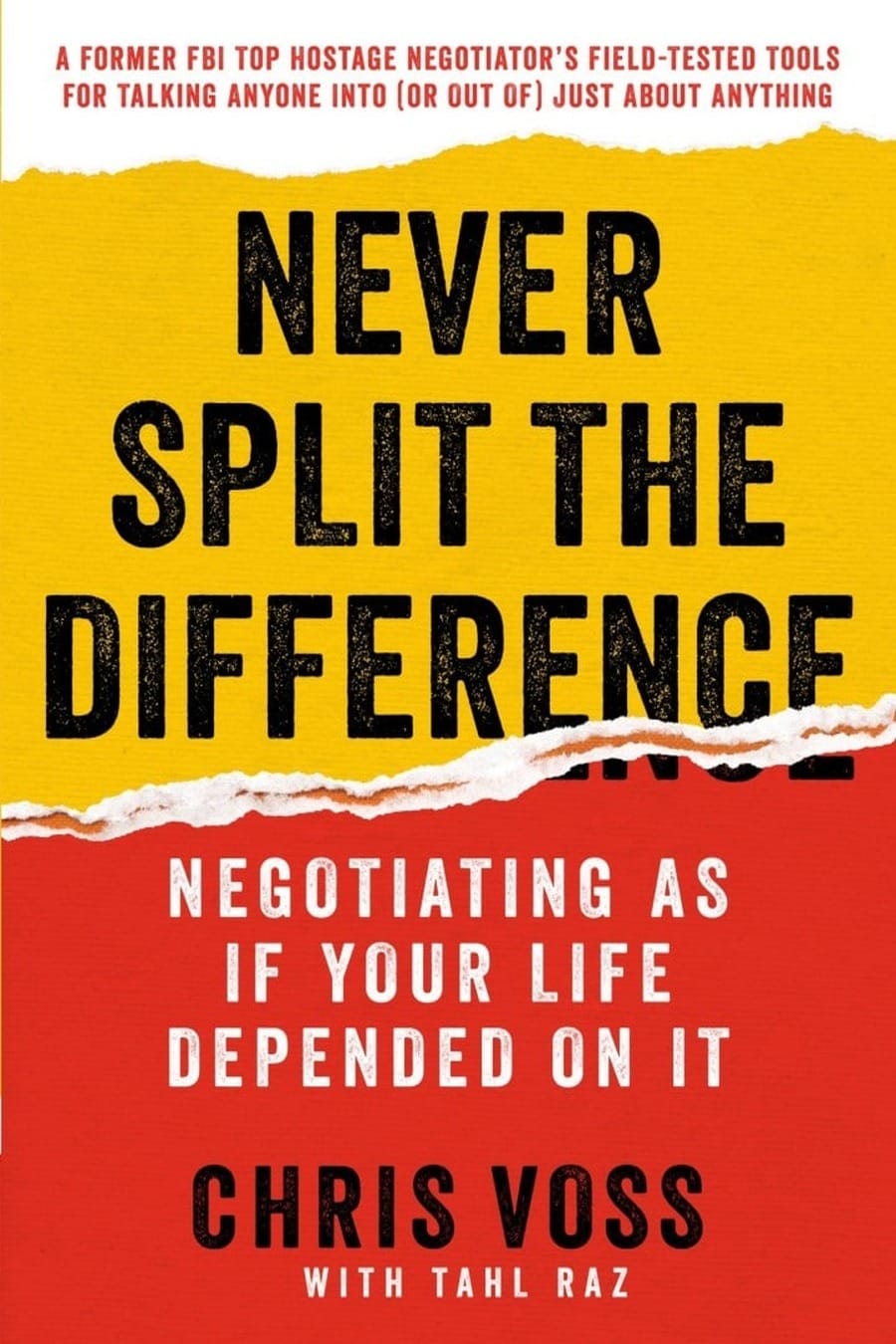
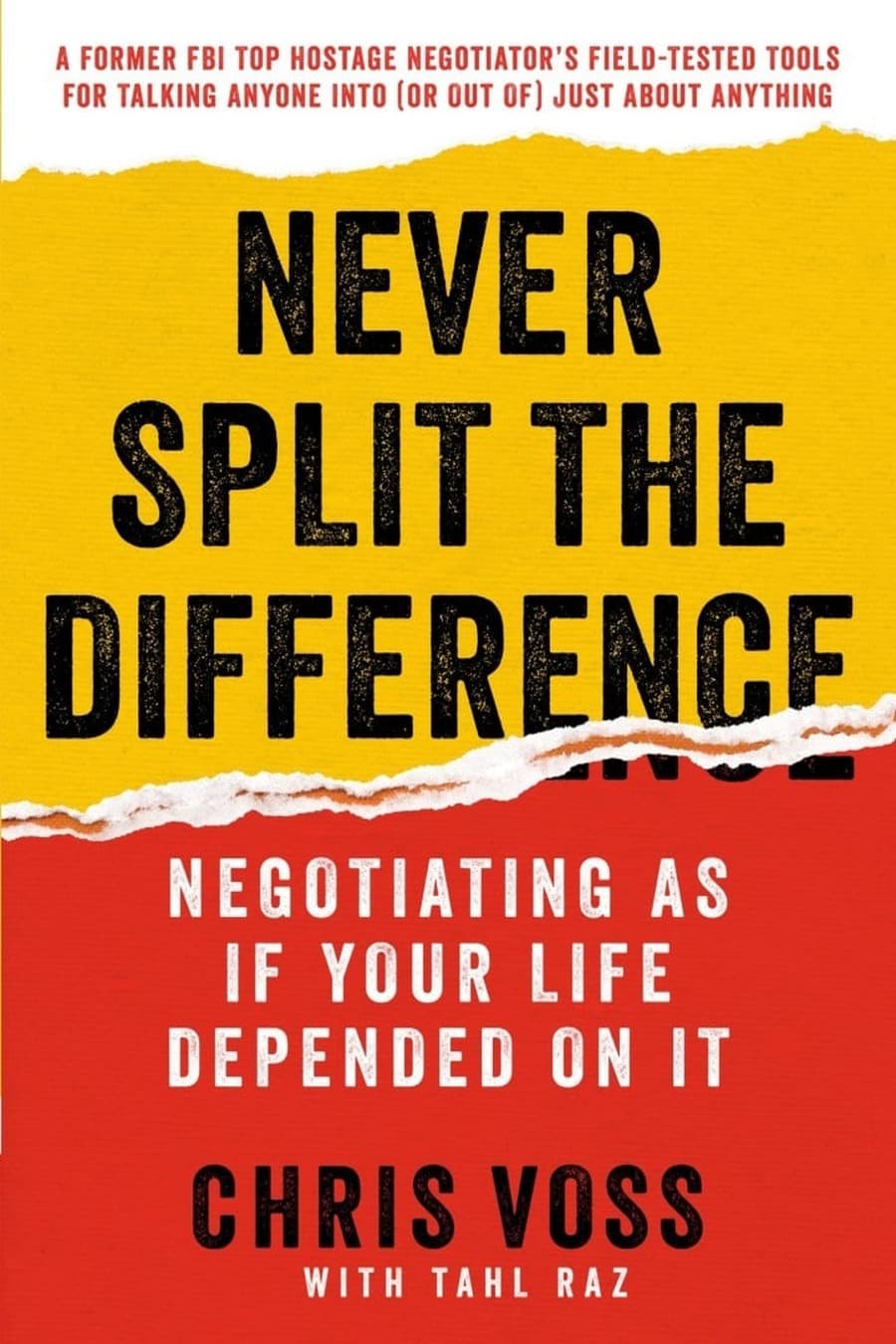
In 'Never Split the Difference,' former FBI hostage negotiator Chris Voss shares his insights on negotiation strategies drawn from his real-life experiences. The book emphasizes the importance of emotional intelligence and psychological tactics in achieving successful outcomes, challenging conventional negotiation techniques. Voss provides practical tools and techniques that can be applied in various situations, making the work significant for both personal and professional negotiations. This Lexicon distills the key ideas into original prose, offering readers a concise understanding of Voss's negotiation principles.
Editions

X-Ray
A former FBI hostage negotiator and the author, who developed and teaches a unique, empathy-based approach to negotiation.
Two esteemed negotiation professors who posed as kidnappers in a role-playing exercise, challenging Voss's traditional negotiation skills.
The lead hostage-taker in a Brooklyn bank robbery, whose negotiation with Voss illustrates active listening and mirroring techniques.
An FBI colleague who initially dismissed Voss's aspirations to become a hostage negotiator, prompting his reflection on the power of 'No'.
About Never Split the Difference (Comprehensive Summary)
Chapter Summaries
- 1
- Voss recounts a Harvard role-playing exercise where he used 'calibrated questions' to turn the tables on professors posing as kidnappers, highlighting the importance of emotional intelligence over logic. He introduces 'Tactical Empathy' and asserts negotiation is a fundamental life skill applicable beyond hostage situations. The chapter sets the stage for the book's broader themes.
- 2
- Voss details a Brooklyn bank robbery negotiation, emphasizing the need for an open mind, active listening, and adapting to surprises. He introduces the 'late-night FM DJ voice' and 'mirroring' as tools to build rapport and diffuse tension with the hostage-taker, Chris Watts. This experience becomes a foundational case study for his techniques.
- 3
- Voss explores tactical empathy and labeling through a Harlem hostage negotiation, demonstrating how acknowledging fears and emotions can build rapport and lead to surrender. He explains how labeling shifts brain activity from fear to rational thought and introduces the 'accusation audit' to disarm counterparts. He encourages practicing these techniques in everyday interactions.
Key Themes
- Emotional Intelligence in Negotiation
- The book consistently argues that understanding and managing emotions—both one's own and the counterpart's—is paramount to successful negotiation, often superseding pure logic. Voss introduces concepts like Tactical Empathy and labeling to demonstrate how acknowledging feelings can diffuse tension and build rapport, leading to more productive outcomes.
- Challenging Conventional Wisdom
- Voss frequently debunks traditional negotiation advice, such as the idea that 'Yes' is always the goal or that compromise is ideal. He advocates for counter-intuitive strategies like embracing 'No' and actively seeking to understand underlying motivations rather than pushing for immediate agreement.
- The Power of Active Listening and Empathy
- A core tenet of Voss's philosophy is the transformative power of truly listening to and understanding the other party's perspective. Techniques like mirroring, labeling, and paraphrasing are presented as essential tools for building rapport, gaining trust, and uncovering crucial information.
Characters
- Chris Voss(narrator)
- A former FBI hostage negotiator and the author, who developed and teaches a unique, empathy-based approach to negotiation.
- Harvard Professors(antagonist)
- Two esteemed negotiation professors who posed as kidnappers in a role-playing exercise, challenging Voss's traditional negotiation skills.
- Chris Watts(antagonist)
- The lead hostage-taker in a Brooklyn bank robbery, whose negotiation with Voss illustrates active listening and mirroring techniques.
- Amy Bonderow(supporting)
- An FBI colleague who initially dismissed Voss's aspirations to become a hostage negotiator, prompting his reflection on the power of 'No'.
- Jim Camp(supporting)
- An expert mentioned by Voss who advocated for giving counterparts 'the right to veto', emphasizing the power of 'No'.
- Daryl(supporting)
- A frequent caller to a crisis hotline where Voss volunteered, teaching him the importance of empowering others rather than seeking personal validation.
Link to this book
Add a free, dofollow link to Lex on your blog, forum, syllabus, or reading list.

<a href="https://lex-books.com/book/never-split-the-difference-comprehensive-summary-b1fa70d6-fe13-58ed-ba4a-f759e500fb3c"><img src="https://lex-books.com/badges/read-on-lex.svg" alt="Read Never Split the Difference (Comprehensive Summary) by Chris Voss free on Lex" width="160" height="40"></a>[](https://lex-books.com/book/never-split-the-difference-comprehensive-summary-b1fa70d6-fe13-58ed-ba4a-f759e500fb3c)[url=https://lex-books.com/book/never-split-the-difference-comprehensive-summary-b1fa70d6-fe13-58ed-ba4a-f759e500fb3c][img]https://lex-books.com/badges/read-on-lex.svg[/img][/url]Read Never Split the Difference (Comprehensive Summary) by Chris Voss free on Lex: https://lex-books.com/book/never-split-the-difference-comprehensive-summary-b1fa70d6-fe13-58ed-ba4a-f759e500fb3cCite this book
Reading this edition for a paper or guide? Copy a citation.
Voss, Chris. Never Split the Difference (Comprehensive Summary). Lex, lex-books.com/book/never-split-the-difference-comprehensive-summary-b1fa70d6-fe13-58ed-ba4a-f759e500fb3c.Voss, C. (n.d.). Never Split the Difference (Comprehensive Summary). Lex. https://lex-books.com/book/never-split-the-difference-comprehensive-summary-b1fa70d6-fe13-58ed-ba4a-f759e500fb3cVoss, Chris. Never Split the Difference (Comprehensive Summary). Lex. https://lex-books.com/book/never-split-the-difference-comprehensive-summary-b1fa70d6-fe13-58ed-ba4a-f759e500fb3c.