Narrative of the Most Extraordinary and Distressing Shipwreck of the Whale-ship…
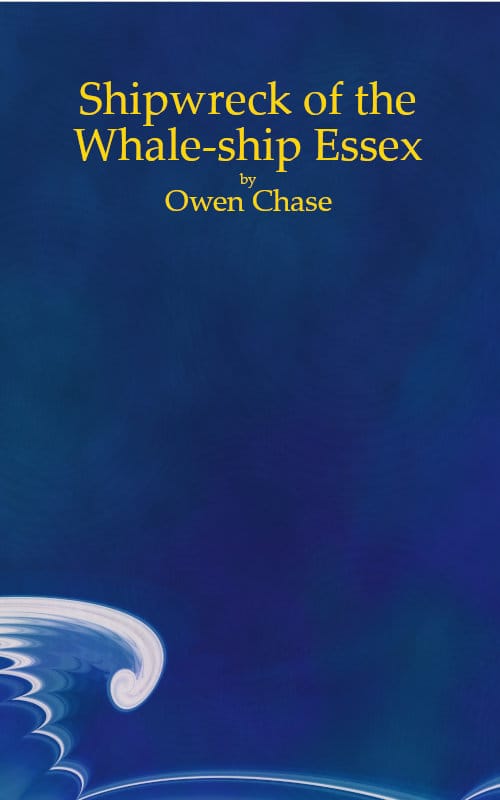
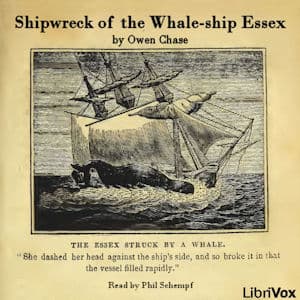
In November 1820, a sperm whale deliberately rammed and sank the whaling ship Essex in the middle of the Pacific Ocean, 2,000 miles from land. Twenty-one men were left drifting in three fragile whale-boats with nothing but oars and a desperate will to live. What followed was ninety-three days of unimaginable suffering: storms that capsized their boats, sharks that circled endlessly, and starvation that drove them to the last resort. Only eight men survived. Owen Chase, the First Mate, recorded this catastrophe in prose that crackles with authenticity and dread. His account, published in 1821, became the raw material for Herman Melville's Moby-Dick and remains one of the most harrowing survival narratives ever written. This is not adventure tourism. This is what happens when the ocean decides you will die.
Editions
X-Ray
“I encouraged them to bear up against all evils, and if we must perish, to die in our own cause, and not weakly distrust the providence of the Almighty, by giving ourselves up to despair. I reasoned with them, and told them that we would not die sooner by keeping up our hopes; that the dreadful sacrifices and privations we endured were to preserve us from death, and were not to be put in competition with the price which we set upon our lives, and their value to our families: it was, besides, unmanly to repine at what neither admitted of alleviation nor cure; and withal, that it was our solemn duty to recognise in our calamities an overruling divinity, by whose mercy we might be suddenly snatched from peril, and to rely upon him alone, ‘Who tempers the wind to the shorn lamb?””
— Owen Chase
“I accordingly turned her over upon the quarter, and was in the act of nailing on the canvass, when I observed a very large spermaceti whale, as well as I could judge, about eighty-five feet in length; he broke water about twenty rods off our weather-bow, and was lying quietly, with his head in a direction for the ship. He spouted two or three times, and then disappeared. In less than two or three seconds he came up again, about the length of the ship off, and made directly for us, at the rate of about three knots. The ship was then going with about the same velocity. His appearance and attitude gave us at first no alarm; but while I stood watching his movements, and observing him but a ship’s length off, com- ing down for us with great celerity, I involuntarily ordered the boy at the helm to put it hard up; intending to sheer off and avoid him. The words were scarcely out of my mouth, before he came down upon us with full speed, and struck the ship with his head, just forward of the fore-chains; he gave us such an appalling and tremendous jar, as nearly threw us all on our faces. The ship brought up as suddenly and violently as if she had struck a rock and trembled for a few seconds like a leaf. We looked at each other with perfect amazement, deprived almost of the power of speech. Many minutes elapsed before we were able to realize the dreadful accident; during which time he passed under the ship, grazing her keel as he went along, came up underside of her to leeward, and lay on the top of the water (apparently stunned with the violence of the blow), for the space of a minute; he then suddenly started off, in a direction to leeward.””
— Owen Chase
“on the 2nd of october we set sail for the Galapagos Islands. We came to anchor, and laid seven days off Hood’s Island, one of the group; during which time we stopped a leak which we had discovered, and obtained three hundred turtle. We then visited Charles Island, where we procured sixty more. These turtle are a most delicious food, and average in weight generally about one hundred pounds, but many of them weigh upwards of eight hundred. With these, ships usually supply themselves for a great length of time and make a great saving of other provisions. They neither eat nor drink, nor is the least pains taken with them; they are strewed over the deck, thrown underfoot, or packed away in the hold, as it suits convenience. They will live upwards of a year without food or water, but soon die in a cold climate.””
— Owen Chase
Link to this book
Add a free, dofollow link to Lex on your blog, forum, syllabus, or reading list.

<a href="https://lex-books.com/book/narrative-of-the-most-extraordinary-and-distressing-shipwreck-of-the-whale-ship-83475f02-5eb0-4583-965b-8209c66a8578"><img src="https://lex-books.com/badges/read-on-lex.svg" alt="Read Narrative of the Most Extraordinary and Distressing Shipwreck of the Whale-ship… by Owen Chase free on Lex" width="160" height="40"></a>[](https://lex-books.com/book/narrative-of-the-most-extraordinary-and-distressing-shipwreck-of-the-whale-ship-83475f02-5eb0-4583-965b-8209c66a8578)[url=https://lex-books.com/book/narrative-of-the-most-extraordinary-and-distressing-shipwreck-of-the-whale-ship-83475f02-5eb0-4583-965b-8209c66a8578][img]https://lex-books.com/badges/read-on-lex.svg[/img][/url]Read Narrative of the Most Extraordinary and Distressing Shipwreck of the Whale-ship… by Owen Chase free on Lex: https://lex-books.com/book/narrative-of-the-most-extraordinary-and-distressing-shipwreck-of-the-whale-ship-83475f02-5eb0-4583-965b-8209c66a8578Cite this book
Reading this edition for a paper or guide? Copy a citation.
Chase, Owen. Narrative of the Most Extraordinary and Distressing Shipwreck of the Whale-ship…. Lex, lex-books.com/book/narrative-of-the-most-extraordinary-and-distressing-shipwreck-of-the-whale-ship-83475f02-5eb0-4583-965b-8209c66a8578.Chase, O. (n.d.). Narrative of the Most Extraordinary and Distressing Shipwreck of the Whale-ship…. Lex. https://lex-books.com/book/narrative-of-the-most-extraordinary-and-distressing-shipwreck-of-the-whale-ship-83475f02-5eb0-4583-965b-8209c66a8578Chase, Owen. Narrative of the Most Extraordinary and Distressing Shipwreck of the Whale-ship…. Lex. https://lex-books.com/book/narrative-of-the-most-extraordinary-and-distressing-shipwreck-of-the-whale-ship-83475f02-5eb0-4583-965b-8209c66a8578.