Influence (Comprehensive Summary)
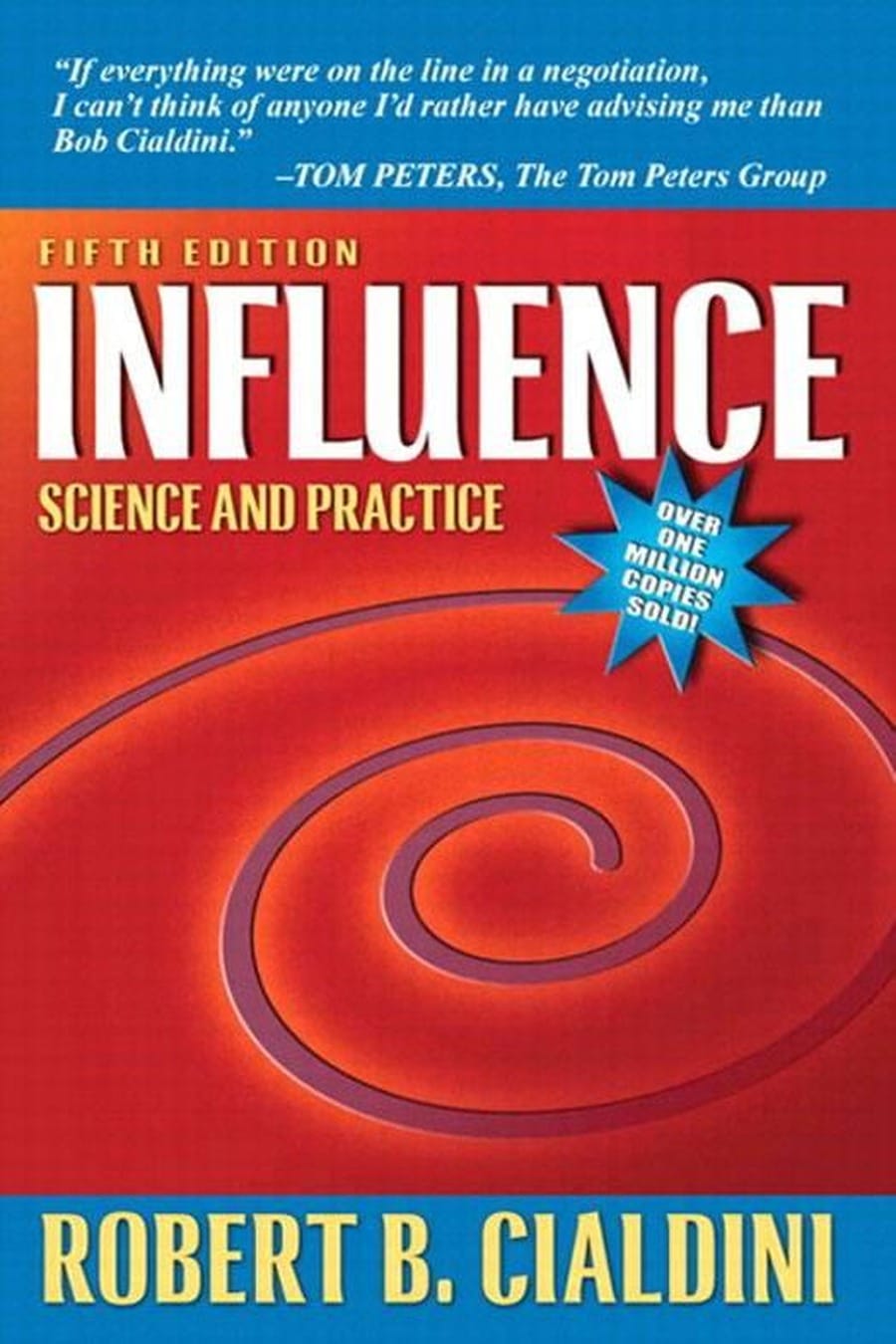
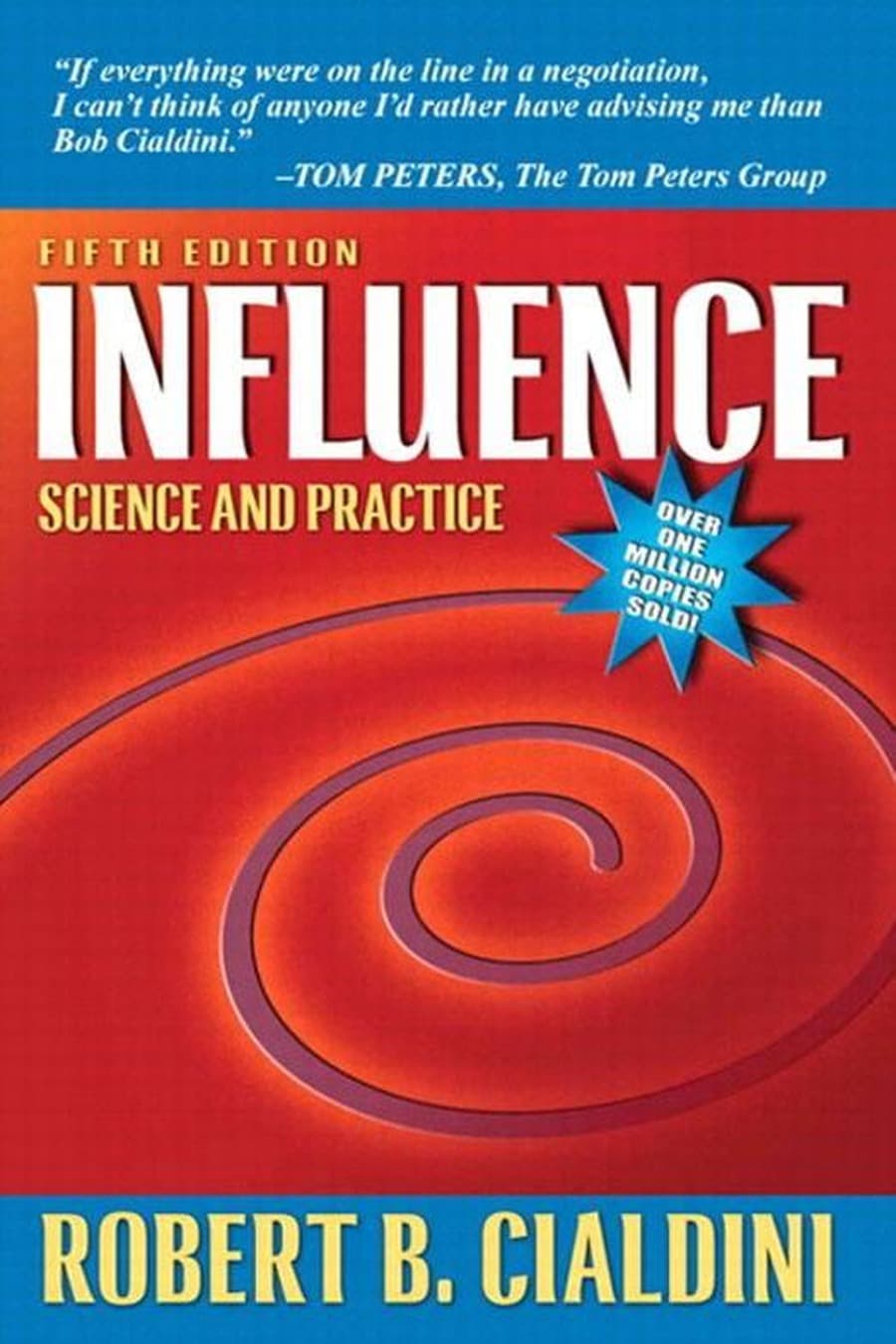
Influence, authored by Robert Cialdini, explores the psychology of persuasion and the principles that drive people to comply with requests. Cialdini, a renowned social psychologist, identifies six key principles of influence: reciprocity, commitment and consistency, social proof, authority, liking, and scarcity. This Lexicon distills these concepts into concise and original prose, making the essential ideas accessible for readers seeking to understand the dynamics of influence in everyday life.
Editions

X-Ray
The author and narrator, who began his research into influence due to his personal susceptibility to persuasion.
A psychologist whose experiment on the power of giving a reason for a request is cited.
A psychologist whose infamous obedience experiments are a cornerstone for understanding the principle of authority.
A renowned car salesman whose success is attributed to his consistent use of the liking principle.
About Influence (Comprehensive Summary)
Chapter Summaries
- 1
- This chapter lays the groundwork for understanding persuasion, introducing influence as a powerful force driven by psychological triggers rather than mere choice. Cialdini emphasizes the prevalence of subtle tactics and the importance of recognizing mental shortcuts, or heuristics, to navigate social interactions effectively and ethically.
- Preface
- The preface outlines the book's evolution from an engaging narrative to a research-based work, integrating scientific evidence and new findings in persuasion. It highlights the inclusion of 'Reader’s Reports' to illustrate practical applications and emphasizes the book's relevance to contemporary contexts and technology.
- Introduction
- Cialdini reflects on his personal susceptibility to persuasion, which motivated his research into compliance. He describes his shift from laboratory experiments to a three-year program of participant observation with compliance professionals, through which he identified six fundamental principles of influence.
Key Themes
- Automaticity and Mental Shortcuts
- The book extensively explores how humans and animals rely on 'fixed-action patterns' and 'heuristics' for efficient decision-making. While often adaptive, these automatic responses can be easily triggered and exploited, leading to compliance without critical thought.
- Exploitation of Psychological Principles
- Cialdini details how various compliance professionals strategically leverage six universal principles—reciprocity, commitment, social proof, liking, authority, and scarcity—to influence behavior. The book highlights the deliberate manipulation of these principles for personal or organizational gain.
- Ethical Implications of Influence
- The author consistently touches upon the dual nature of influence, acknowledging its potential for beneficial purposes while warning against its misuse. He encourages readers to develop critical awareness to discern ethical persuasion from exploitative tactics.
Characters
- Robert Cialdini(narrator)
- The author and narrator, who began his research into influence due to his personal susceptibility to persuasion.
- Ellen Langer(supporting)
- A psychologist whose experiment on the power of giving a reason for a request is cited.
- Stanley Milgram(supporting)
- A psychologist whose infamous obedience experiments are a cornerstone for understanding the principle of authority.
- Joe Girard(supporting)
- A renowned car salesman whose success is attributed to his consistent use of the liking principle.
- Tupperware hostesses(supporting)
- Individuals who leverage personal relationships to drive sales, illustrating the power of the liking principle.
- Doomsday cult members(supporting)
- A group whose behavior illustrates how social proof can reinforce commitment even in the face of disconfirmation.
Link to this book
Add a free, dofollow link to Lex on your blog, forum, syllabus, or reading list.

<a href="https://lex-books.com/book/influence-comprehensive-summary-d7f8a9c5-e700-5d4d-bfd2-b8cb37d07e4c"><img src="https://lex-books.com/badges/read-on-lex.svg" alt="Read Influence (Comprehensive Summary) by Robert Cialdini free on Lex" width="160" height="40"></a>[](https://lex-books.com/book/influence-comprehensive-summary-d7f8a9c5-e700-5d4d-bfd2-b8cb37d07e4c)[url=https://lex-books.com/book/influence-comprehensive-summary-d7f8a9c5-e700-5d4d-bfd2-b8cb37d07e4c][img]https://lex-books.com/badges/read-on-lex.svg[/img][/url]Read Influence (Comprehensive Summary) by Robert Cialdini free on Lex: https://lex-books.com/book/influence-comprehensive-summary-d7f8a9c5-e700-5d4d-bfd2-b8cb37d07e4cCite this book
Reading this edition for a paper or guide? Copy a citation.
Cialdini, Robert. Influence (Comprehensive Summary). Lex, lex-books.com/book/influence-comprehensive-summary-d7f8a9c5-e700-5d4d-bfd2-b8cb37d07e4c.Cialdini, R. (n.d.). Influence (Comprehensive Summary). Lex. https://lex-books.com/book/influence-comprehensive-summary-d7f8a9c5-e700-5d4d-bfd2-b8cb37d07e4cCialdini, Robert. Influence (Comprehensive Summary). Lex. https://lex-books.com/book/influence-comprehensive-summary-d7f8a9c5-e700-5d4d-bfd2-b8cb37d07e4c.