Geometrical Solutions Derived from Mechanics; a Treatise of Archimedes

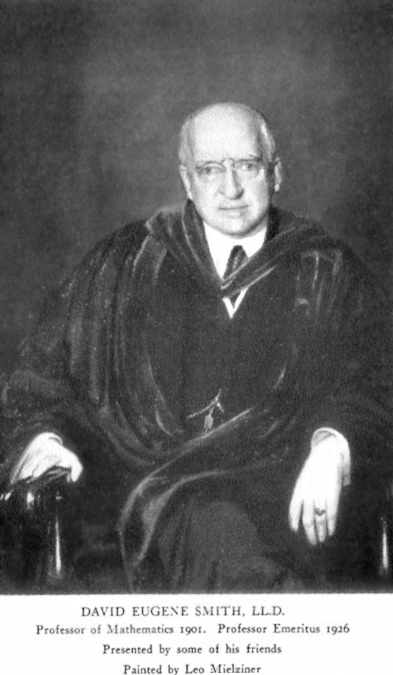
In these fragments, preserved through centuries of near-oblivion, we witness one of history's greatest minds at work. Archimedes developed what he called his "mechanical method" - solving geometric problems by imagining them as problems of balance, leverage, and weight. This wasn't mere illustration; it was revelation. By treating area and volume as physical quantities that could be balanced against each other, he discovered results that eluded purely abstract geometry. The treatise preserves his radical approach: deriving area formulas not through proofs, but through levers and centers of gravity. The manuscripts, recovered from a palimpsest in the early 20th century after a thousand years in obscurity, offer a rare glimpse into how ancient mathematicians actually thought. Heiberg's reconstruction and Smith's introduction make this essential reading for anyone curious about the roots of mathematical imagination.
Editions

Link to this book
Add a free, dofollow link to Lex on your blog, forum, syllabus, or reading list.

<a href="https://lex-books.com/book/geometrical-solutions-derived-from-mechanics-a-treatise-of-archimedes-481ddcf3-f89b-4868-81fc-ed0a869946c3"><img src="https://lex-books.com/badges/read-on-lex.svg" alt="Read Geometrical Solutions Derived from Mechanics; a Treatise of Archimedes by David Eugene Smith free on Lex" width="160" height="40"></a>[](https://lex-books.com/book/geometrical-solutions-derived-from-mechanics-a-treatise-of-archimedes-481ddcf3-f89b-4868-81fc-ed0a869946c3)[url=https://lex-books.com/book/geometrical-solutions-derived-from-mechanics-a-treatise-of-archimedes-481ddcf3-f89b-4868-81fc-ed0a869946c3][img]https://lex-books.com/badges/read-on-lex.svg[/img][/url]Read Geometrical Solutions Derived from Mechanics; a Treatise of Archimedes by David Eugene Smith free on Lex: https://lex-books.com/book/geometrical-solutions-derived-from-mechanics-a-treatise-of-archimedes-481ddcf3-f89b-4868-81fc-ed0a869946c3Cite this book
Reading this edition for a paper or guide? Copy a citation.
Smith, David Eugene. Geometrical Solutions Derived from Mechanics; a Treatise of Archimedes. Lex, lex-books.com/book/geometrical-solutions-derived-from-mechanics-a-treatise-of-archimedes-481ddcf3-f89b-4868-81fc-ed0a869946c3.Smith, D. E. (n.d.). Geometrical Solutions Derived from Mechanics; a Treatise of Archimedes. Lex. https://lex-books.com/book/geometrical-solutions-derived-from-mechanics-a-treatise-of-archimedes-481ddcf3-f89b-4868-81fc-ed0a869946c3Smith, David Eugene. Geometrical Solutions Derived from Mechanics; a Treatise of Archimedes. Lex. https://lex-books.com/book/geometrical-solutions-derived-from-mechanics-a-treatise-of-archimedes-481ddcf3-f89b-4868-81fc-ed0a869946c3.