Berlin and Its Environs: Handbook for Travellers (1903) — Karl Baedeker’s Guide to Wilhelmine Berlin
Berlin and Its Environs: Handbook for Travellers (1903) — Karl Baedeker’s Guide to Wilhelmine Berlin
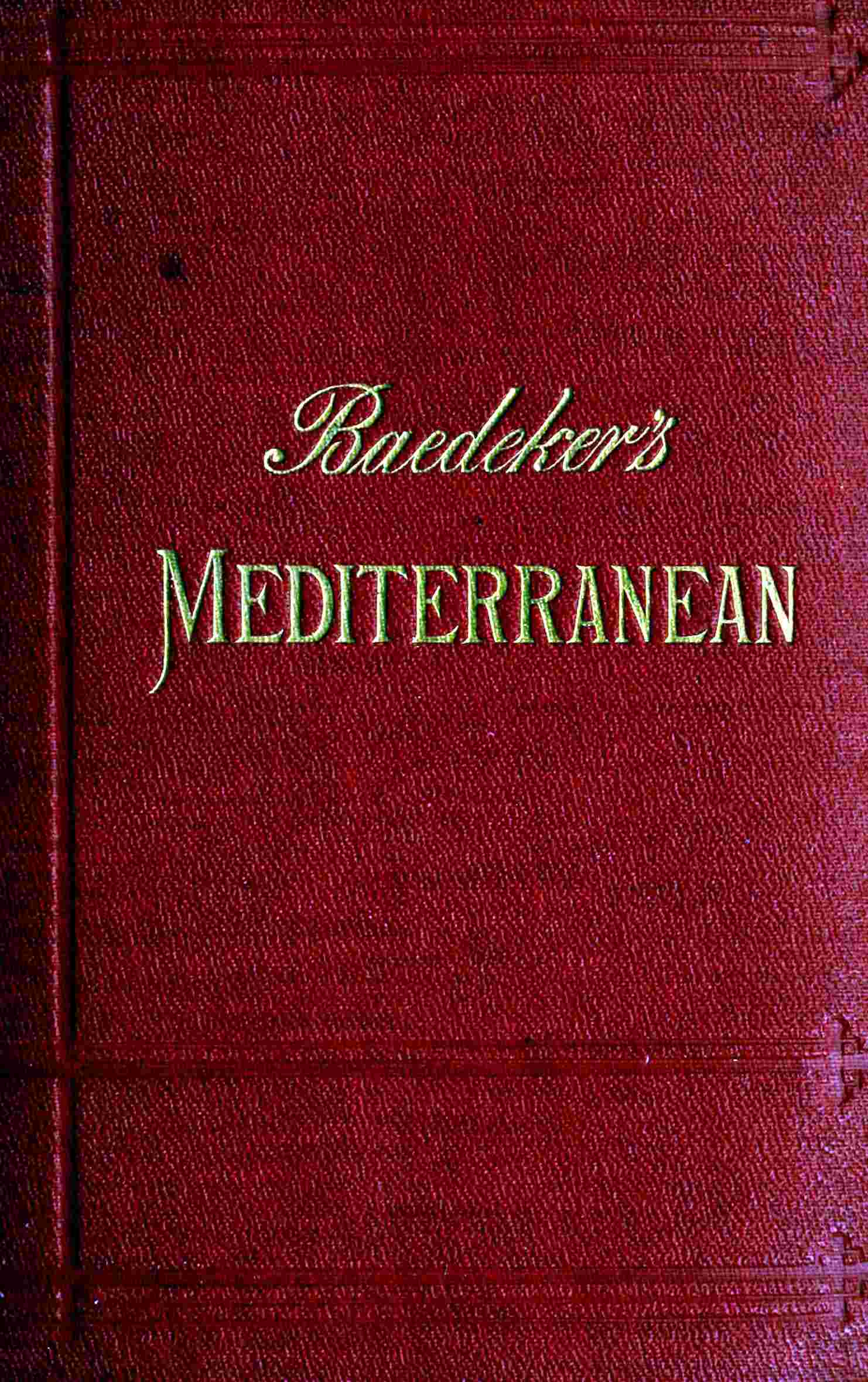
Baedeker, Karl. Berlin and Its Environs: Handbook for Travellers . Leipsic: Karl Baedeker, 1903. Contextual Background Karl Baedeker’s Berlin and Its Environs (1903) was published at the height of the German Empire under Kaiser Wilhelm II, during a period when Berlin was asserting itself as a modern imperial capital and cultural center of Europe. This guidebook represents not just a travel aid, but also a snapshot of Berlin's civic identity, cultural aspirations, and urban structure at the turn of the 20th century. Baedeker’s guidebooks, renowned for their precision, compact detail, and impartial tone, were designed to make travelers self-sufficient—“independent of the services of guides and others,” as the preface states. This edition was adapted and expanded from Baedeker’s earlier Handbook for Northern Germany , reflecting the increasing political, architectural, and touristic importance of Berlin as the newly unified German Empire’s capital. The guide offers detailed descriptions of transportation (railways, cabs, tramways), lodging (hotels, boarding houses), art and science museums, royal landmarks, and excursions into nearby Potsdam and beyond. Its focus on infrastructure—trams, elevated railways, new museums, and hotels with electric lighting and hot-water heating—reveals the modernizing ethos of Wilhelmine Berlin. Moreover, the guide reflects the rise of middle-class and international tourism, facilitated by improved railway access and a growing urban hospitality industry. It is a key example of how imperial Berlin was curated for the foreign gaze: organized, cultured, and increasingly cosmopolitan. Thus, this Baedeker handbook is not merely utilitarian. It functions as an imperial-era cultural artifact, illustrating the values of order, civic pride, and urban spectacle central to both German nationalism and European modernity at the dawn of the 20th century. Thematic Summary 1. Imperial Identity and Nationalism Baedeker presents Berlin as the proud capital of the newly unified German Empire , emphasizing monuments to Prussian kings and German emperors (e.g., the Reichstag , Brandenburg Gate , Victory Column , statues of Frederick the Great ). The guide reflects the deliberate monumentalization of German history —celebrating military victories (1813–1815, Franco-Prussian War) and imperial continuity under the Hohenzollerns. Curricular Connection: Nationalism, nation-building, and historical memory in Germany; causes of World War I (Wilhelmine imperial ambition and militarism). 2. Modernization and Urban Development Berlin is portrayed as Europe’s most modern city , with electric trams, elevated railways, public baths, underground systems, and detailed infrastructure. The handbook emphasizes the efficiency and planning of Berlin’s transport, hotels, postal system, and museums—ideal for demonstrating urban modernization and industrial growth . Curricular Connection: The Second Industrial Revolution, urban planning, technology and society in 19th–20th century Europe. 3. Tourism and the Middle-Class Experience Designed for literate, mobile, upper-middle-class European (and increasingly American) travelers, the guide democratizes travel —with detailed instructions on lodging, meals, sightseeing, and etiquette. The traveler is expected to be independent , cultured, and economical—reflecting the values of the bourgeois age of leisure, consumerism, and exploration . Curricular Connection: Rise of the middle class; consumer culture and leisure in modern industrial societies. 4. Imperial Cosmopolitanism and Cultural Hierarchy Although Berlin is framed as modern and cultured, Baedeker distinguishes between different levels of civilization and refinement . It praises the fine arts, ethnographic collections, and “progress” of the West while implicitly comparing it to “lesser” regions or peoples—especially in the ethnographic and colonial exhibitions . This supports a Eurocentric worldview typical of the imperialist mindset of the era. Curricular Connection: Imperialism and colonialism; cultural imperialism; the construction of the “civilized” vs. “uncivilized” world. 5. The Urban Landscape as Political Statement The architectural layout, grand boulevards, and monumental public buildings described are not neutral : they are designed to project power, order, and state authority . The use of Berlin’s space reflects political intent —to showcase Germany’s rise as a modern empire and cultural competitor to London, Paris, and Vienna. Curricular Connection: Use of architecture and city planning in statecraft and ideology; Berlin as a case study in the politics of public space. Suggested Essay Prompt (IB/EE/AP): "To what extent did the development of Berlin's urban infrastructure and cultural institutions in the early 20th century reflect the political ambitions of the German Empire?" Description Karl Baedeker’s Berlin and Its Environs: Handbook for Travellers
Editions
Link to this book
Add a free, dofollow link to Lex on your blog, forum, syllabus, or reading list.

<a href="https://lex-books.com/book/berlin-and-its-environs-handbook-for-travellers-1903-karl-baedeker-s-guide-to-wi-00df8835-8f14-46c2-b7c9-db9b9a15f5f3"><img src="https://lex-books.com/badges/read-on-lex.svg" alt="Read Berlin and Its Environs: Handbook for Travellers (1903) — Karl Baedeker’s Guide to Wilhelmine Berlin by Karl Baedeker free on Lex" width="160" height="40"></a>[](https://lex-books.com/book/berlin-and-its-environs-handbook-for-travellers-1903-karl-baedeker-s-guide-to-wi-00df8835-8f14-46c2-b7c9-db9b9a15f5f3)[url=https://lex-books.com/book/berlin-and-its-environs-handbook-for-travellers-1903-karl-baedeker-s-guide-to-wi-00df8835-8f14-46c2-b7c9-db9b9a15f5f3][img]https://lex-books.com/badges/read-on-lex.svg[/img][/url]Read Berlin and Its Environs: Handbook for Travellers (1903) — Karl Baedeker’s Guide to Wilhelmine Berlin by Karl Baedeker free on Lex: https://lex-books.com/book/berlin-and-its-environs-handbook-for-travellers-1903-karl-baedeker-s-guide-to-wi-00df8835-8f14-46c2-b7c9-db9b9a15f5f3Cite this book
Reading this edition for a paper or guide? Copy a citation.
Baedeker, Karl. Berlin and Its Environs: Handbook for Travellers (1903) — Karl Baedeker’s Guide to Wilhelmine Berlin. Lex, lex-books.com/book/berlin-and-its-environs-handbook-for-travellers-1903-karl-baedeker-s-guide-to-wi-00df8835-8f14-46c2-b7c9-db9b9a15f5f3.Baedeker, K. (n.d.). Berlin and Its Environs: Handbook for Travellers (1903) — Karl Baedeker’s Guide to Wilhelmine Berlin. Lex. https://lex-books.com/book/berlin-and-its-environs-handbook-for-travellers-1903-karl-baedeker-s-guide-to-wi-00df8835-8f14-46c2-b7c9-db9b9a15f5f3Baedeker, Karl. Berlin and Its Environs: Handbook for Travellers (1903) — Karl Baedeker’s Guide to Wilhelmine Berlin. Lex. https://lex-books.com/book/berlin-and-its-environs-handbook-for-travellers-1903-karl-baedeker-s-guide-to-wi-00df8835-8f14-46c2-b7c9-db9b9a15f5f3.