Atomic Habits (Comprehensive Summary)
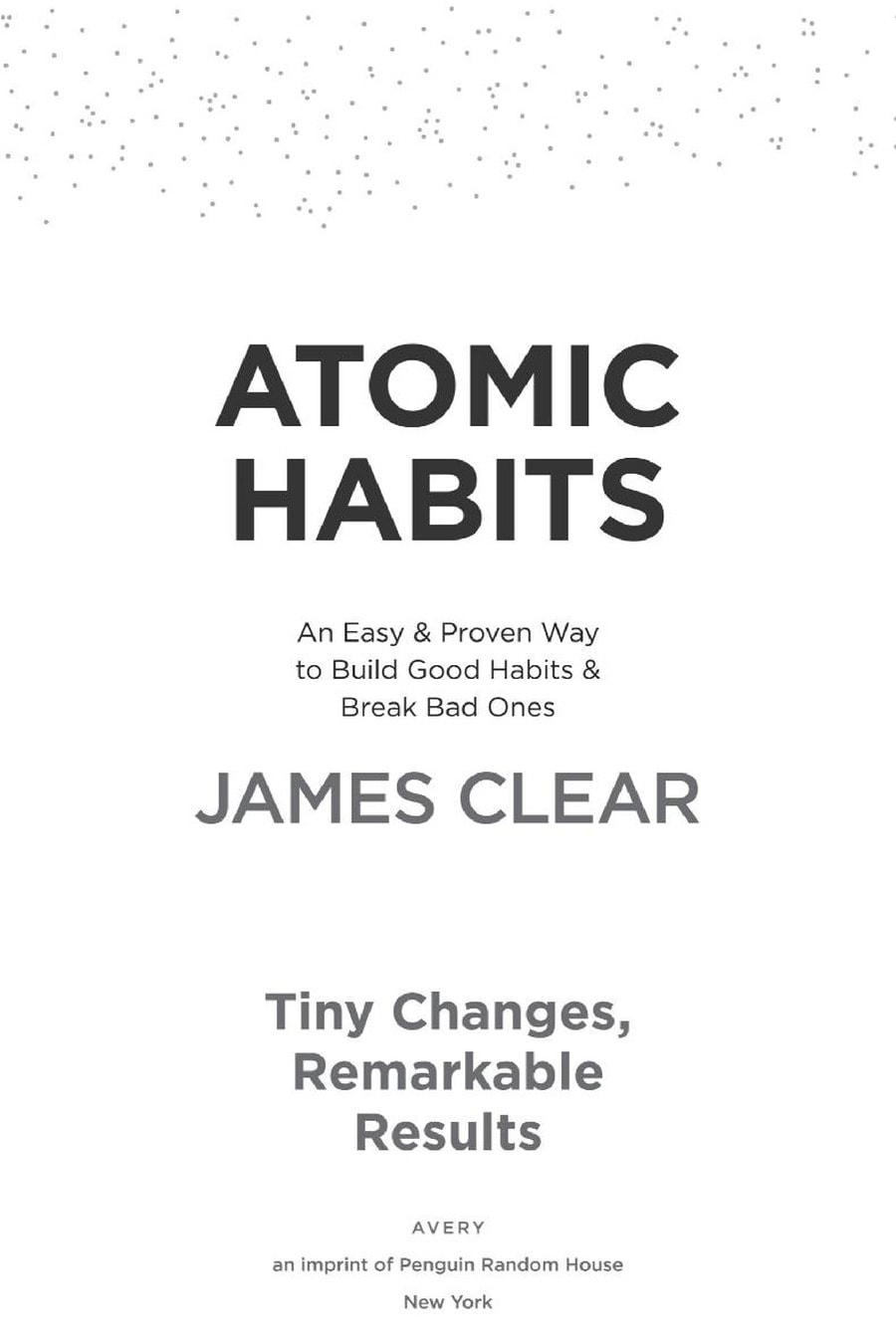
Atomic Habits by James Clear explores the power of small, incremental changes in behavior and how they can lead to significant personal transformation over time. Clear, a writer and speaker focused on habits and decision-making, presents a framework for understanding how habits work and offers practical strategies for building good habits and breaking bad ones. This Lexicon distills the key ideas from the original work into concise prose, making it easier for readers to grasp the essential concepts and apply them in their lives.
Editions

X-Ray
The author and narrator who shares personal experiences and research to explain the principles of habit formation.
A primary care physician whose study on altering a hospital cafeteria environment is cited to illustrate the power of environmental cues.
A psychologist whose equation (B = f(P,E)) is referenced to explain that behavior is a function of the person in their environment.
A historical figure whose extreme commitment device (locking away clothes) is used as an anecdote to illustrate making bad habits difficult.
About Atomic Habits (Comprehensive Summary)
Chapter Summaries
- 1
- Chapter 1 introduces the concept of atomic habits, emphasizing their surprising power and the significant impact of small, consistent changes over time. Clear uses his personal injury story and the British Cycling team's success to illustrate how 1% improvements compound to yield remarkable outcomes. The chapter distinguishes between goals and systems, introduces the 'Plateau of Latent Potential,' and outlines the Four Laws of Behavior Change as a foundational framework.
- 2
- This chapter delves into the first law of behavior change: 'Make It Obvious,' focusing on how cues trigger habits and how to design environments to facilitate good habits. Clear introduces habit stacking and implementation intentions, providing a formula for specific action. Examples like Anne Thorndike's cafeteria study and Kurt Lewin's equation demonstrate the profound influence of environmental cues on behavior, advocating for strategic placement of reminders and redesigning spaces.
- 3
- Chapter 3 introduces the 'Two-Minute Rule,' emphasizing that new habits should take less than two minutes to start, thereby reducing friction and reinforcing identity. It discusses habit shaping, gradually increasing complexity, and the use of commitment devices, like Victor Hugo's anecdote, to make bad habits more difficult. The chapter also highlights leveraging automation to make good habits inevitable and bad habits impractical, reducing the need for willpower.
Key Themes
- The Power of Small Changes and Compounding
- This theme emphasizes that tiny, incremental improvements, even as small as 1% daily, accumulate over time to yield significant, often exponential, results. It challenges the common belief that only monumental efforts lead to success, highlighting the long-term impact of consistent, minor adjustments.
- Systems Over Goals
- Clear argues that focusing on the processes and systems that lead to desired outcomes is more effective than fixating solely on the outcomes themselves. This shift in perspective provides a practical and sustainable framework for achieving and maintaining progress, ensuring continuous improvement rather than just reaching a single endpoint.
- Environmental Design as a Habit Facilitator
- The book highlights the crucial role of one's environment in shaping behavior, advocating for the intentional design of spaces and cues. By making good habits obvious and easy, and bad habits invisible and difficult, individuals can reduce reliance on willpower and create a context that naturally supports positive actions.
Characters
- James Clear(narrator)
- The author and narrator who shares personal experiences and research to explain the principles of habit formation.
- Anne Thorndike(supporting)
- A primary care physician whose study on altering a hospital cafeteria environment is cited to illustrate the power of environmental cues.
- Kurt Lewin(supporting)
- A psychologist whose equation (B = f(P,E)) is referenced to explain that behavior is a function of the person in their environment.
- Victor Hugo(supporting)
- A historical figure whose extreme commitment device (locking away clothes) is used as an anecdote to illustrate making bad habits difficult.
Link to this book
Add a free, dofollow link to Lex on your blog, forum, syllabus, or reading list.

<a href="https://lex-books.com/book/atomic-habits-comprehensive-summary-951f68a4-ca0d-569e-88af-1014911a9409"><img src="https://lex-books.com/badges/read-on-lex.svg" alt="Read Atomic Habits (Comprehensive Summary) by James Clear free on Lex" width="160" height="40"></a>[](https://lex-books.com/book/atomic-habits-comprehensive-summary-951f68a4-ca0d-569e-88af-1014911a9409)[url=https://lex-books.com/book/atomic-habits-comprehensive-summary-951f68a4-ca0d-569e-88af-1014911a9409][img]https://lex-books.com/badges/read-on-lex.svg[/img][/url]Read Atomic Habits (Comprehensive Summary) by James Clear free on Lex: https://lex-books.com/book/atomic-habits-comprehensive-summary-951f68a4-ca0d-569e-88af-1014911a9409Cite this book
Reading this edition for a paper or guide? Copy a citation.
Clear, James. Atomic Habits (Comprehensive Summary). Lex, lex-books.com/book/atomic-habits-comprehensive-summary-951f68a4-ca0d-569e-88af-1014911a9409.Clear, J. (n.d.). Atomic Habits (Comprehensive Summary). Lex. https://lex-books.com/book/atomic-habits-comprehensive-summary-951f68a4-ca0d-569e-88af-1014911a9409Clear, James. Atomic Habits (Comprehensive Summary). Lex. https://lex-books.com/book/atomic-habits-comprehensive-summary-951f68a4-ca0d-569e-88af-1014911a9409.