Aristophanes
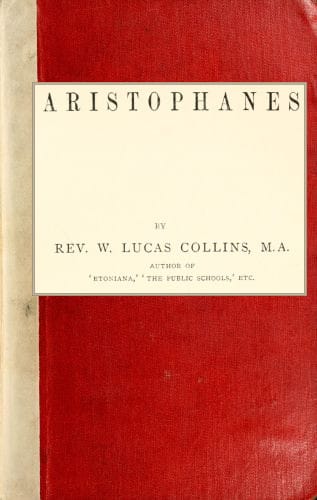
Aristophanes was the bad boy of Athenian theater. While his contemporaries wrote tragedies about fate and the gods, this comic playwright turned the full force of his wit against the most powerful men in the city, mocking politicians, generals, and even Socrates. His plays burst with obscene jokes, daring fantasy, and an audacious political imagination that made audiences laugh while thinking seriously about war, justice, and power. W. Lucas Collins, writing in the late nineteenth century, offers an elegant introduction to this most vital of ancient dramatists. He traces Aristophanes' career through the great comedies, The Clouds, The Wasps, The Birds, The Frogs, explaining how a playwright could ridicule Athenian leaders in the middle of a devastating war and survive to write another day. This is scholarly writing with personality, tracing the boundaries between comedy and citizenship in a democracy that learned to laugh at itself.
Editions
X-Ray
“are influenced in their verdicts much more by prejudice or favour, or greed of gain, or anger, or indignation, or pleasure, or hope or fear, or by misapprehension, or by some excitement of their feelings, than either by the facts of the case, or by established precedents, or by any rules or principles whatever either of law or equity".””
— W. Lucas Collins
“Men are influenced in their verdicts much more by prejudice or favour, or greed of gain, or anger, or indignation, or pleasure, or hope or fear, or by misapprehension, or by some excitement of their feelings, than either by the facts of the case, or by established precedents, or by any rules or principles whatever either of law or equity".””
— W. Lucas Collins
“existed, furnished the choicest modern””
— W. Lucas Collins
“Sound, sound the clarion, fill the fife! To all the sensual world proclaim, One crowded hour of glorious life Is worth an age without a name". Do not then (concludes the Stoic) take good words in your mouth, and prate before applauding citizens of honour, duty, and so forth, while you make your private lives a mere selfish calculation of expediency. We were surely born for nobler ends than this, and none who is worthy the name of a man would subscribe to doctrines which destroy all honour and all chivalry. The heroes of old time won their immortality not by weighing pleasures and pains in the balance, but by being prodigal of their lives, doing and enduring all things for the sake of their fellow-men.””
— W. Lucas Collins
Link to this book
Add a free, dofollow link to Lex on your blog, forum, syllabus, or reading list.

<a href="https://lex-books.com/book/aristophanes-1b4d973e-76a5-4759-b8ce-505de03a755b"><img src="https://lex-books.com/badges/read-on-lex.svg" alt="Read Aristophanes by W. Lucas Collins free on Lex" width="160" height="40"></a>[](https://lex-books.com/book/aristophanes-1b4d973e-76a5-4759-b8ce-505de03a755b)[url=https://lex-books.com/book/aristophanes-1b4d973e-76a5-4759-b8ce-505de03a755b][img]https://lex-books.com/badges/read-on-lex.svg[/img][/url]Read Aristophanes by W. Lucas Collins free on Lex: https://lex-books.com/book/aristophanes-1b4d973e-76a5-4759-b8ce-505de03a755bCite this book
Reading this edition for a paper or guide? Copy a citation.
Collins, W. Lucas. Aristophanes. Lex, lex-books.com/book/aristophanes-1b4d973e-76a5-4759-b8ce-505de03a755b.Collins, W. L. (n.d.). Aristophanes. Lex. https://lex-books.com/book/aristophanes-1b4d973e-76a5-4759-b8ce-505de03a755bCollins, W. Lucas. Aristophanes. Lex. https://lex-books.com/book/aristophanes-1b4d973e-76a5-4759-b8ce-505de03a755b.