A treatise on the art of making good wholesome bread of wheat, oats, rye,…
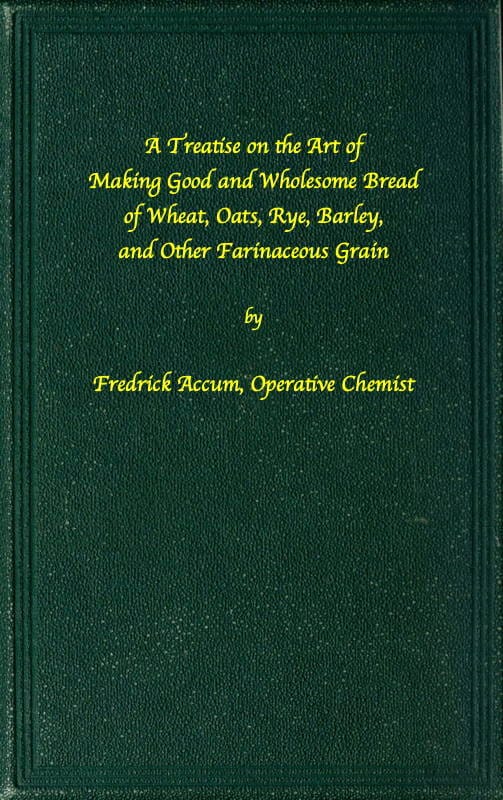
Before there was nutrition science, there was Friedrich Christian Accum, and in this remarkable early treatise, he turned his keen chemist's eye on the most fundamental of foods: bread. Written in the early 19th century when chemistry itself was still mapping its own frontiers, this work represents one of the first rigorous scientific examinations of what exactly happens when flour, water, and heat transform into loaf. Accum dissects the molecular constitution of wheat, oats, rye, barley, rice, and potatoes with genuine scientific curiosity, explaining not just how to make bread but why certain grains rise and others fail, why yeast creates light porous loaves while other methods produce dense ones, and how different cultures across the world solved the same fundamental problem of turning grain into sustenance. This is food chemistry before the term even felt comfortable, a window into a moment when scientists were still discovering the basic building blocks of what we eat. For anyone curious about the science hidden in their sandwich, the history of how we learned to nourish ourselves, or the remarkable story of bread itself, Accum's treatise remains surprisingly absorbing.
Editions
Link to this book
Add a free, dofollow link to Lex on your blog, forum, syllabus, or reading list.

<a href="https://lex-books.com/book/a-treatise-on-the-art-of-making-good-wholesome-bread-of-wheat-oats-rye-391bdda8-45c4-4aa1-a4ed-d337c4131e27"><img src="https://lex-books.com/badges/read-on-lex.svg" alt="Read A treatise on the art of making good wholesome bread of wheat, oats, rye,… by Friedrich Christian Accum free on Lex" width="160" height="40"></a>[](https://lex-books.com/book/a-treatise-on-the-art-of-making-good-wholesome-bread-of-wheat-oats-rye-391bdda8-45c4-4aa1-a4ed-d337c4131e27)[url=https://lex-books.com/book/a-treatise-on-the-art-of-making-good-wholesome-bread-of-wheat-oats-rye-391bdda8-45c4-4aa1-a4ed-d337c4131e27][img]https://lex-books.com/badges/read-on-lex.svg[/img][/url]Read A treatise on the art of making good wholesome bread of wheat, oats, rye,… by Friedrich Christian Accum free on Lex: https://lex-books.com/book/a-treatise-on-the-art-of-making-good-wholesome-bread-of-wheat-oats-rye-391bdda8-45c4-4aa1-a4ed-d337c4131e27Cite this book
Reading this edition for a paper or guide? Copy a citation.
Accum, Friedrich Christian. A treatise on the art of making good wholesome bread of wheat, oats, rye,…. Lex, lex-books.com/book/a-treatise-on-the-art-of-making-good-wholesome-bread-of-wheat-oats-rye-391bdda8-45c4-4aa1-a4ed-d337c4131e27.Accum, F. C. (n.d.). A treatise on the art of making good wholesome bread of wheat, oats, rye,…. Lex. https://lex-books.com/book/a-treatise-on-the-art-of-making-good-wholesome-bread-of-wheat-oats-rye-391bdda8-45c4-4aa1-a4ed-d337c4131e27Accum, Friedrich Christian. A treatise on the art of making good wholesome bread of wheat, oats, rye,…. Lex. https://lex-books.com/book/a-treatise-on-the-art-of-making-good-wholesome-bread-of-wheat-oats-rye-391bdda8-45c4-4aa1-a4ed-d337c4131e27.