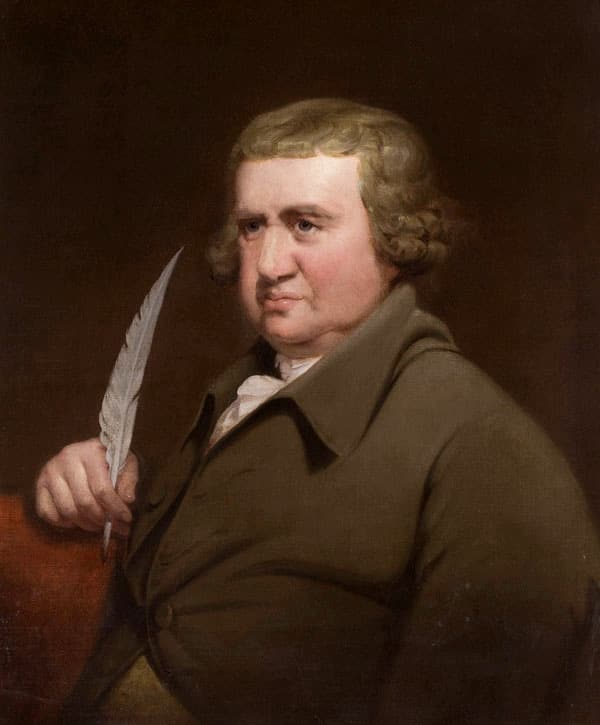
Erasmus Darwin
Erasmus Darwin was an influential English physician and a prominent figure of the Midlands Enlightenment, known for his contributions to natural philosophy and poetry. As a member of the esteemed Darwin–Wedgwood family, he was the grandfather of Charles Darwin, which positioned him at the forefront of early evolutionary thought. His poetic works often intertwined themes of natural history and evolution, reflecting his belief in the interconnectedness of all life forms. Notable poems such as 'The Botanic Garden' and 'Zoonomia' articulated ideas about the development of species and the processes of life, laying groundwork for future scientific inquiry. Beyond his literary pursuits, Darwin was a founding member of the Lunar Society of Birmingham, where he engaged with other leading thinkers and industrialists of his time. His advocacy for abolition and innovative ideas in various fields, including medicine and invention, showcased his commitment to social progress and scientific advancement. Erasmus Darwin's legacy endures not only through his writings but also through the profound impact he had on the scientific community, influencing the thoughts of his grandson Charles and shaping the discourse around evolution and natural history.
Famous Quotes
View all 3 quotes“Birth after birth the line unchanging runs, And fathers live transmitted in their sons; Each passing year beholds the unvarying kinds, The same their manners, and the same their minds:Till, as erelong successive buds decay, And insect-shoals successive pass away, Increasing wants the pregnant parent vex With the fond wish to form a softer sex. ..”
“Organic life beneath the shoreless waves Was born and rais’d in Ocean’s pearly caves First forms minute, unseen by spheric glass, Move on the mud, or pierce the watery mass; These, as successive generations bloom, New powers acquire, and larger limbs assume; Whence countless groups of vegetation spring, And breathing realms of fin, and feet and wing.”
“Soon shall thy arm, UNCONQUER'D STEAM! afar Drag the slow barge, or drive the rapid car; Or on wide-waving wings expanded bear The flying-chariot through the fields of air.”
Books from the author


Link to this page
Add a free, dofollow link to Lex on your blog, forum, syllabus, or reading list.

<a href="https://lex-books.com/author/erasmus-darwin"><img src="https://lex-books.com/badges/read-on-lex.svg" alt="Erasmus Darwin on Lex" width="160" height="40"></a>[](https://lex-books.com/author/erasmus-darwin)[url=https://lex-books.com/author/erasmus-darwin][img]https://lex-books.com/badges/read-on-lex.svg[/img][/url]Erasmus Darwin on Lex: https://lex-books.com/author/erasmus-darwin