The Temple of Nature; Or, The Origin of Society: A Poem, with Philosophical Notes
1803
The Temple of Nature; Or, The Origin of Society: A Poem, with Philosophical Notes
1803
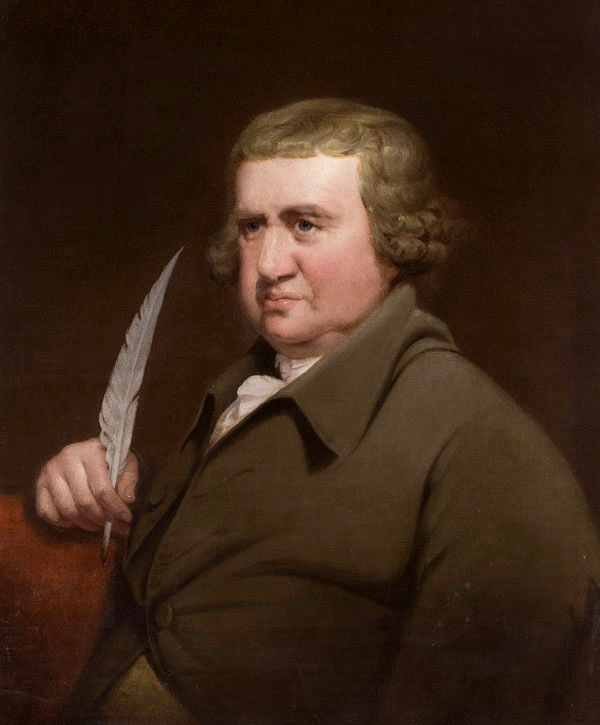
The grandfather of Charles Darwin wrote this ambitious philosophical poem decades before "On the Origin of Species" would revolutionize how we understand life on Earth. Erasmus Darwin, a physician, poet, and natural philosopher, constructed in verse what his grandson would later prove with evidence: that life transforms across generations, that competition drives adaptation, and that the diversity of form we see in the natural world emerges from simpler origins. The poem unfolds in grand cantos, moving from the primordial state through the development of life, love, and finally human society. Darwin invokes Nature as a divine force, using the framework of Eden and the first humans to explore his theories about reproduction, growth, and the great chain of being. The philosophical notes that accompany the verse are not mere appendages but substantive scientific speculations, drawing on Linnaeus, ancient philosophy, and his own medical observations. What makes this poem remarkable is its position at a crossroads. Here is a brilliant mind reaching toward evolutionary truth while still dressed in the mythological language of Eden and the Great Chain of Being. It is proto-science rendered in the poetic conventions of the Enlightenment, and it shows one of the most important intellectual transitions in history happening in real time.
Editions
X-Ray
“Birth after birth the line unchanging runs,And fathers live transmitted in their sons;Each passing year beholds the unvarying kinds,The same their manners, and the same their minds:Till, as erelong successive buds decay,And insect-shoals successive pass away,Increasing wants the pregnant parent vexWith the fond wish to form a softer sex. ..””
— Erasmus Darwin
“ORGANIC LIFE beneath the shoreless wavesWas born and nurs'd in Ocean's pearly caves;First, forms minute, unseen by spheric glass,Move on the mud, or pierce the watery mass;These, as successive generations bloom,New powers acquire, and larger limbs assume;Whence countless groups of vegetation spring,And breathing realms of fin, and feet, and wing.Thus the tall Oak, the giant of the wood,Which bears Britannia's thunders on the flood;The Whale, unmeasured monster of the main,The lordly Lion, monarch of the plain,The Eagle soaring in the realms of air,Whose eye undazzled drinks the solar glare,Imperious man, who rules the bestial crowd,Of language, reason, and reflection proud,With brow erect, who scorns this earthy sod,And styles himself the image of his God;Arose from rudiments of form and sense,An embryon point, or microscopic ens!””
— Erasmus Darwin
“It is often hazardous to marry an heiress, as she is not unfrequently the last of a diseased family.””
— Erasmus Darwin
“By firm immutable immortal laws Impress'd on Nature by the GREAT FIRST CAUSE,Say, MUSE! how rose from elemental strifeOrganic forms, and kindled into life;How Love and Sympathy with potent charmWarm the cold heart, the lifted hand disarm;Allure with pleasures, and alarm with pains,And bind Society in golden chains.””
— Erasmus Darwin
“Each pregnant Oak ten thousand acorns formsProfusely scatter'd by autumnal storms;Ten thousand seeds each pregnant poppy shedsProfusely scatter'd from its waving heads;The countless Aphides, prolific tribe,With greedy trunks the honey'd sap imbibe;Swarm on each leaf with eggs or embryons big,And pendent nations tenant every twig ...”
— Erasmus Darwin
Link to this book
Add a free, dofollow link to Lex on your blog, forum, syllabus, or reading list.

<a href="https://lex-books.com/book/the-temple-of-nature-or-the-origin-of-society-a-poem-with-philosophical-notes-7ec35ebc-00d3-4a69-81ea-6f02161f677e"><img src="https://lex-books.com/badges/read-on-lex.svg" alt="Read The Temple of Nature; Or, The Origin of Society: A Poem, with Philosophical Notes by Erasmus Darwin free on Lex" width="160" height="40"></a>[](https://lex-books.com/book/the-temple-of-nature-or-the-origin-of-society-a-poem-with-philosophical-notes-7ec35ebc-00d3-4a69-81ea-6f02161f677e)[url=https://lex-books.com/book/the-temple-of-nature-or-the-origin-of-society-a-poem-with-philosophical-notes-7ec35ebc-00d3-4a69-81ea-6f02161f677e][img]https://lex-books.com/badges/read-on-lex.svg[/img][/url]Read The Temple of Nature; Or, The Origin of Society: A Poem, with Philosophical Notes by Erasmus Darwin free on Lex: https://lex-books.com/book/the-temple-of-nature-or-the-origin-of-society-a-poem-with-philosophical-notes-7ec35ebc-00d3-4a69-81ea-6f02161f677eCite this book
Reading this edition for a paper or guide? Copy a citation.
Darwin, Erasmus. The Temple of Nature; Or, The Origin of Society: A Poem, with Philosophical Notes. Lex, lex-books.com/book/the-temple-of-nature-or-the-origin-of-society-a-poem-with-philosophical-notes-7ec35ebc-00d3-4a69-81ea-6f02161f677e.Darwin, E. (1803). The Temple of Nature; Or, The Origin of Society: A Poem, with Philosophical Notes. Lex. https://lex-books.com/book/the-temple-of-nature-or-the-origin-of-society-a-poem-with-philosophical-notes-7ec35ebc-00d3-4a69-81ea-6f02161f677eDarwin, Erasmus. The Temple of Nature; Or, The Origin of Society: A Poem, with Philosophical Notes. Lex. https://lex-books.com/book/the-temple-of-nature-or-the-origin-of-society-a-poem-with-philosophical-notes-7ec35ebc-00d3-4a69-81ea-6f02161f677e.