Sir Gawain and the Green Knight
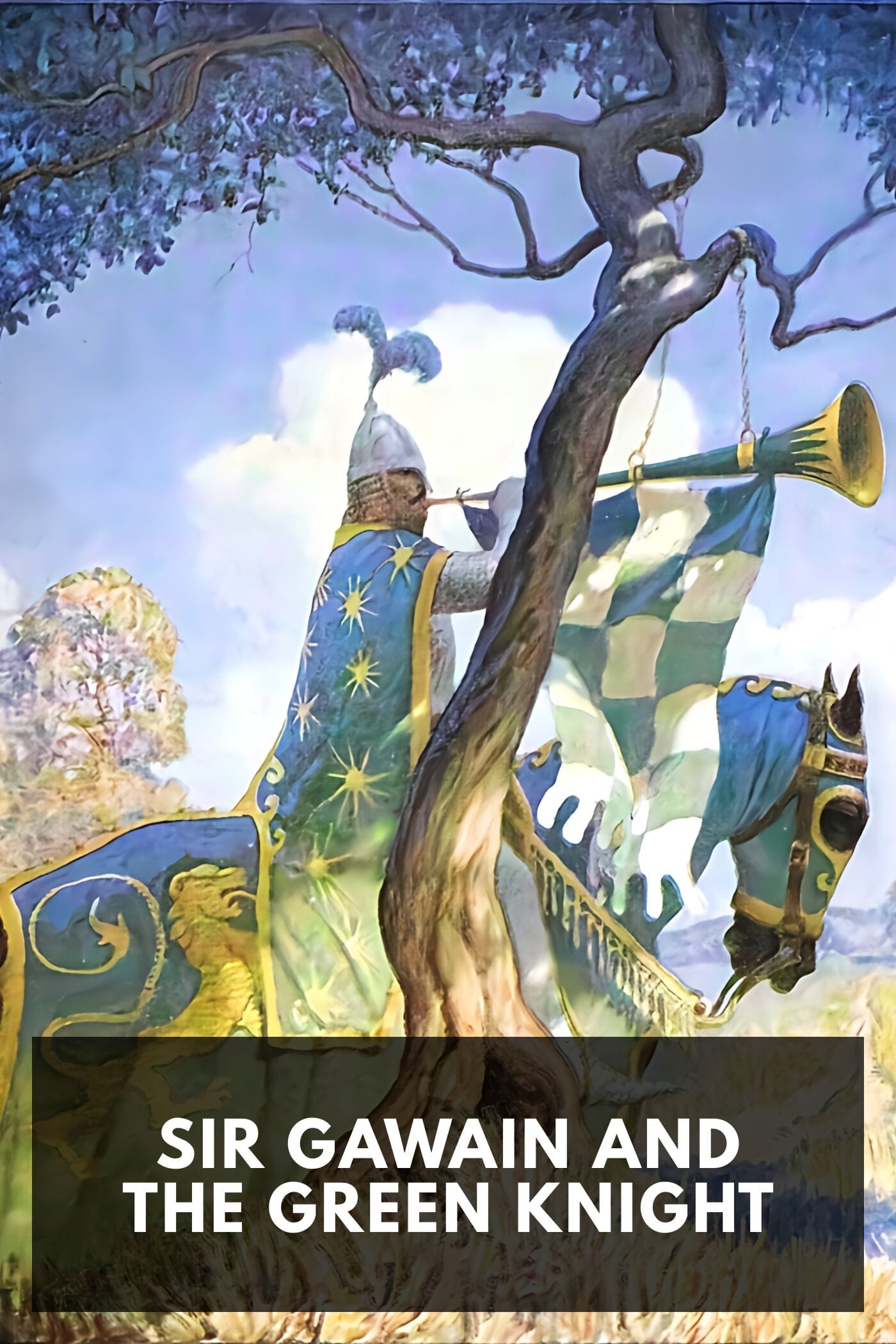
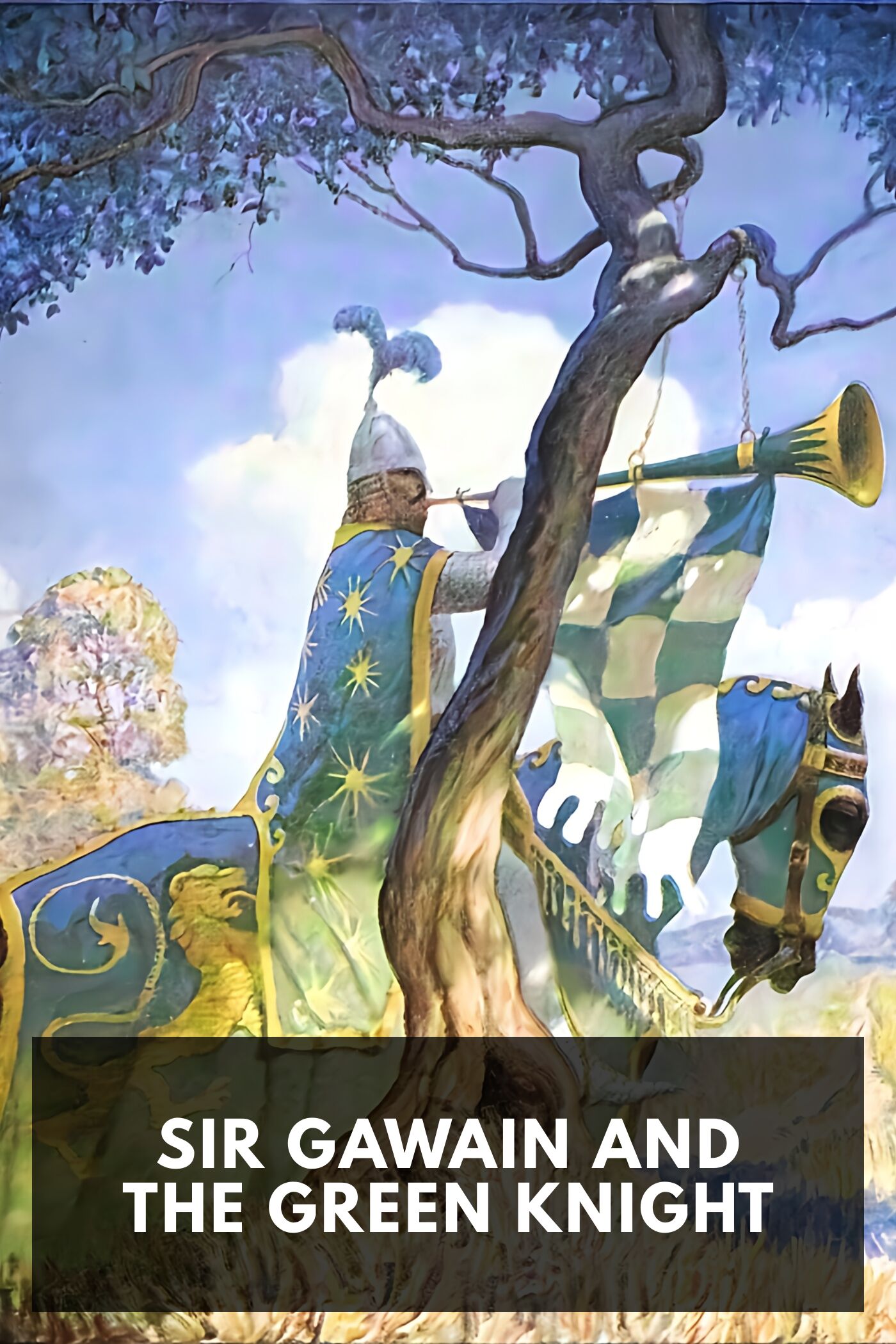
King Arthur’s court is celebrating a New Year’s feast when a mysterious knight suddenly appears at their table. His skin, hair, clothing, and even his horse are entirely green, and he carries a holly branch as well as a large axe, symbolizing both life and death. This Green Knight proposes a beheading game to test the courage and honor of Arthur’s knights: any knight may strike him with an axe, on the condition that the Green Knight may return the blow in one year and a day. To protect King Arthur, Sir Gawain, his nephew, accepts the challenge and beheads the Green Knight—only to watch the Green Knight calmly pick up his severed head and ride away astride his green horse. As the green giant rides away, he reminds Gawain to meet him at the Green Chapel the following year to receive his retribution. Sir Gawain and the Green Knight is a late 14th-century Middle English romance written by an unnamed poet now known as the Gawain Poet, who was likely from the northwest Midlands of England. The poem survives in a single manuscript, and reflects a blend of regional dialect, Christian morality, and courtly romance. Drawing on Arthurian legend, it centers on Sir Gawain, traditionally depicted as the ideal knight, while incorporating older Celtic folklore, especially the beheading game motif seen in Irish and Welsh tales. The work explores medieval chivalric values like honor, courage, and courtesy, but also questions their perfection by portraying human weakness. Through its combination of Christian symbolism, supernatural elements, and moral testing, the poem illustrates the cultural and literary influences that shaped late medieval England.
Editions

Link to this book
Add a free, dofollow link to Lex on your blog, forum, syllabus, or reading list.

<a href="https://lex-books.com/book/sir-gawain-and-the-green-knight-6073eb8a-9dc1-40ca-8f3f-ee65390b7998"><img src="https://lex-books.com/badges/read-on-lex.svg" alt="Read Sir Gawain and the Green Knight by Anonymous free on Lex" width="160" height="40"></a>[](https://lex-books.com/book/sir-gawain-and-the-green-knight-6073eb8a-9dc1-40ca-8f3f-ee65390b7998)[url=https://lex-books.com/book/sir-gawain-and-the-green-knight-6073eb8a-9dc1-40ca-8f3f-ee65390b7998][img]https://lex-books.com/badges/read-on-lex.svg[/img][/url]Read Sir Gawain and the Green Knight by Anonymous free on Lex: https://lex-books.com/book/sir-gawain-and-the-green-knight-6073eb8a-9dc1-40ca-8f3f-ee65390b7998Cite this book
Reading this edition for a paper or guide? Copy a citation.
Anonymous. Sir Gawain and the Green Knight. Lex, lex-books.com/book/sir-gawain-and-the-green-knight-6073eb8a-9dc1-40ca-8f3f-ee65390b7998.Anonymous (n.d.). Sir Gawain and the Green Knight. Lex. https://lex-books.com/book/sir-gawain-and-the-green-knight-6073eb8a-9dc1-40ca-8f3f-ee65390b7998Anonymous. Sir Gawain and the Green Knight. Lex. https://lex-books.com/book/sir-gawain-and-the-green-knight-6073eb8a-9dc1-40ca-8f3f-ee65390b7998.