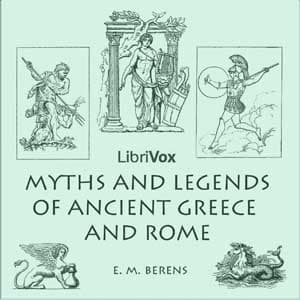
Myths and Legends of Ancient Greece and Rome
1880
This 1880 collection introduced generations of young readers to the dangerous, beautiful world of classical mythology. Berens wrote with clarity and directness that modern retellings often lose, presenting the great gods of Olympus, their petty feuds and overwhelming powers, alongside heroes who dared to challenge fate itself. The book moves from creation stories through the Trojan War's long shadow, pausing to introduce the strange beings that populated ancient imagination: satyrs and centaurs, the medusa's gaze, the Labyrinth's minotaur. What gives this volume its enduring charm is its earnestness. Berens believed these stories mattered, that understanding Zeus and Jupiter, Athena and Minerva, was essential to grasping the foundations of Western literature and thought. The illustrations add period flavor, but the real draw is encountering these myths in their relatively raw form, before a thousand adaptations softened their edges. For anyone building a foundation in classical literature, or wanting to remember why these stories have lasted three millennia, this remains a solid starting point.
Editions
X-Ray
“upon the many strange beliefs of the ancient Greeks, and the extraordinary number of gods they worshipped,””
— E. M. Berens
“Erebus (Darkness) and Nyx (Night), who formed a striking contrast to the cheerful light of heaven and the bright smiles of earth. Erebus reigned in that mysterious world below where no ray of sunshine, no gleam of daylight, nor vestige of health-giving terrestrial life ever appeared. Nyx, the sister of Erebus, represented Night, and was worshipped by the ancients with the greatest solemnity.””
— E. M. Berens
“Having discovered him[6] they gave full vent to their ecstatic delight by indulging in the most violent gesticulations, dancing, shouting, and, at the same time, wounding and gashing themselves in a frightful manner.””
— E. M. Berens
Link to this book
Add a free, dofollow link to Lex on your blog, forum, syllabus, or reading list.

<a href="https://lex-books.com/book/myths-and-legends-of-ancient-greece-and-rome-d61ffb58-517a-4a86-b9be-bdaecadbb3d6"><img src="https://lex-books.com/badges/read-on-lex.svg" alt="Read Myths and Legends of Ancient Greece and Rome by E. M. Berens free on Lex" width="160" height="40"></a>[](https://lex-books.com/book/myths-and-legends-of-ancient-greece-and-rome-d61ffb58-517a-4a86-b9be-bdaecadbb3d6)[url=https://lex-books.com/book/myths-and-legends-of-ancient-greece-and-rome-d61ffb58-517a-4a86-b9be-bdaecadbb3d6][img]https://lex-books.com/badges/read-on-lex.svg[/img][/url]Read Myths and Legends of Ancient Greece and Rome by E. M. Berens free on Lex: https://lex-books.com/book/myths-and-legends-of-ancient-greece-and-rome-d61ffb58-517a-4a86-b9be-bdaecadbb3d6Cite this book
Reading this edition for a paper or guide? Copy a citation.
Berens, E. M.. Myths and Legends of Ancient Greece and Rome. Lex, lex-books.com/book/myths-and-legends-of-ancient-greece-and-rome-d61ffb58-517a-4a86-b9be-bdaecadbb3d6.Berens, E. M. (1880). Myths and Legends of Ancient Greece and Rome. Lex. https://lex-books.com/book/myths-and-legends-of-ancient-greece-and-rome-d61ffb58-517a-4a86-b9be-bdaecadbb3d6Berens, E. M.. Myths and Legends of Ancient Greece and Rome. Lex. https://lex-books.com/book/myths-and-legends-of-ancient-greece-and-rome-d61ffb58-517a-4a86-b9be-bdaecadbb3d6.