Forestry for Farmers

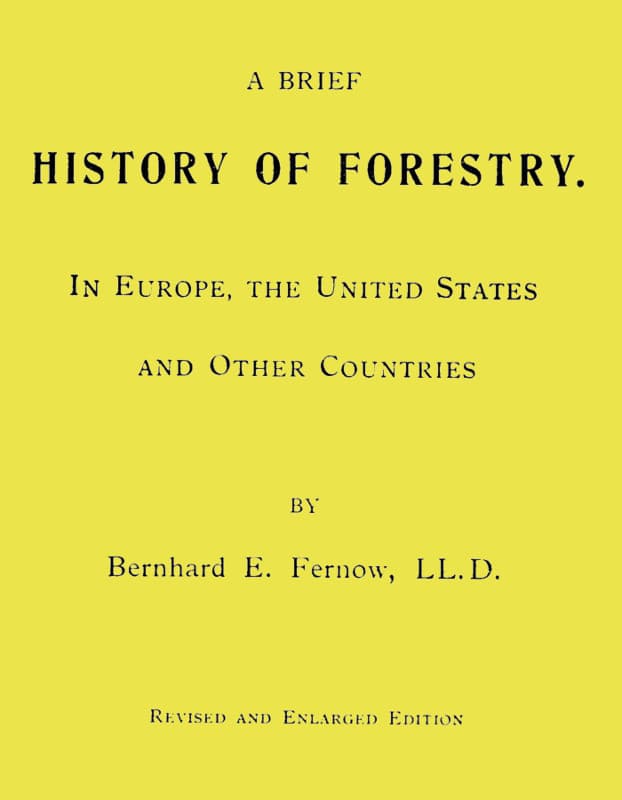
One of the earliest American guides to putting forests in service of the family farm, this 1890s volume addresses farmers who own wood lots or timber tracts and wish to manage them wisely, or plant new forests on marginal land. B. E. Fernow, who would become the founding dean of American forestry education, walks his readers through five interconnected lessons: how trees actually grow (the biology), when and how to plant new timber, how to encourage natural forest regeneration, how to harvest and manage an existing wood lot for sustained yield, and finally, why forests and farms belong together. Fernow understood what many farmers of his era were only beginning to suspect: that a healthy wood lot could protect soil from erosion, provide a renewable source of fuel and building material, and become a quiet revenue stream for generations. Written with conditions in the northeastern United States as its primary lens but grounded in principles that translate anywhere, this book captures a pivotal moment when American agriculture was learning to see trees not as obstacles to be cleared but as partners in sustainable land use. For the modern reader, it serves as both a historical artifact and a surprisingly practical manual, fascinating for anyone curious about where American forestry began.
Editions

Link to this book
Add a free, dofollow link to Lex on your blog, forum, syllabus, or reading list.

<a href="https://lex-books.com/book/forestry-for-farmers-6b952b52-b30b-4bf0-848c-9f0b7944b18a"><img src="https://lex-books.com/badges/read-on-lex.svg" alt="Read Forestry for Farmers by B. E. Fernow free on Lex" width="160" height="40"></a>[](https://lex-books.com/book/forestry-for-farmers-6b952b52-b30b-4bf0-848c-9f0b7944b18a)[url=https://lex-books.com/book/forestry-for-farmers-6b952b52-b30b-4bf0-848c-9f0b7944b18a][img]https://lex-books.com/badges/read-on-lex.svg[/img][/url]Read Forestry for Farmers by B. E. Fernow free on Lex: https://lex-books.com/book/forestry-for-farmers-6b952b52-b30b-4bf0-848c-9f0b7944b18aCite this book
Reading this edition for a paper or guide? Copy a citation.
Fernow, B. E.. Forestry for Farmers. Lex, lex-books.com/book/forestry-for-farmers-6b952b52-b30b-4bf0-848c-9f0b7944b18a.Fernow, B. E. (n.d.). Forestry for Farmers. Lex. https://lex-books.com/book/forestry-for-farmers-6b952b52-b30b-4bf0-848c-9f0b7944b18aFernow, B. E.. Forestry for Farmers. Lex. https://lex-books.com/book/forestry-for-farmers-6b952b52-b30b-4bf0-848c-9f0b7944b18a.