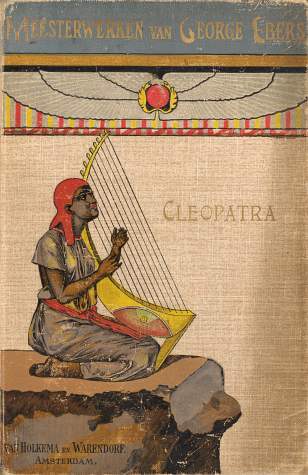
Cleopatra: Historische Roman Van George Ebers
1894
She ruled the richest kingdom in the world and brought two of Rome's most powerful men to their knees. Cleopatra, the last Pharaoh of Egypt, was neither the beauty of legend nor the villain of Roman propaganda but something far more dangerous: a shrewd strategist who wielded seduction like a sword and politics like poetry. Georg Ebers, writing in the late 19th century with the benefit of archaeological discovery and classical sources, reconstructs the Alexandria of her time in meticulous detail: its decadent court, its political conspiracies, its desperate gamble to preserve Egyptian independence against the rising tide of Rome. The novel follows her entanglement with both Julius Caesar and Mark Antony, men who surrendered their empires, their armies, and finally their honor to follow her. What unfolds is a tragedy written in the language of power and desire, where every triumph contains the seed of destruction and the only question is which emperor will fall first. Ebers gives us a Cleopatra who thinks three moves ahead while Rome thinks one, a woman who understood that the battlefield of the bedroom could decide the fate of nations.
Editions
Link to this book
Add a free, dofollow link to Lex on your blog, forum, syllabus, or reading list.

<a href="https://lex-books.com/book/cleopatra-historische-roman-van-george-ebers-366c302b-2011-4d60-b499-66791b68e3c5"><img src="https://lex-books.com/badges/read-on-lex.svg" alt="Read Cleopatra: Historische Roman Van George Ebers by Georg Ebers free on Lex" width="160" height="40"></a>[](https://lex-books.com/book/cleopatra-historische-roman-van-george-ebers-366c302b-2011-4d60-b499-66791b68e3c5)[url=https://lex-books.com/book/cleopatra-historische-roman-van-george-ebers-366c302b-2011-4d60-b499-66791b68e3c5][img]https://lex-books.com/badges/read-on-lex.svg[/img][/url]Read Cleopatra: Historische Roman Van George Ebers by Georg Ebers free on Lex: https://lex-books.com/book/cleopatra-historische-roman-van-george-ebers-366c302b-2011-4d60-b499-66791b68e3c5Cite this book
Reading this edition for a paper or guide? Copy a citation.
Ebers, Georg. Cleopatra: Historische Roman Van George Ebers. Lex, lex-books.com/book/cleopatra-historische-roman-van-george-ebers-366c302b-2011-4d60-b499-66791b68e3c5.Ebers, G. (1894). Cleopatra: Historische Roman Van George Ebers. Lex. https://lex-books.com/book/cleopatra-historische-roman-van-george-ebers-366c302b-2011-4d60-b499-66791b68e3c5Ebers, Georg. Cleopatra: Historische Roman Van George Ebers. Lex. https://lex-books.com/book/cleopatra-historische-roman-van-george-ebers-366c302b-2011-4d60-b499-66791b68e3c5.