
Omar Khayyam
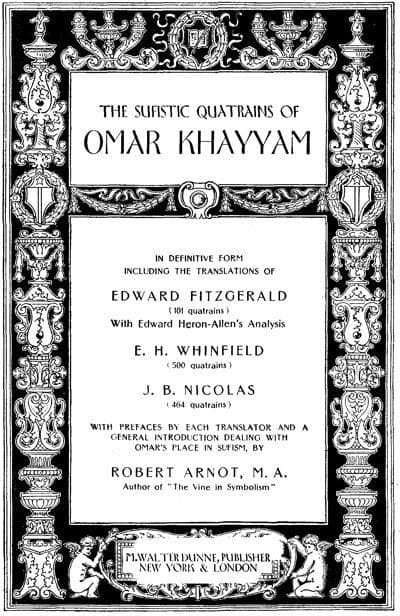
Omar Khayyam was a Persian polymath renowned for his contributions to poetry, mathematics, and astronomy. Born in Nishapur, he became famous primarily for his quatrains, known as the 'Rubaiyat,' which reflect on the nature of existence, love, and the passage of time. His poetry is characterized by its philosophical depth and often explores themes of fate and the fleeting nature of life, making it resonate across cultures and centuries. The 'Rubaiyat' was later popularized in the West by Edward FitzGerald's translation in the 19th century, which introduced Khayyam's contemplative verses to a broader audience and solidified his place in literary history. In addition to his poetic achievements, Khayyam made significant advancements in mathematics, particularly in algebra, where he contributed to the development of cubic equations. His work in astronomy led to the creation of a more accurate solar calendar, which was ahead of its time. Khayyam's legacy is multifaceted; he is celebrated not only as a poet but also as a thinker who bridged the worlds of science and literature. His influence extends beyond Persian literature, impacting writers and philosophers worldwide, and his quatrains continue to be cherished for their universal themes and lyrical beauty.
Famous Quotes
View all 3 quotes“Be happy for this moment. This moment is your life.”
“Drink wine. This is life eternal. This is all that youth will give you. It is the season for wine, roses and drunken friends. Be happy for this moment. This moment is your life.”
“The Moving Finger writes; and, having writ, Moves on: nor all thy Piety nor Wit Shall lure it back to cancel half a Line, Nor all thy Tears wash out a Word of it.”
Books from the author







Link to this page
Add a free, dofollow link to Lex on your blog, forum, syllabus, or reading list.

<a href="https://lex-books.com/author/omar-khayyam"><img src="https://lex-books.com/badges/read-on-lex.svg" alt="Omar Khayyam on Lex" width="160" height="40"></a>[](https://lex-books.com/author/omar-khayyam)[url=https://lex-books.com/author/omar-khayyam][img]https://lex-books.com/badges/read-on-lex.svg[/img][/url]Omar Khayyam on Lex: https://lex-books.com/author/omar-khayyam