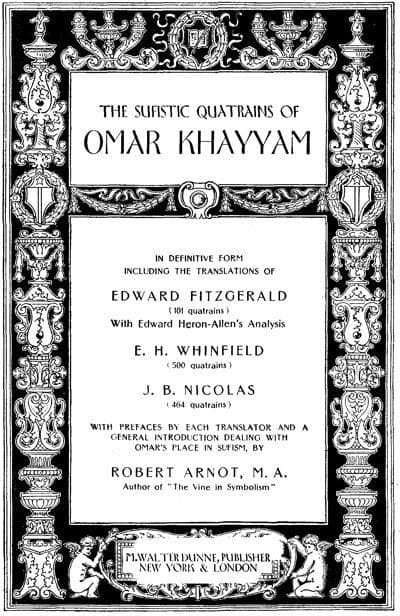
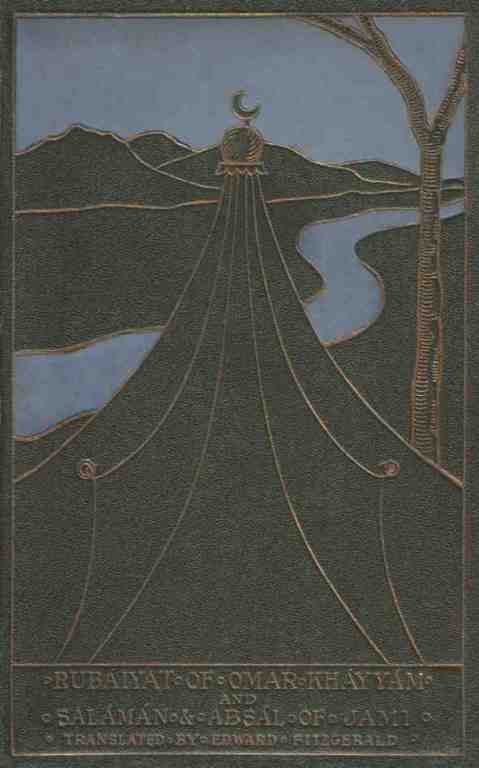
Rubáiyát of Omar Khayyam, Rendered into English Verse
1851
Rubáiyát of Omar Khayyam, Rendered into English Verse
1851
Translated by Edward FitzGerald
These 110 quatrains contain more philosophy than most libraries. Written by the 11th-century Persian polymath Omar Khayyám and translated into English by Edward FitzGerald in 1859, they form a sustained meditation on time, pleasure, and the void. The voice is unmistakable: wise, weary, and defiant, urging readers to drink wine, love deeply, and abandon the pretensions of the afterlife. Each four-line stanza stands alone as a diamond of thought, yet together they build an argument for embracing the present moment before consciousness dissolves into dust. The imagery moves from tavern mornings to ruined tombs, from roses to rotting graves, always returning to one unanswerable question: how should we live knowing we will die? This is not, properly speaking, a philosophy book. It is a manual for living deliberately, disguised as wine poetry. The translator's achievement lies in capturing not just meaning but music, the particular lilt and weight of English that makes these lines feel inevitable, as though they could only ever have been written in this tongue.
Editions
X-Ray
“Be happy for this moment. This moment is your life.””
— Omar Khayyam
“Drink wine. This is life eternal. This is all that youth will give you. It is the season for wine, roses and drunken friends. Be happy for this moment. This moment is your life.””
— Omar Khayyam
“To wisely live your life, you don't need to know muchJust remember two main rules for the beginning:You better starve, than eat whateverAnd better be alone, than with whoever.””
— Omar Khayyam
“Oh threats of Hell and Hopes of Paradise!One thing at least is certain - Life flies;One thing is certain and the rest is Lies -The Flower that once has blown forever dies.””
— Omar Khayyam
“As far as you can avoid it, do not give grief to anyone. Never inflict your rage on another. If you hope for eternal rest, feel the pain yourself; but don’t hurt others.””
— Omar Khayyam
“And do you think that unto such as youA maggot-minded, starved, fanatic crewGod gave a secret, and denied it me?Well, well”
— Omar Khayyam
“Your hand can seize today, but not tomorrow; and thoughts of your tomorrow are nothing but desire. Don’t waste this breath, if your heart isn’t crazy, since "the rest of your life" won’t last forever.””
— Omar Khayyam
“Beyond the earth,beyond the farthest skiesI try to find Heaven and Hell.Then I hear a solemn voice that says:"Heaven and hell are inside.””
— Omar Khayyam
“How sad, a heart thatdoes not know how to love, thatdoes not know what it is to be drunk with love.If you are not in love, how can you enjoythe blinding light of the sun,the soft light of the moon?””
— Omar Khayyam
Link to this book
Add a free, dofollow link to Lex on your blog, forum, syllabus, or reading list.

<a href="https://lex-books.com/book/rub-iy-t-of-omar-khayyam-rendered-into-english-verse-cdb60889-2851-475d-bd49-8a7c8c21d8bf"><img src="https://lex-books.com/badges/read-on-lex.svg" alt="Read Rubáiyát of Omar Khayyam, Rendered into English Verse by Omar Khayyam free on Lex" width="160" height="40"></a>[](https://lex-books.com/book/rub-iy-t-of-omar-khayyam-rendered-into-english-verse-cdb60889-2851-475d-bd49-8a7c8c21d8bf)[url=https://lex-books.com/book/rub-iy-t-of-omar-khayyam-rendered-into-english-verse-cdb60889-2851-475d-bd49-8a7c8c21d8bf][img]https://lex-books.com/badges/read-on-lex.svg[/img][/url]Read Rubáiyát of Omar Khayyam, Rendered into English Verse by Omar Khayyam free on Lex: https://lex-books.com/book/rub-iy-t-of-omar-khayyam-rendered-into-english-verse-cdb60889-2851-475d-bd49-8a7c8c21d8bfCite this book
Reading this edition for a paper or guide? Copy a citation.
Khayyam, Omar. Rubáiyát of Omar Khayyam, Rendered into English Verse. Lex, lex-books.com/book/rub-iy-t-of-omar-khayyam-rendered-into-english-verse-cdb60889-2851-475d-bd49-8a7c8c21d8bf.Khayyam, O. (1851). Rubáiyát of Omar Khayyam, Rendered into English Verse. Lex. https://lex-books.com/book/rub-iy-t-of-omar-khayyam-rendered-into-english-verse-cdb60889-2851-475d-bd49-8a7c8c21d8bfKhayyam, Omar. Rubáiyát of Omar Khayyam, Rendered into English Verse. Lex. https://lex-books.com/book/rub-iy-t-of-omar-khayyam-rendered-into-english-verse-cdb60889-2851-475d-bd49-8a7c8c21d8bf.