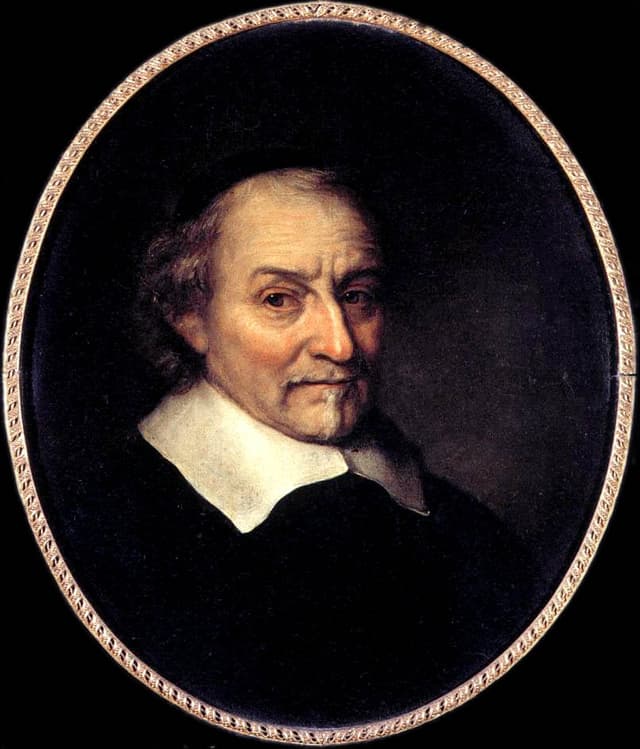
Joost van den Vondel
Joost van den Vondel was a prominent Dutch playwright, poet, and translator, widely recognized as the greatest writer in the Dutch language and a significant figure in Western literature. Born in Cologne to a Mennonite family that fled Antwerp, Vondel eventually settled in Amsterdam, where he became a central literary figure during the Dutch Golden Age. His literary career began in earnest with his involvement in a local Chamber of rhetoric, and he produced an extensive body of work that includes 33 plays, numerous poems, an epic poem, and translations of classical literature. Vondel's conversion to Catholicism in a predominantly Protestant society added a layer of complexity to his life and work, often reflected in his themes of faith and morality. Vondel's oeuvre is marked by a series of celebrated tragedies, particularly those written in the latter part of his life, such as "Lucifer," "Jephta," "Adam in ballingschap," and "Noach." Among these, "Lucifer" is often regarded as his masterpiece, showcasing his virtuosic command of language and dramatic structure. His poetry, too, is highly esteemed, noted for its stylistic brilliance and emotional depth, with notable works including "Het stockske van Oldenbarneveldt" and "Kinder-lijck," the latter reflecting on the loss of his son. Vondel's contributions to literature not only shaped Dutch literary tradition but also left a lasting legacy that influenced subsequent generations of writers and thinkers in Europe.
Famous Quotes
View all 1 quotes“Wat baat al 's mensen roem, indien zijn schoonheid smelt, En endelijk verwelkt, gelijk een bloem op 't veld?”
Books from the author
![De Complete Werken Van Joost Van Vondel. Vergelijking Van De Verlossinge Der Kindren Israels Met De Vrijwording Der Vereenigde Nederlandsche Provinciën, [Etc.]](/_next/image?url=https%3A%2F%2Fd3b2n8gj62qnwr.cloudfront.net%2FCOVERS%2Fgutenberg_covers75k%2Febook-48113.png&w=3840&q=75)
![De Complete Werken Van Joost Van Vondel. Op De Aankomste Van De Koninginne Van 'T Zuiden Te Hierusalem, [Etc.]](/_next/image?url=https%3A%2F%2Fd3b2n8gj62qnwr.cloudfront.net%2FCOVERS%2Fgutenberg_covers75k%2Febook-52542.png&w=3840&q=75)




Link to this page
Add a free, dofollow link to Lex on your blog, forum, syllabus, or reading list.

<a href="https://lex-books.com/author/joost-van-den-vondel"><img src="https://lex-books.com/badges/read-on-lex.svg" alt="Joost van den Vondel on Lex" width="160" height="40"></a>[](https://lex-books.com/author/joost-van-den-vondel)[url=https://lex-books.com/author/joost-van-den-vondel][img]https://lex-books.com/badges/read-on-lex.svg[/img][/url]Joost van den Vondel on Lex: https://lex-books.com/author/joost-van-den-vondel