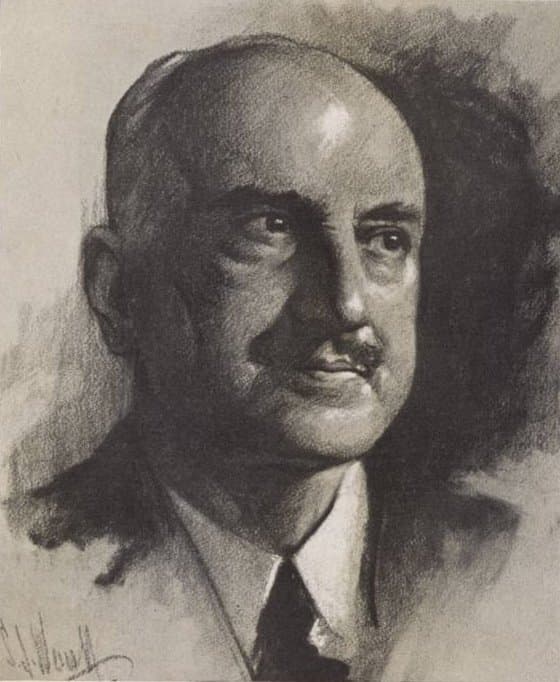
George Santayana
George Santayana was a Spanish philosopher, essayist, poet, and novelist whose work spanned a variety of intellectual disciplines. Born in Spain and raised in the United States from the age of eight, he became a prominent figure in American philosophy and literature. Santayana is best known for his aphorisms, including the famous lines 'Those who cannot remember the past are condemned to repeat it' and 'Only the dead have seen the end of war.' His philosophical inquiries often explored the nature of beauty, which he defined as 'pleasure objectified,' reflecting his deep engagement with aesthetics and ethics. In addition to his philosophical contributions, Santayana wrote notable works such as 'The Life of Reason,' a five-volume series that examined the role of reason in human life, and 'Scepticism and Animal Faith,' which delved into the relationship between belief and knowledge. His writings often critiqued contemporary culture and reflected his unique perspective as an outsider, having been influenced by both Spanish Catholic traditions and secular thought. After leaving his academic position at Harvard University at the age of 48, he returned to Europe, where he continued to write until his death, ultimately choosing to be buried in the Spanish Pantheon in Rome. Santayana's legacy endures through his profound insights into human nature and the complexities of cultural identity.
Famous Quotes
View all 3 quotes“Sanity is a madness put to good uses.”
“Those who cannot remember the past, are condemned to repeat it.”
“The world is not respectable; it is mortal, tormented, confused, deluded forever; but it is shot through with beauty, with love, with glints of courage and laughter; and in these, the spirit blooms timidly, and struggles to the light amid the thorns.”
Books from the author










Link to this page
Add a free, dofollow link to Lex on your blog, forum, syllabus, or reading list.

<a href="https://lex-books.com/author/george-santayana"><img src="https://lex-books.com/badges/read-on-lex.svg" alt="George Santayana on Lex" width="160" height="40"></a>[](https://lex-books.com/author/george-santayana)[url=https://lex-books.com/author/george-santayana][img]https://lex-books.com/badges/read-on-lex.svg[/img][/url]George Santayana on Lex: https://lex-books.com/author/george-santayana