
Jonathan Swift
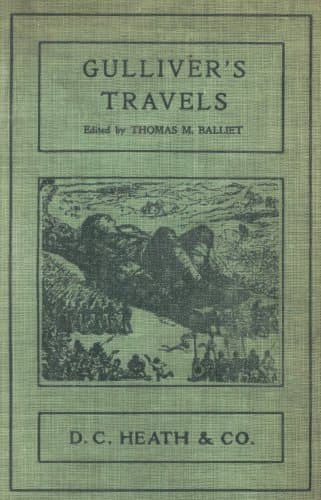
Jonathan Swift was an Anglo-Irish writer, essayist, and satirist, renowned for his sharp wit and incisive social commentary. He served as the dean of St. Patrick's Cathedral in Dublin, earning the nickname 'Dean Swift.' His most famous work, *Gulliver's Travels* (1726), is a satirical exploration of human nature and society, introducing readers to the fictional island of Lilliput and its diminutive inhabitants. This work, along with *A Modest Proposal* (1729), exemplifies his trademark deadpan style and has led to the term 'Swiftian' being used to describe similar forms of satire. Swift's ability to blend humor with serious critique established him as one of the foremost prose satirists in English literature and a significant voice of the Georgian era. Throughout his career, Swift wrote under various pseudonyms, including Lemuel Gulliver and Isaac Bickerstaff, which allowed him to navigate the politically charged atmosphere of his time. His early works, such as *A Tale of a Tub* (1704) and *An Argument Against Abolishing Christianity* (1712), reflect his deep engagement with the political landscape and social issues of early 18th-century Britain and Ireland. Swift's unique blend of Horatian and Juvenalian satire not only entertained but also provoked thought and discussion, solidifying his legacy as a master of satire whose influence can still be felt in literature and political discourse today.
Famous Quotes
View all 18 quotes“May you live every day of your life.””
“Vision is the art of seeing things invisible.””
“When a great genius appears in the world you may know him by this sign; that the dunces are all in confederacy against him."[]””
Books from the author
























Link to this page
Add a free, dofollow link to Lex on your blog, forum, syllabus, or reading list.

<a href="https://lex-books.com/author/jonathan-swift"><img src="https://lex-books.com/badges/read-on-lex.svg" alt="Jonathan Swift on Lex" width="160" height="40"></a>[](https://lex-books.com/author/jonathan-swift)[url=https://lex-books.com/author/jonathan-swift][img]https://lex-books.com/badges/read-on-lex.svg[/img][/url]Jonathan Swift on Lex: https://lex-books.com/author/jonathan-swift