Gulliver's Travels into Several Remote Nations of the World
1726
Gulliver's Travels into Several Remote Nations of the World
1726
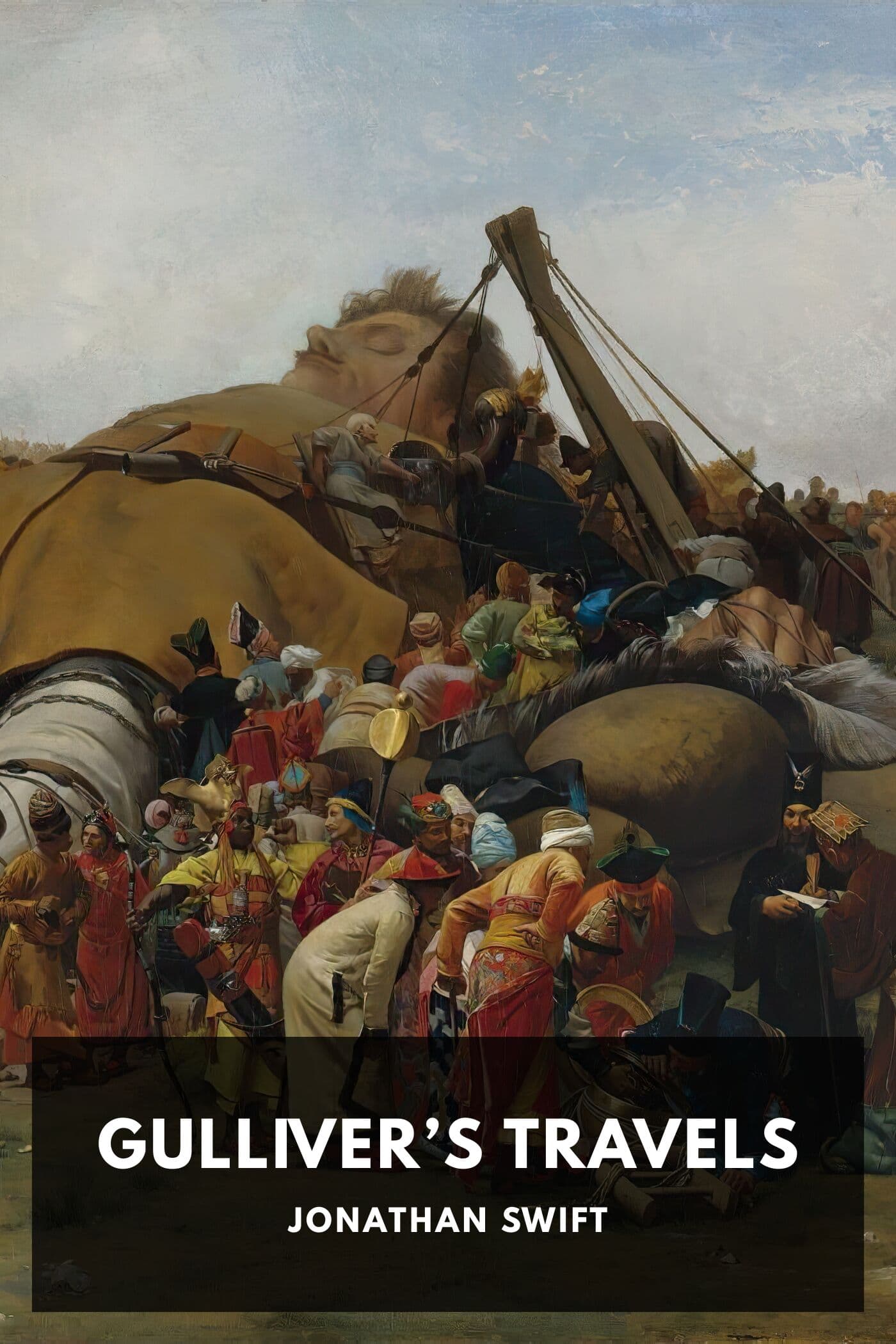
Swift's genius lies in his perspective shifts. By making Gulliver enormous in Lilliput and microscopic in Brobdingnag, he doesn't just show us different worlds - he makes us see our own world from angles we didn't know existed. The surgeon turned sailor stumbles through four increasingly unsettling lands, each one a funhouse mirror reflecting some grotesque truth about human ambition, political folly, and pride. What begins as an adventure story - the shipwreck, the tiny bindings, the curious crowd - curdles into something darker. The Lilliputians squabble over which end of an egg to crack. The giants of Brobdingnag find humanity contemptible. Laputa's scientists float above their ruined country, lost in useless calculations. And the Houyhnhnms - the gentle, rational horses - see humans as barely distinguishable from the brutish Yahoos they keep. Swift's satire doesn't let anyone off the hook: not the powerful, not the learned, not even the reader. More than three centuries later, Gulliver's Travels remains unsettling because Swift understood something essential about civilization: we're all certain we're the rational ones until someone bigger looks down and sees what we really are.
Editions
X-Ray
“Every man desires to live long, but no man wishes to be old.””
— Jonathan Swift
“I cannot but conclude that the Bulk of your Natives, to be the most pernicious Race of little odious Vermin that Nature ever suffered to crawl upon the Surface of the Earth.””
— Jonathan Swift
“Undoubtedly, philosophers are in the right when they tell us that nothing is great or little otherwise than by comparison.””
— Jonathan Swift
“The tiny Lilliputians surmise that Gulliver's watch may be his god, because it is that which, he admits, he seldom does anything without consulting.””
— Jonathan Swift
“And he gave it for his opinion, "that whoever could make two ears of corn, or two blades of grass, to grow upon a spot of ground where only one grew before, would deserve better of mankind, and do more essential service to his country, than the whole race of politicians put together.””
— Jonathan Swift
“Difference in opinions has cost many millions of lives: for instance, whether flesh be bread, or bread be flesh; whether the juice of a certain berry be blood or wine.””
— Jonathan Swift
“This made me reflect, how vain an attempt it is for a man to endeavor to do himself honor among those who are out of all degree of equality or comparison with him.””
— Jonathan Swift
“... a wife should be always a reasonable and agreeable companion, because she cannot always be young.””
— Jonathan Swift
“Judges... are picked out from the most dextrous lawyers, who are grown old or lazy, and having been biased all their lives against truth or equity, are under such a fatal necessity of favoring fraud, perjury and oppression, that I have known several of them to refuse a large bribe from the side where justice lay, rather than injure the faculty by doing any thing unbecoming their nature in office.””
— Jonathan Swift
Link to this book
Add a free, dofollow link to Lex on your blog, forum, syllabus, or reading list.

<a href="https://lex-books.com/book/gulliver-s-travels-into-several-remote-nations-of-the-world-0577a4b7-04ae-4dca-b8b3-50e5199a3d21"><img src="https://lex-books.com/badges/read-on-lex.svg" alt="Read Gulliver's Travels into Several Remote Nations of the World by Jonathan Swift free on Lex" width="160" height="40"></a>[](https://lex-books.com/book/gulliver-s-travels-into-several-remote-nations-of-the-world-0577a4b7-04ae-4dca-b8b3-50e5199a3d21)[url=https://lex-books.com/book/gulliver-s-travels-into-several-remote-nations-of-the-world-0577a4b7-04ae-4dca-b8b3-50e5199a3d21][img]https://lex-books.com/badges/read-on-lex.svg[/img][/url]Read Gulliver's Travels into Several Remote Nations of the World by Jonathan Swift free on Lex: https://lex-books.com/book/gulliver-s-travels-into-several-remote-nations-of-the-world-0577a4b7-04ae-4dca-b8b3-50e5199a3d21Cite this book
Reading this edition for a paper or guide? Copy a citation.
Swift, Jonathan. Gulliver's Travels into Several Remote Nations of the World. Lex, lex-books.com/book/gulliver-s-travels-into-several-remote-nations-of-the-world-0577a4b7-04ae-4dca-b8b3-50e5199a3d21.Swift, J. (1726). Gulliver's Travels into Several Remote Nations of the World. Lex. https://lex-books.com/book/gulliver-s-travels-into-several-remote-nations-of-the-world-0577a4b7-04ae-4dca-b8b3-50e5199a3d21Swift, Jonathan. Gulliver's Travels into Several Remote Nations of the World. Lex. https://lex-books.com/book/gulliver-s-travels-into-several-remote-nations-of-the-world-0577a4b7-04ae-4dca-b8b3-50e5199a3d21.