Gulliver Utazásai
1726
Gulliver Utazásai
1726
Translated by Frigyes Karinthy
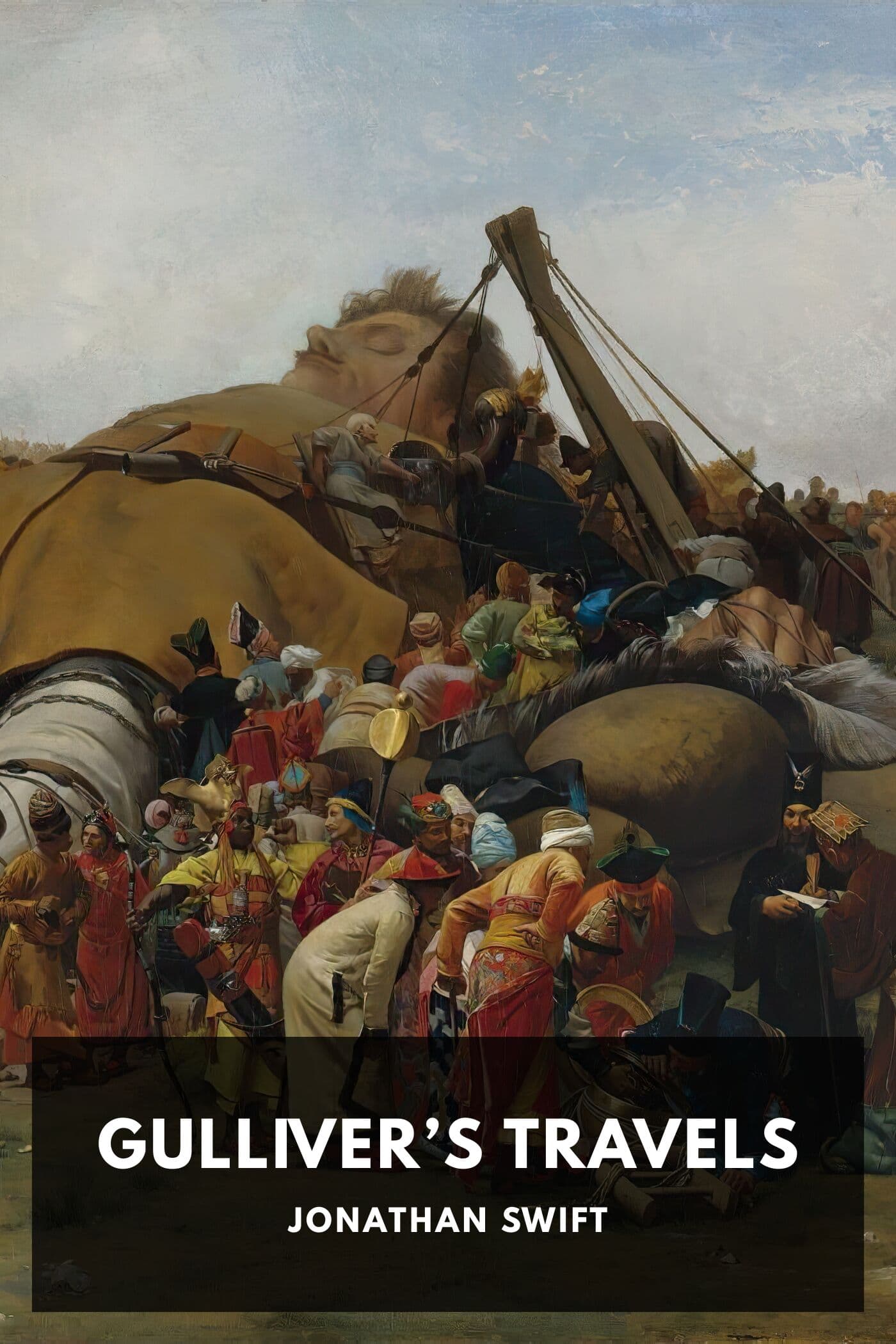
A satirical novel written in the early 18th century. The book follows Lemuel Gulliver, a ship's surgeon and restless traveler, who embarks on extraordinary voyages to fantastical lands inhabited by strange and symbolic peoples. Centered on adventure and social commentary, the story uses Gulliver's encounters to sharply critique human society, politics, and nature. The opening of the novel provides both an introduction and a distinct interpretative lens through an extended preface or essay, highlighting Swift's deep cynicism about humanity. The narrative then shifts to Gulliver himself, who recounts his background and practical education, emphasizing his preparedness for travel. Soon after, Gulliver survives a shipwreck and finds himself a giant among a civilization of tiny people, the Lilliputians, who capture and gradually come to carefully scrutinize him. The early chapters vividly detail Gulliver’s disorienting arrival in Lilliput, his initial captivity, the curiosity and fear he inspires, and the measured way he gains trust, while also showcasing Swift’s blend of imaginative world-building and biting social allegory.
Editions
X-Ray
“Every man desires to live long, but no man wishes to be old.””
— Jonathan Swift
“I cannot but conclude that the Bulk of your Natives, to be the most pernicious Race of little odious Vermin that Nature ever suffered to crawl upon the Surface of the Earth.””
— Jonathan Swift
“Undoubtedly, philosophers are in the right when they tell us that nothing is great or little otherwise than by comparison.””
— Jonathan Swift
“The tiny Lilliputians surmise that Gulliver's watch may be his god, because it is that which, he admits, he seldom does anything without consulting.””
— Jonathan Swift
“And he gave it for his opinion, "that whoever could make two ears of corn, or two blades of grass, to grow upon a spot of ground where only one grew before, would deserve better of mankind, and do more essential service to his country, than the whole race of politicians put together.””
— Jonathan Swift
“Difference in opinions has cost many millions of lives: for instance, whether flesh be bread, or bread be flesh; whether the juice of a certain berry be blood or wine.””
— Jonathan Swift
“This made me reflect, how vain an attempt it is for a man to endeavor to do himself honor among those who are out of all degree of equality or comparison with him.””
— Jonathan Swift
“... a wife should be always a reasonable and agreeable companion, because she cannot always be young.””
— Jonathan Swift
“Judges... are picked out from the most dextrous lawyers, who are grown old or lazy, and having been biased all their lives against truth or equity, are under such a fatal necessity of favoring fraud, perjury and oppression, that I have known several of them to refuse a large bribe from the side where justice lay, rather than injure the faculty by doing any thing unbecoming their nature in office.””
— Jonathan Swift
Link to this book
Add a free, dofollow link to Lex on your blog, forum, syllabus, or reading list.

<a href="https://lex-books.com/book/gulliver-utaz-sai-12ecad37-5fa1-422a-8556-d4e87fe4889e"><img src="https://lex-books.com/badges/read-on-lex.svg" alt="Read Gulliver Utazásai by Jonathan Swift free on Lex" width="160" height="40"></a>[](https://lex-books.com/book/gulliver-utaz-sai-12ecad37-5fa1-422a-8556-d4e87fe4889e)[url=https://lex-books.com/book/gulliver-utaz-sai-12ecad37-5fa1-422a-8556-d4e87fe4889e][img]https://lex-books.com/badges/read-on-lex.svg[/img][/url]Read Gulliver Utazásai by Jonathan Swift free on Lex: https://lex-books.com/book/gulliver-utaz-sai-12ecad37-5fa1-422a-8556-d4e87fe4889eCite this book
Reading this edition for a paper or guide? Copy a citation.
Swift, Jonathan. Gulliver Utazásai. Lex, lex-books.com/book/gulliver-utaz-sai-12ecad37-5fa1-422a-8556-d4e87fe4889e.Swift, J. (1726). Gulliver Utazásai. Lex. https://lex-books.com/book/gulliver-utaz-sai-12ecad37-5fa1-422a-8556-d4e87fe4889eSwift, Jonathan. Gulliver Utazásai. Lex. https://lex-books.com/book/gulliver-utaz-sai-12ecad37-5fa1-422a-8556-d4e87fe4889e.