Ernst Cassirer
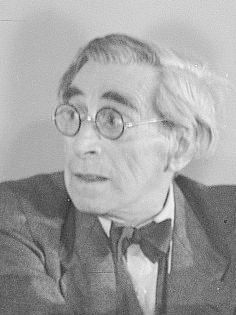
Ernst Cassirer was a prominent German philosopher and historian of philosophy, known for his significant contributions to the fields of idealism and cultural philosophy. Educated in the Neo-Kantian tradition at the Marburg School, he initially sought to develop an idealistic philosophy of science under the mentorship of Hermann Cohen. Following Cohen's death, Cassirer expanded his intellectual pursuits, formulating a comprehensive theory of symbolism that explored the 'logic and psychology of thought' within a broader 'logic of the cultural sciences.' His seminal work, 'Philosophy of Symbolic Forms,' published between 1923 and 1929, established him as a leading figure in 20th-century philosophical discourse. Cassirer's legacy is marked by his vigorous defense of Enlightenment ideals and liberal democracy during a period when fascism was gaining ground in Europe. His philosophical inquiries into the nature of human culture and symbolic expression have influenced various disciplines, including anthropology, psychology, and the social sciences. Although his work faced a mixed reception in the years following his death, contemporary scholarship has increasingly recognized Cassirer as a vital thinker whose ideas resonate in discussions of ethics and moral philosophy, particularly within the Jewish intellectual tradition. His commitment to the moral idealism of the Enlightenment continues to inspire debates about the role of philosophy in addressing contemporary societal challenges.
Famous Quotes
View all 3 quotes“Man is always inclined to regard the small circle in which he lives as the center of the world and to make his particular, private life the standard of the universe and to make his particular, private life the standard of the universe. But he must give up this vain pretense, this petty provincial way of thinking and judging.”
“There is no remedy against this reversal of the natural order. Man cannot escape from his own achievement. He cannot but adopt the conditions of his own life. No longer in a merely physical universe, man lives in a symbolic universe. Language, myth, art, and religion are parts of this universe. They are the varied threads which weave the symbolic net, the tangled web of human experience. All human progress in thought and experience refines and strengthens this net. No longer can man confront reality immediately; he cannot see it, as it were, face to face. Physical reality seems to recede in proportion as man's symbolic activity advances. Instead of dealing with the things themselves man is in a sense constantly conversing with himself. He has so enveloped himself in linguistic forms, in artistic images, in mythical symbols or religious rites that he cannot see or know anything except by the interposition of this artificial medium. His situation is the same in the theoretical as in the practical sphere. Even here man does not live in a world of hard facts, or according to his immediate needs and desires. He lives rather in the midst of imaginary emotions, in hopes and fears, in illusions and disillusions, in his fantasies and dreams. 'What disturbs and alarms man,' said Epictetus, 'are not the things, but his opinions and fantasies about the things.”
“...it would be a very naive sort of dogmatism to assume that there exists an absolute reality of things which is the same for all living beings. Reality is not a unique and homogeneous thing; it is immensely diversified, having as many different schemes and patterns as there are different organisms. Every organism is, so to speak, a monadic being. It has a world of its own because it has an experience of its own. The phenomena that we find in the life of a certain biological species are not transferable to any other species. The experiences - and therefore the realities - of two different organisms are incommensurable with one another. In the world of a fly, says Uexkull, we find only "fly things"; in the world of a sea urchin we find only "sea urchin things.”
Books from the author



Link to this page
Add a free, dofollow link to Lex on your blog, forum, syllabus, or reading list.

<a href="https://lex-books.com/author/ernst-cassirer"><img src="https://lex-books.com/badges/read-on-lex.svg" alt="Ernst Cassirer on Lex" width="160" height="40"></a>[](https://lex-books.com/author/ernst-cassirer)[url=https://lex-books.com/author/ernst-cassirer][img]https://lex-books.com/badges/read-on-lex.svg[/img][/url]Ernst Cassirer on Lex: https://lex-books.com/author/ernst-cassirer