
Albert Schweitzer
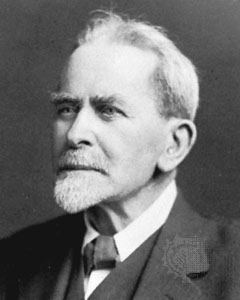
Albert Schweitzer was a multifaceted German polymath whose influence spanned theology, music, philosophy, and medicine. Born in Alsace, he initially pursued a career in theology, where he became known for his critical examination of the historical Jesus and the interpretation of Pauline Christianity. His theological insights emphasized the significance of mysticism and the concept of 'being in Christ,' challenging both secular and traditional Christian perspectives. Schweitzer's commitment to humanitarianism led him to establish the Hôpital Albert Schweitzer in Lambaréné, French Equatorial Africa, where he practiced medicine and embodied his philosophy of 'Reverence for Life.' This philosophy underscored his belief in the intrinsic value of all living beings and earned him the Nobel Peace Prize in 1952, recognizing his contributions to peace and humanitarian efforts. In addition to his theological and humanitarian work, Schweitzer was an accomplished organist and musicologist, particularly noted for his studies of Johann Sebastian Bach. His work in music not only contributed to the understanding of Bach's compositions but also played a significant role in the Organ Reform Movement, which sought to enhance the performance and appreciation of organ music. Through his diverse contributions, Schweitzer left a lasting legacy as a thinker who bridged the realms of spirituality, ethics, and the arts, influencing generations in both religious and secular contexts.
Famous Quotes
View all 3 quotes“Sometimes our light goes out, but is blown again into instant flame by an encounter with another human being.”
“There are two means of refuge from the misery of life — music and cats.”
“If you love something so much let it go. If it comes back it was meant to be; if it doesn't it never was”
Books from the author













Link to this page
Add a free, dofollow link to Lex on your blog, forum, syllabus, or reading list.

<a href="https://lex-books.com/author/albert-schweitzer"><img src="https://lex-books.com/badges/read-on-lex.svg" alt="Albert Schweitzer on Lex" width="160" height="40"></a>[](https://lex-books.com/author/albert-schweitzer)[url=https://lex-books.com/author/albert-schweitzer][img]https://lex-books.com/badges/read-on-lex.svg[/img][/url]Albert Schweitzer on Lex: https://lex-books.com/author/albert-schweitzer