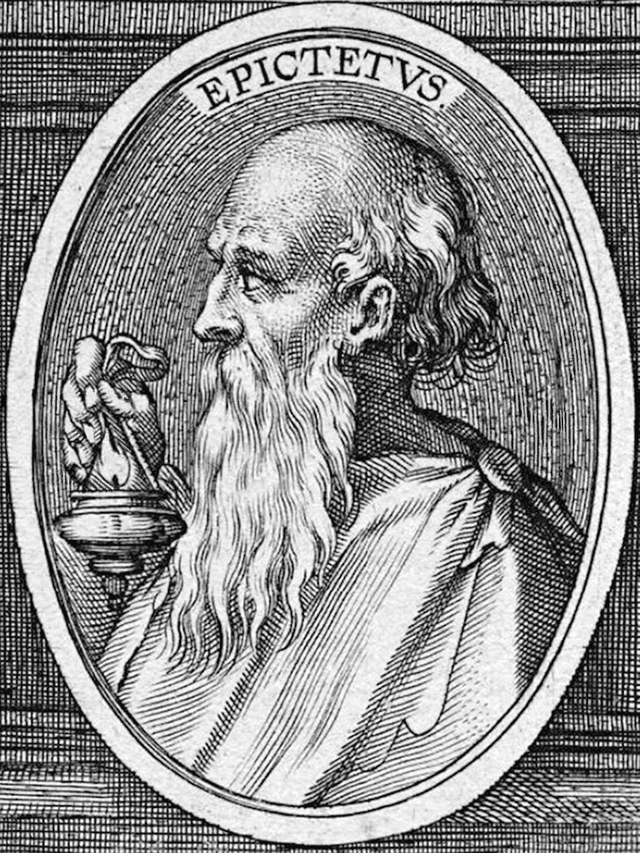
Epictetus
Epictetus was a prominent Greek Stoic philosopher whose teachings have significantly influenced Western philosophy. Born into slavery in Hierapolis, Phrygia, he was later freed and moved to Rome, where he studied under the Stoic philosopher Musonius Rufus. His life took a turn when he was banished from Rome, prompting him to settle in Nicopolis, Greece, where he established a school of philosophy. Epictetus's thoughts were recorded by his student Arrian in works such as the 'Discourses' and the 'Enchiridion,' which emphasize the importance of personal ethics informed by a system of logic and natural law. He taught that philosophy is a way of life and that individuals should focus on what is within their control while accepting what is not. Epictetus's legacy lies in his practical approach to Stoicism, advocating for resilience in the face of adversity and the development of inner virtue. His ideas have had a lasting impact on later philosophical thought, particularly during the Renaissance and the Enlightenment, influencing figures such as Descartes and Kant. His emphasis on personal responsibility and the distinction between external events and internal responses continues to resonate in contemporary discussions of ethics and psychology, marking him as a pivotal figure in the history of Western philosophy.
Famous Quotes
View all 18 quotes“If anyone tells you that a certain person speaks ill of you, do not make excuses about what is said of you but answer, "He was ignorant of my other faults, else he would not have mentioned these alone.””
“Wealth consists not in having great possessions, but in having few wants.””
“Don't explain your philosophy. Embody it.””
Books from the author






Link to this page
Add a free, dofollow link to Lex on your blog, forum, syllabus, or reading list.

<a href="https://lex-books.com/author/epictetus"><img src="https://lex-books.com/badges/read-on-lex.svg" alt="Epictetus on Lex" width="160" height="40"></a>[](https://lex-books.com/author/epictetus)[url=https://lex-books.com/author/epictetus][img]https://lex-books.com/badges/read-on-lex.svg[/img][/url]Epictetus on Lex: https://lex-books.com/author/epictetus