A Selection from the Discourses of Epictetus with the Encheiridion
1888
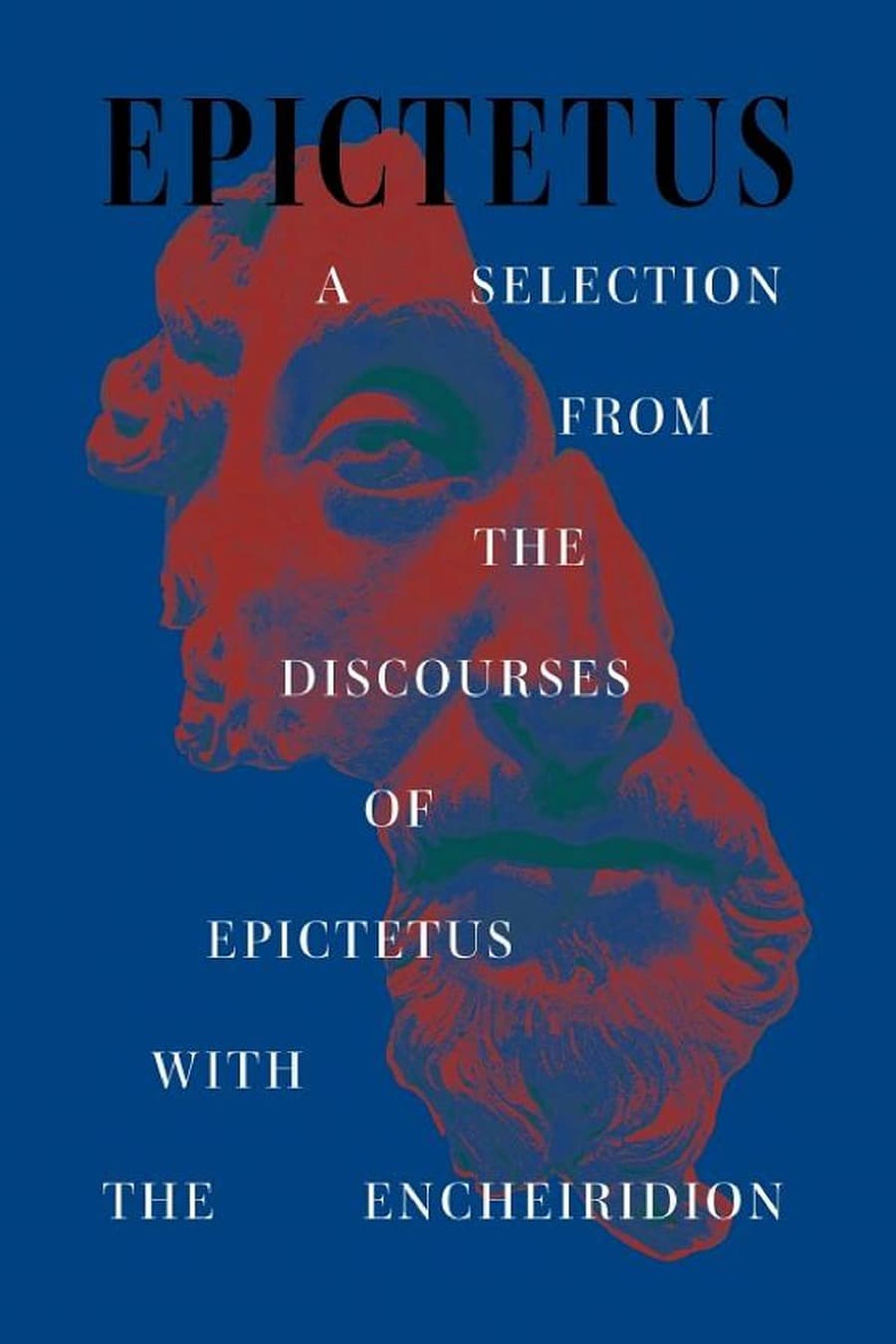
A Selection from the Discourses of Epictetus with the Encheiridion
1888
Translated by George Long
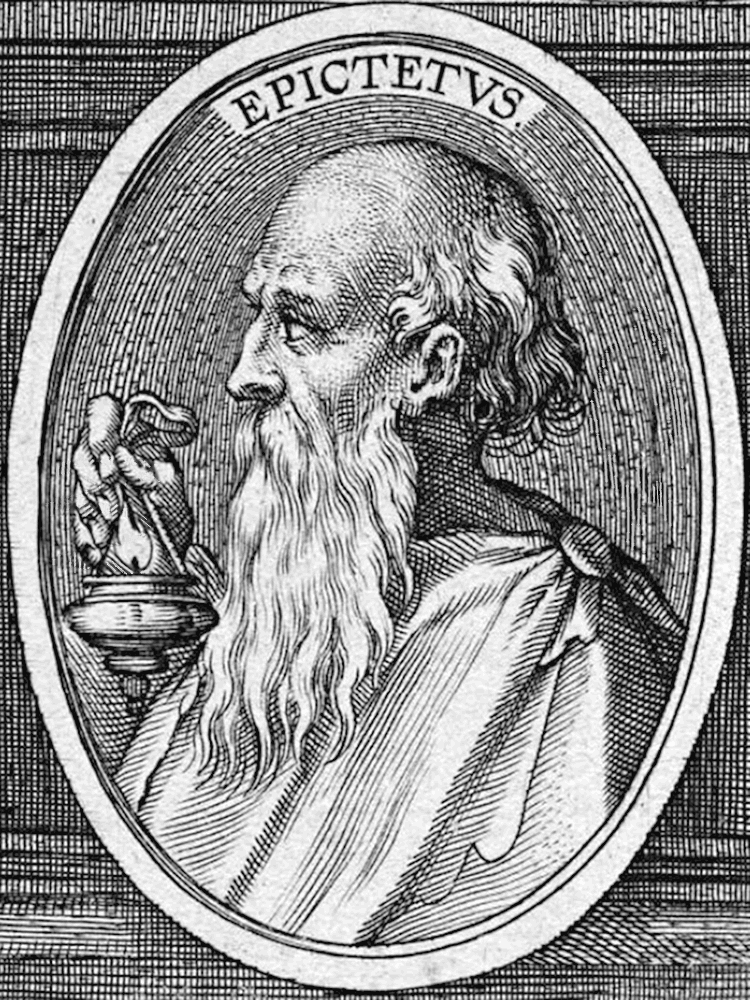
Two thousand years ago, a former slave carved philosophy into something you could actually live. Epictetus didn't care about abstract debates or elegant systems. He had one question: what can you actually control? The answer, both simple and radical: your thoughts, your desires, your reactions. Everything else, wealth, reputation, the actions of others, the body itself, isn't yours to command. The Encheiridion, a pocket manual of 93 sharp teachings, distills this insight into something you can return to daily. The Discourses, longer and more discursive, show it in action: how to face grief without being destroyed, how to want nothing while having little, how to die without regret. This isn't passive resignation. It's the hardest kind of freedom, the kind you build from the inside out. Epictetus wrote for people exhausted by wanting, by fearing, by measuring their lives against what they couldn't hold. The world hasn't changed. The solution still works.
Editions
X-Ray
“Don't just say you have read books. Show that through them you have learned to think better, to be a more discriminating and reflective person. Books are the training weights of the mind. They are very helpful, but it would be a bad mistake to suppose that one has made progress simply by having internalized their contents.””
— Epictetus
“People are not disturbed by things, but by the views they take of them.””
— Epictetus
“Remember, it is not enough to be hit or insulted to be harmed, you must believe that you are being harmed. If someone succeeds in provoking you, realize that your mind is complicit in the provocation. Which is why it is essential that we not respond impulsively to impressions; take a moment before reacting, and you will find it easier to maintain control.””
— Epictetus
“Now is the time to get serious about living your ideals. How long can you afford to put off who you really want to be? Your nobler self cannot wait any longer. Put your principles into practice – now. Stop the excuses and the procrastination. This is your life! You aren’t a child anymore. The sooner you set yourself to your spiritual program, the happier you will be. The longer you wait, the more you’ll be vulnerable to mediocrity and feel filled with shame and regret, because you know you are capable of better. From this instant on, vow to stop disappointing yourself. Separate yourself from the mob. Decide to be extraordinary and do what you need to do – now.””
— Epictetus
“Most of what passes for legitimate entertainment is inferior or foolish and only caters to or exploits people's weaknesses. Avoid being one of the mob who indulges in such pastimes. Your life is too short and you have important things to do. Be discriminating about what images and ideas you permit into your mind. If you yourself don't choose what thoughts and images you expose yourself to, someone else will, and their motives may not be the highest. It is the easiest thing in the world to slide imperceptibly into vulgarity. But there's no need for that to happen if you determine not to waste your time and attention on mindless pap.””
— Epictetus
“You become what you give your attention to.””
— Epictetus
“Never depend on the admiration of others. There is no strength in it. Personal merit cannot be derived from an external source. It is not to be found in your personal associations, nor can it be found in the regard of other people. It is a fact of life that other people, even people who love you, will not necessarily agree with your ideas, understand you, or share your enthusiasms. Grow up! Who cares what other people think about you!””
— Epictetus
“Men are disturbed not by things, but by the views which they take of things. Thus death is nothing terrible, else it would have appeared so to Socrates. But the terror consists in our notion of death, that it is terrible. When, therefore, we are hindered, or disturbed, or grieved let us never impute it to others, but to ourselves; that is, to our own views. It is the action of an uninstructed person to reproach others for his own misfortunes; of one entering upon instruction, to reproach himself; and of one perfectly instructed, to reproach neither others or himself.””
— Epictetus
“An ignorant person is inclined to blame others for his own misfortune. To blame oneself is proof of progress. But the wise man never has to blame another or himself.””
— Epictetus
About A Selection from the Discourses of Epictetus with the Encheiridion
Chapter Summaries
- Biographical Note
- Details the sparse known facts about Epictetus's life: born in Hierapolis, enslaved in Rome under Epaphroditus, studied with Musonius Rufus, gained freedom, and taught in Nicopolis. Emphasizes that he wrote nothing himself—all teachings come through Arrian's records.
- 1
- Establishes the fundamental Stoic distinction between what is within our control (our will, judgments, desires) and what is not (external circumstances). Only the rational faculty can examine itself and determine proper action.
- 2
- Argues that rational beings should only be troubled by what is irrational, not by external circumstances. We should not sell our will cheaply but maintain our character regardless of consequences.
Key Themes
- Freedom and Slavery
- Epictetus argues that true freedom comes not from external circumstances but from mastery over one's own will and judgments. Physical slavery cannot touch the soul's liberty.
- Control and Acceptance
- The central Stoic principle that we must distinguish between what is 'up to us' and what is not, focusing our energy only on what we can control while accepting what we cannot.
- Virtue as the Sole Good
- Material possessions, health, reputation, and even life itself are 'indifferent'—only virtue and vice are truly good or evil, as they alone are within our power to choose.
Characters
- Epictetus(protagonist)
- A former slave turned Stoic philosopher who teaches principles of virtue, wisdom, and inner freedom. He emphasizes the distinction between what is within our control and what is not.
- Arrian(major)
- Student and disciple of Epictetus who recorded the philosopher's teachings in the Discourses. He serves as the conduit through which Epictetus's wisdom reaches posterity.
- Socrates(major)
- Ancient Greek philosopher frequently cited by Epictetus as an exemplar of virtue and wisdom. He represents the ideal of living according to philosophical principles.
- Musonius Rufus(minor)
- Stoic philosopher who was Epictetus's teacher during his time as a slave in Rome.
- Epaphroditus(minor)
- Epictetus's former master, a freedman of Emperor Nero who allowed his slave to study philosophy.
- Chrysippus(minor)
- Earlier Stoic philosopher whose works are referenced throughout the text as examples of philosophical study.
Link to this book
Add a free, dofollow link to Lex on your blog, forum, syllabus, or reading list.

<a href="https://lex-books.com/book/a-selection-from-the-discourses-of-epictetus-with-the-encheiridion-ddadba11-072d-4cf4-8d53-d02a82b62b09"><img src="https://lex-books.com/badges/read-on-lex.svg" alt="Read A Selection from the Discourses of Epictetus with the Encheiridion by Epictetus free on Lex" width="160" height="40"></a>[](https://lex-books.com/book/a-selection-from-the-discourses-of-epictetus-with-the-encheiridion-ddadba11-072d-4cf4-8d53-d02a82b62b09)[url=https://lex-books.com/book/a-selection-from-the-discourses-of-epictetus-with-the-encheiridion-ddadba11-072d-4cf4-8d53-d02a82b62b09][img]https://lex-books.com/badges/read-on-lex.svg[/img][/url]Read A Selection from the Discourses of Epictetus with the Encheiridion by Epictetus free on Lex: https://lex-books.com/book/a-selection-from-the-discourses-of-epictetus-with-the-encheiridion-ddadba11-072d-4cf4-8d53-d02a82b62b09Cite this book
Reading this edition for a paper or guide? Copy a citation.
Epictetus. A Selection from the Discourses of Epictetus with the Encheiridion. Lex, lex-books.com/book/a-selection-from-the-discourses-of-epictetus-with-the-encheiridion-ddadba11-072d-4cf4-8d53-d02a82b62b09.Epictetus (1888). A Selection from the Discourses of Epictetus with the Encheiridion. Lex. https://lex-books.com/book/a-selection-from-the-discourses-of-epictetus-with-the-encheiridion-ddadba11-072d-4cf4-8d53-d02a82b62b09Epictetus. A Selection from the Discourses of Epictetus with the Encheiridion. Lex. https://lex-books.com/book/a-selection-from-the-discourses-of-epictetus-with-the-encheiridion-ddadba11-072d-4cf4-8d53-d02a82b62b09.