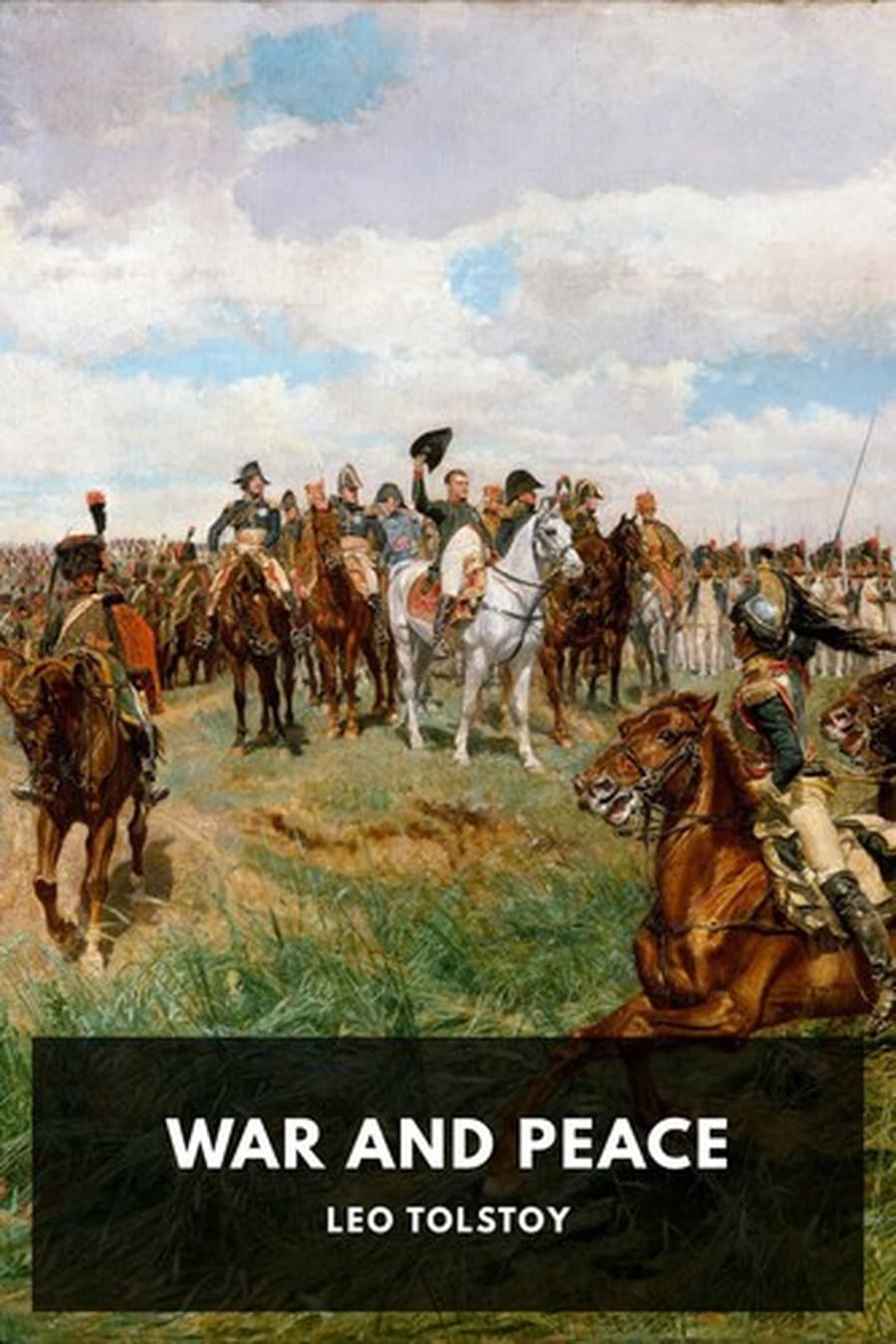
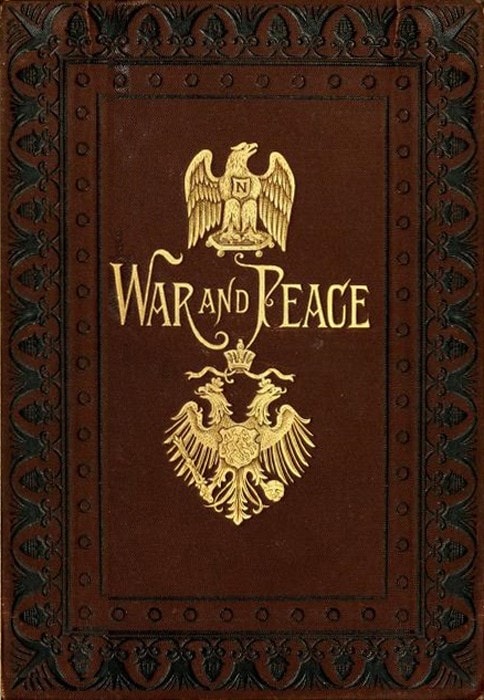
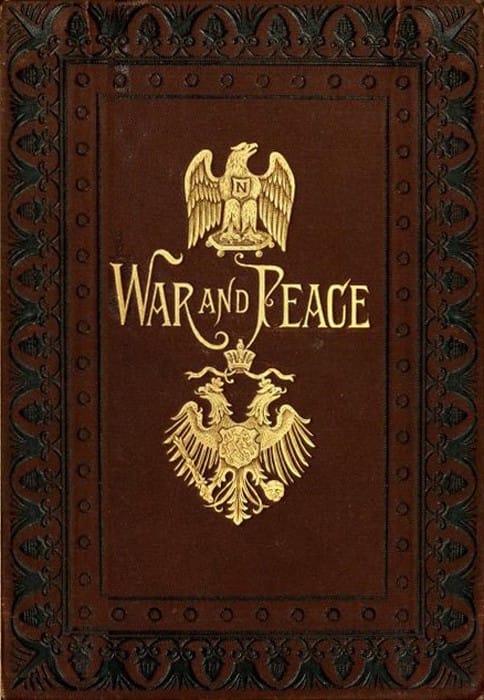
War and Peace
1869
History is not made by emperors and generals, Tolstoy argues in this radical masterpiece, it is made by millions of ordinary people caught in currents they cannot see. Against the sweeping backdrop of Napoleon's invasion of Russia, three lives intertwine: Pierre Bezukhov, the illegitimate son of a count, desperately seeking purpose in a world of hollow aristocracy; Prince Andrei Bolkonsky, who abandons his family chasing martial glory only to find war's brutal truth; and Natasha Rostov, the radiant young woman whose capacity for love grows even as the world burns around her. Tolstoy follows these characters through salons and battlefields, suffering and joy, as the French army advances on Moscow and Russia faces annihilation. But what makes War and Peace timeless is not merely its epic scale, it is Tolstoy's insistence that history is chaos, that meaning is something we impose on randomness, and that what matters is not the grand narrative of nations but the irreducible reality of individual human experience. The novel refuses to end tidily, because life refuses to end tidily, and that refusal is precisely why it endures.
Editions


X-Ray
“We can know only that we know nothing. And that is the highest degree of human wisdom.””
— Leo Tolstoy
“Nothing is so necessary for a young man as the company of intelligent women.””
— Leo Tolstoy
“The strongest of all warriors are these two”
— Leo Tolstoy
“If everyone fought for their own convictions there would be no war.””
— Leo Tolstoy
“There is no greatness where there is not simplicity, goodness, and truth.””
— Leo Tolstoy
“The whole world is divided for me into two parts: one is she, and there is all happiness, hope, light; the other is where she is not, and there is dejection and darkness...””
— Leo Tolstoy
“Pierre was right when he said that one must believe in the possibility of happiness in order to be happy, and I now believe in it. Let the dead bury the dead, but while I'm alive, I must live and be happy.””
— Leo Tolstoy
“You can love a person dear to you with a human love, but an enemy can only be loved with divine love.””
— Leo Tolstoy
“It's not given to people to judge what's right or wrong. People have eternally been mistaken and will be mistaken, and in nothing more than in what they consider right and wrong.””
— Leo Tolstoy
About War and Peace
Chapter Summaries
- 1
- Anna Pávlovna Schérer's soirée in July 1805 sets the scene for Petersburg high society, where guests discuss Napoleon and the impending war. Prince Vasíli Kurágin arrives, and Anna Pávlovna subtly attempts to arrange a marriage between his son Anatole and Princess Mary Bolkónskaya.
- 2
- The drawing room fills with more guests, including Hélène Kurágina, the pregnant Princess Lise Bolkónskaya, and Hippolyte Kurágin. Pierre Bezúkhov, an awkward and illegitimate young man, makes his first appearance in society, causing some anxiety for Anna Pávlovna.
- 3
- Guests discuss the murder of the Duc d’Enghien, with the Vicomte recounting an anecdote. Pierre attempts to engage in a political discussion with the Abbé, but Anna Pávlovna skillfully manages the conversation, while Hélène's beauty captivates everyone.
Key Themes
- War and Peace
- The novel contrasts the grand scale of historical events like the Napoleonic Wars with the intimate lives of its characters. It explores the brutal realities of battle, the complexities of military strategy, and the psychological impact of conflict, juxtaposed with periods of domestic tranquility, social gatherings, and personal development.
- Love and Marriage
- Tolstoy examines various forms of love, from passionate romance to familial affection and unrequited longing. Marriage is depicted as a central institution, often driven by societal pressures, financial considerations, and personal desires, with varying degrees of happiness and disillusionment among the characters.
- Social Class and Ambition
- The aristocratic society of Petersburg and Moscow is meticulously portrayed, highlighting the intricate social hierarchies, the pursuit of status and wealth, and the constant maneuvering for influence. Characters' ambitions, whether for military glory, diplomatic success, or advantageous marriages, are often shaped by their social standing.
Characters
- Anna Pávlovna Schérer(supporting)
- A maid of honor to the Empress Márya Fëdorovna and a prominent hostess in Petersburg society, known for her political enthusiasm and social maneuvering.
- Prince Vasíli Kurágin(supporting)
- A man of high rank and importance, primarily concerned with advancing his children's social and financial standing through advantageous marriages.
- Prince Andrew Bolkónski(protagonist)
- An intelligent and ambitious young prince, disillusioned with society and seeking glory in war, married to Lise Bolkónskaya.
- Princess Lise Bolkónskaya(supporting)
- Prince Andrew's pretty, youthful, and pregnant wife, who fears his departure for war and feels isolated in the countryside.
- Hélène Kurágina(supporting)
- Prince Vasíli's beautiful daughter, admired for her striking appearance and social grace, who becomes Pierre's wife.
- Pierre Bezúkhov(protagonist)
- The illegitimate, awkward, but kind-hearted son of Count Bezúkhov, who unexpectedly inherits a vast fortune and struggles with his place in society and personal morality.
Link to this book
Add a free, dofollow link to Lex on your blog, forum, syllabus, or reading list.

<a href="https://lex-books.com/book/war-and-peace-0b4437bf-5ce6-418d-a572-f00776fa52bb"><img src="https://lex-books.com/badges/read-on-lex.svg" alt="Read War and Peace by Leo Tolstoy free on Lex" width="160" height="40"></a>[](https://lex-books.com/book/war-and-peace-0b4437bf-5ce6-418d-a572-f00776fa52bb)[url=https://lex-books.com/book/war-and-peace-0b4437bf-5ce6-418d-a572-f00776fa52bb][img]https://lex-books.com/badges/read-on-lex.svg[/img][/url]Read War and Peace by Leo Tolstoy free on Lex: https://lex-books.com/book/war-and-peace-0b4437bf-5ce6-418d-a572-f00776fa52bbCite this book
Reading this edition for a paper or guide? Copy a citation.
Tolstoy, Leo. War and Peace. Lex, lex-books.com/book/war-and-peace-0b4437bf-5ce6-418d-a572-f00776fa52bb.Tolstoy, L. (1869). War and Peace. Lex. https://lex-books.com/book/war-and-peace-0b4437bf-5ce6-418d-a572-f00776fa52bbTolstoy, Leo. War and Peace. Lex. https://lex-books.com/book/war-and-peace-0b4437bf-5ce6-418d-a572-f00776fa52bb.