Katia
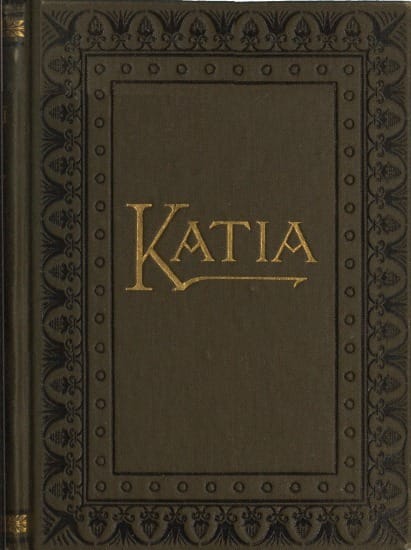
Seventeen-year-old Katia has just lost her mother and finds herself adrift in the empty countryside, caught between childhood and adulthood, between grief and the first stirrings of desire. When Sergius Mikaïlovitch, a figure from her childhood, arrives as her guardian, everything shifts. He represents both comfort and confusion, safety and something far more troubling. Tolstoy, with his uncanny ability to render the interior life, traces Katia's evolving feelings with devastating precision: the guilt, the longing, the terrible awareness of her own emerging wants. This is not a simple romance. It is a study of a young woman caught in the undertow of loss, trying to find solid ground. The prose moves like memory itself - elliptical, tender, sometimes brutal in its honesty about what it means to be young and overwhelmed by feeling. The ending carries a particular kind of ache: the ache of possibilities foreclosed, of moments understood too late. Tolstoy understood that first love rarely arrives in a form we can keep, and Katia captures this truth with quiet devastation.
Editions
X-Ray
“A quiet secluded life in the country, with the possibility of being useful to people to whom it is easy to do good, and who are not accustomed to have it done to them; then work which one hopes may be of some use; then rest, nature, books, music, love for one's neighbor”
— Leo Tolstoy
“I have lived through much, and now I think I have found what is needed for happiness. A quiet secluded life in the country, with the possibility of being useful to people to whom it is easy to do good, and who are not accustomed to have it done to them; then work which one hopes may be of some use; then rest, nature, books , music, love for one's neighbor - such is my idea of happiness. And then, on top of all that, you for a mate, and children, perhaps - what more can the heart of a man desire?””
— Leo Tolstoy
“I can't praise a young lady who is alive only when people are admiring her, but as soon as she is left alone, collapses and finds nothing to her taste--one who is all for show and has no resources in herself””
— Leo Tolstoy
“I wanted movement and not a calm course of existence. I wanted excitement and the chance to sacrifice myself for my love. I felt it in myself a superabundance of energy which found no outlet in our quiet life.””
— Leo Tolstoy
“I was wrong when I said that I did not regret the past. I do regret it; I weep for that past love which can never return. Who is to blame, I do not know. Love remains, but not the old love; its place remains, but it all wasted away and has lost all strength and substance; recollections are still left, and gratitude; but...””
— Leo Tolstoy
“I wanted feeling to guide us in life, and not life to be the guide to feeling.””
— Leo Tolstoy
“There is not in me what you are looking for... Why deceive ourselves?””
— Leo Tolstoy
“De qualquer modo””
— Leo Tolstoy
“And would you not alter the past? do you not reproach yourself or me?" "No, never! It was all for the best.””
— Leo Tolstoy
Link to this book
Add a free, dofollow link to Lex on your blog, forum, syllabus, or reading list.

<a href="https://lex-books.com/book/katia-48ce7703-034f-42e4-8acb-66e431282358"><img src="https://lex-books.com/badges/read-on-lex.svg" alt="Read Katia by Leo Tolstoy free on Lex" width="160" height="40"></a>[](https://lex-books.com/book/katia-48ce7703-034f-42e4-8acb-66e431282358)[url=https://lex-books.com/book/katia-48ce7703-034f-42e4-8acb-66e431282358][img]https://lex-books.com/badges/read-on-lex.svg[/img][/url]Read Katia by Leo Tolstoy free on Lex: https://lex-books.com/book/katia-48ce7703-034f-42e4-8acb-66e431282358Cite this book
Reading this edition for a paper or guide? Copy a citation.
Tolstoy, Leo. Katia. Lex, lex-books.com/book/katia-48ce7703-034f-42e4-8acb-66e431282358.Tolstoy, L. (n.d.). Katia. Lex. https://lex-books.com/book/katia-48ce7703-034f-42e4-8acb-66e431282358Tolstoy, Leo. Katia. Lex. https://lex-books.com/book/katia-48ce7703-034f-42e4-8acb-66e431282358.