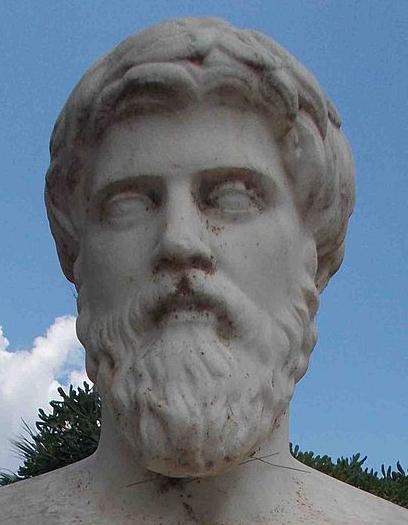
Plutarch's Morals
1883
Plutarch's Morals
1883
Translated by A. R. (Arthur Richard) Shilleto
Plutarch wrote these essays in the first century AD, but they're addressing questions that never go out of style: How should we raise children? What constitutes a virtuous life? What do we owe each other? What does it mean to be a good friend, a good citizen, a good person? Unlike abstract philosophy, these essays are grounded in practical wisdom. Plutarch draws on historical figures, Socratic dialogue, and everyday examples to explore how we actually live ethically. He argues that virtue isn't simply born but made through careful education, deliberate practice, and the influence of good role models. The essays range from how to raise children to the nature of love, from political ethics to personal integrity. Two thousand years later, we still struggle with these same tensions between duty and desire, ambition and honor, self-interest and the common good. For anyone who wants to think more carefully about how to live, this remains a remarkable companion.
Editions
X-Ray
“Can you really ask what reason Pythagoras had for abstaining from flesh? For my part I rather wonder both by what accident and in what state of soul or mind the first man did so, touched his mouth to gore and brought his lips to the flesh of a dead creature, he who set forth tables of dead, stale bodies and ventured to call food and nourishment the parts that had a little before bellowed and cried, moved and lived. How could his eyes endure the slaughter when throats were slit and hides flayed and limbs torn from limb? How could his nose endure the stench? How was it that the pollution did not turn away his taste, which made contact with the sores of others and sucked juices and serums from mortal wounds? … It is certainly not lions and wolves that we eat out of self-defense; on the contrary, we ignore these and slaughter harmless, tame creatures without stings or teeth to harm us, creatures that, I swear, Nature appears to have produced for the sake of their beauty and grace. But nothing abashed us, not the flower-like tinting of the flesh, not the persuasiveness of the harmonious voice, not the cleanliness of their habits or the unusual intelligence that may be found in the poor wretches. No, for the sake of a little flesh we deprive them of sun, of light, of the duration of life to which they are entitled by birth and being.””
— Plutarch
“In a certain faraway land the cold is so intense that words freeze as soon as they are uttered, and after some time then thaw and become audible so that words spoken in winter go unheard until the next summer.””
— Plutarch
“take care, in reading the writings of philosophers or hearing their speeches, that you do not attend to words more than things, nor get attracted more by what is difficult and curious than by what is serviceable and solid and useful.””
— Plutarch
“Even so the more a vicious man denies his vice, the more does it insinuate itself and master him: as those people really poor who pretend to be rich get still more poor from their false display.””
— Plutarch
“By the aid of philosophy you will live not unpleasantly, for you will learn to extract pleasure from all places and things: wealth will make you happy, because it will enable you to benefit many; and poverty, as you will not then have many anxieties; and glory, for it will make you honoured; and obscurity, for you will then be safe from envy.””
— Plutarch
“4. So reason makes all sorts of life easy, and every change pleasant. Alexander wept when he heard from Anaxarchus that there was an infinite number of worlds, and his friends asking him if any accident had befallen him, he returns this answer: Do not you think it a matter worthy of lamentation, that, when there is such a vast multitude of them, we have not yet conquered one? But Crates with only his scrip and tattered cloak laughed out his life jocosely, as if he had been always at a festival. The great power and command of Agamemnon gave him an equal disturbance:””
— Plutarch
“we ought not to let either our joy at their faults or our grief at their success be idle, but in either case we ought to reflect, how we may become better than them by avoiding their errors, and by imitating their virtues not come short of them.””
— Plutarch
“Even if your life be bad do not live unknown, but be known, reform, repent; if you have virtue, be not utterly useless in life; if you are vicious, do not continue unreformed.””
— Plutarch
“For the Greek name for moral virtue is only habit: and if anyone defines moral virtues as habitual virtues, he will not be beside the mark.””
— Plutarch
Link to this book
Add a free, dofollow link to Lex on your blog, forum, syllabus, or reading list.

<a href="https://lex-books.com/book/plutarch-s-morals-0918201d-1ca8-4edb-ae97-bb8d3d03e95f"><img src="https://lex-books.com/badges/read-on-lex.svg" alt="Read Plutarch's Morals by Plutarch free on Lex" width="160" height="40"></a>[](https://lex-books.com/book/plutarch-s-morals-0918201d-1ca8-4edb-ae97-bb8d3d03e95f)[url=https://lex-books.com/book/plutarch-s-morals-0918201d-1ca8-4edb-ae97-bb8d3d03e95f][img]https://lex-books.com/badges/read-on-lex.svg[/img][/url]Read Plutarch's Morals by Plutarch free on Lex: https://lex-books.com/book/plutarch-s-morals-0918201d-1ca8-4edb-ae97-bb8d3d03e95fCite this book
Reading this edition for a paper or guide? Copy a citation.
Plutarch. Plutarch's Morals. Lex, lex-books.com/book/plutarch-s-morals-0918201d-1ca8-4edb-ae97-bb8d3d03e95f.Plutarch (1883). Plutarch's Morals. Lex. https://lex-books.com/book/plutarch-s-morals-0918201d-1ca8-4edb-ae97-bb8d3d03e95fPlutarch. Plutarch's Morals. Lex. https://lex-books.com/book/plutarch-s-morals-0918201d-1ca8-4edb-ae97-bb8d3d03e95f.