Notre-Dame De Paris
1831
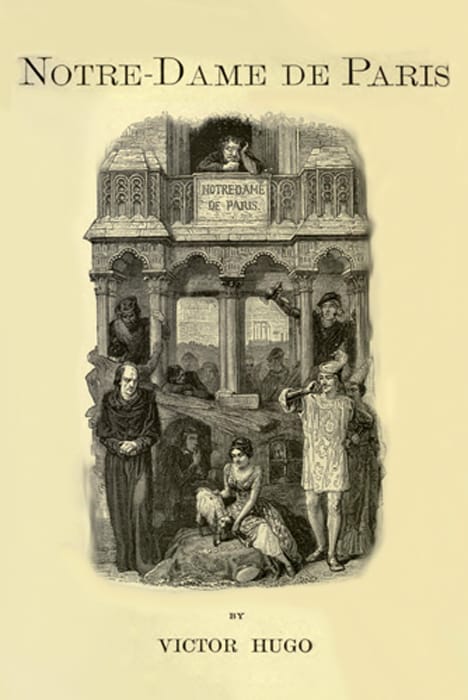
Notre-Dame De Paris
1831
Translated by Isabel Florence Hapgood
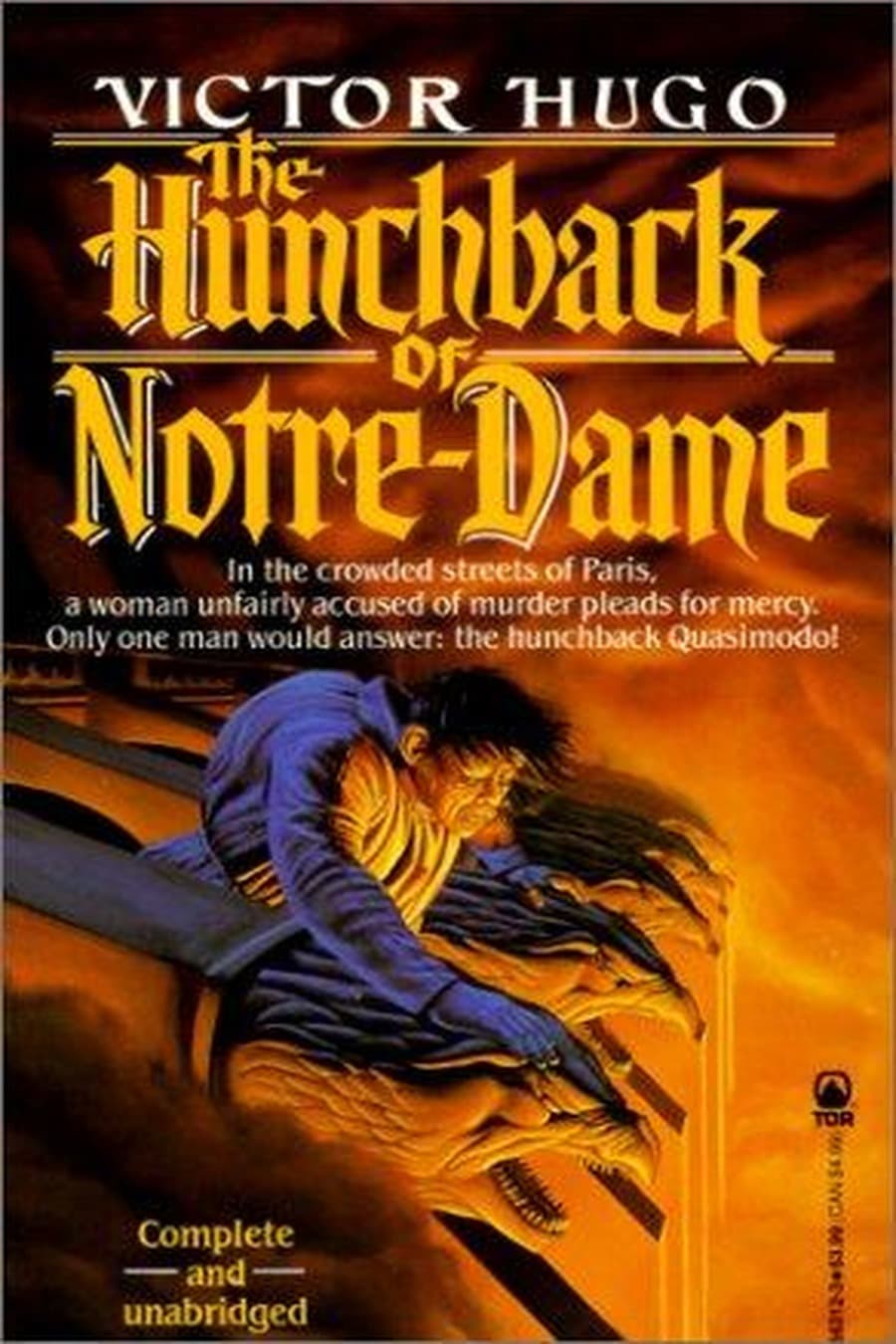
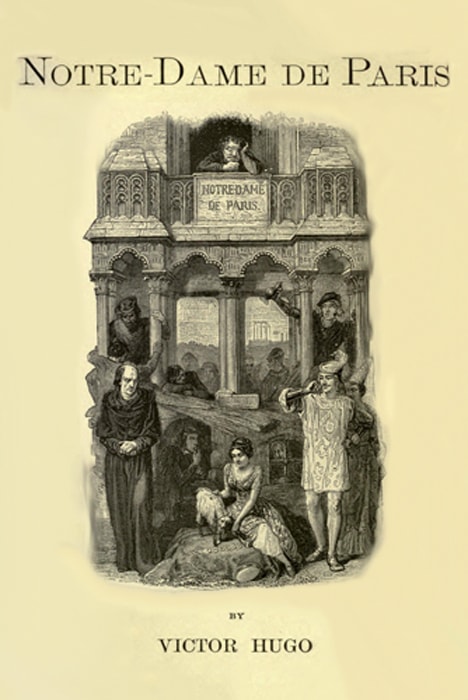
In the labyrinthine streets and under the shadow of medieval Paris's greatest cathedral, Victor Hugo constructs a dark and sweeping tragedy of desire, obsession, and the price of beauty. At its heart stands Quasimodo, the deaf and malformed bell-ringer, whose devotion to the cruel Archdeacon Claude Frollo and his impossible love for the Romani dancer Esmeralda drives the novel toward its devastating climax. Around them swirls a cast of poets, scholars, thieves, and soldiers, all caught in the machinery of fate that Hugo weaves with operatic intensity. Published in 1831, the novel was a thunderous plea to save France's Gothic heritage from destruction, and it succeeded: Notre-Dame de Paris became a national icon, and the book launched the cathedral's restoration. But beyond its historical purpose, this is a story about what it means to be an outcast in a world that worships appearance, and what happens when love becomes indistinguishable from possession. It is Gothic grandeur, social prophecy, and tragic romance woven into one unforgettable tapestry.
Editions


X-Ray
“Love is like a tree: it grows by itself, roots itself deeply in our being and continues to flourish over a heart in ruin. The inexplicable fact is that the blinder it is, the more tenacious it is. It is never stronger than when it is completely unreasonable.””
— Victor Hugo
“Nothing makes a man so adventurous as an empty pocket.””
— Victor Hugo
“I wanted to see you again, touch you, know who you were, see if I would find you identical with the ideal image of you which had remained with me and perhaps shatter my dream with the aid of reality.-Claude Frollo ””
— Victor Hugo
“When you get an idea into your head you find it in everything.””
— Victor Hugo
“Spira, spera.(breathe, hope)””
— Victor Hugo
“Do you know what friendship is?' he asked.'Yes,' replied the gypsy; 'it is to be brother and sister; two souls which touch without mingling, two fingers on one hand.''And love?' pursued Gringoire.'Oh! love!' said she, and her voice trembled, and her eye beamed. 'That is to be two and to be but one. A man and a woman mingled into one angel. It is heaven.””
— Victor Hugo
“A one-eyed man is much more incomplete than a blind man, for he knows what it is that's lacking.””
— Victor Hugo
“mothers are often fondest of the child which has caused them the greatest pain.””
— Victor Hugo
“He reached for his pocket, and found there, only reality””
— Victor Hugo
Link to this book
Add a free, dofollow link to Lex on your blog, forum, syllabus, or reading list.

<a href="https://lex-books.com/book/notre-dame-de-paris-1d0b2bf5-0c3c-4651-923b-8a4c503e29cb"><img src="https://lex-books.com/badges/read-on-lex.svg" alt="Read Notre-Dame De Paris by Victor Hugo free on Lex" width="160" height="40"></a>[](https://lex-books.com/book/notre-dame-de-paris-1d0b2bf5-0c3c-4651-923b-8a4c503e29cb)[url=https://lex-books.com/book/notre-dame-de-paris-1d0b2bf5-0c3c-4651-923b-8a4c503e29cb][img]https://lex-books.com/badges/read-on-lex.svg[/img][/url]Read Notre-Dame De Paris by Victor Hugo free on Lex: https://lex-books.com/book/notre-dame-de-paris-1d0b2bf5-0c3c-4651-923b-8a4c503e29cbCite this book
Reading this edition for a paper or guide? Copy a citation.
Hugo, Victor. Notre-Dame De Paris. Lex, lex-books.com/book/notre-dame-de-paris-1d0b2bf5-0c3c-4651-923b-8a4c503e29cb.Hugo, V. (1831). Notre-Dame De Paris. Lex. https://lex-books.com/book/notre-dame-de-paris-1d0b2bf5-0c3c-4651-923b-8a4c503e29cbHugo, Victor. Notre-Dame De Paris. Lex. https://lex-books.com/book/notre-dame-de-paris-1d0b2bf5-0c3c-4651-923b-8a4c503e29cb.