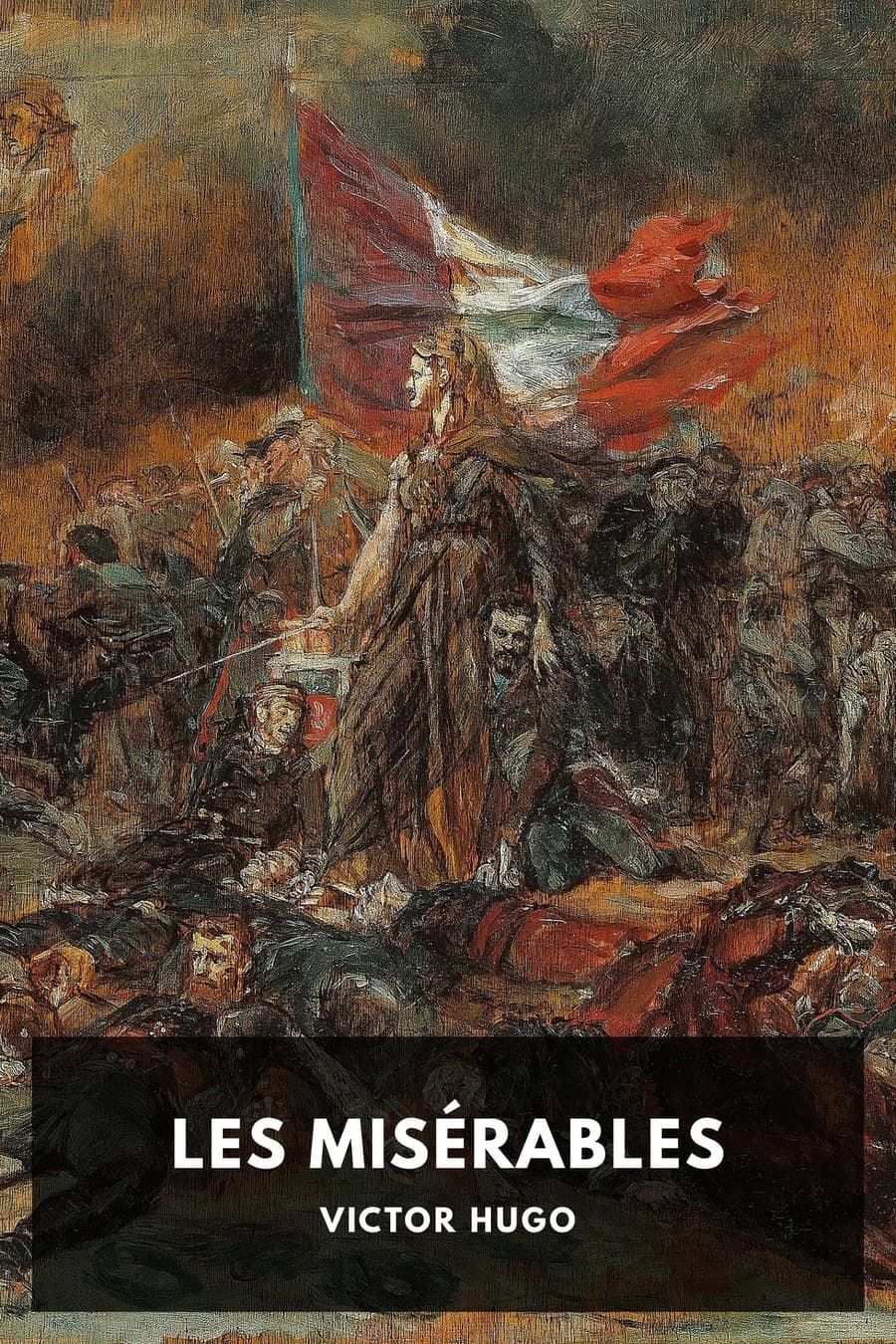
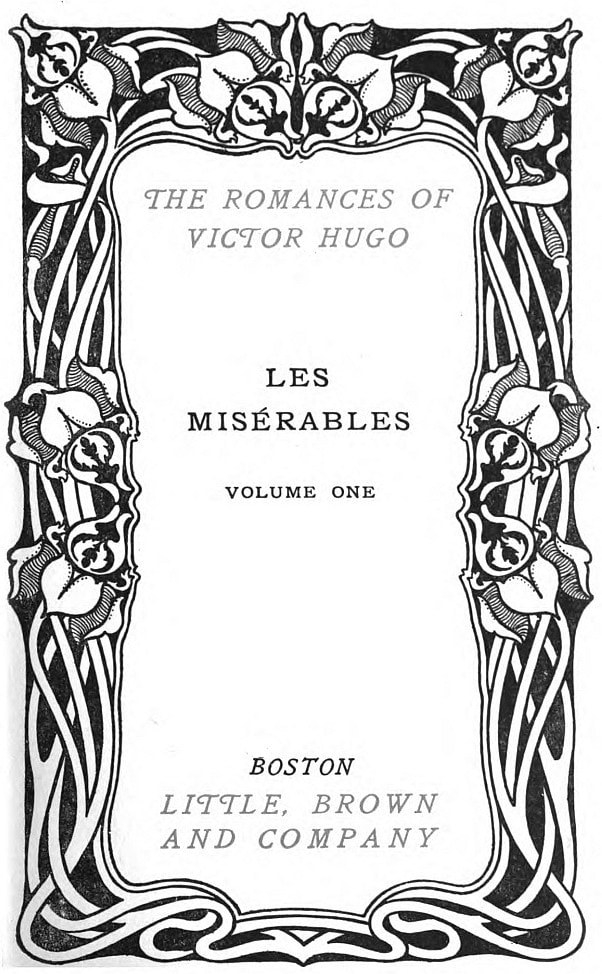
Les Misérables, V. 1/5: Fantine
1862
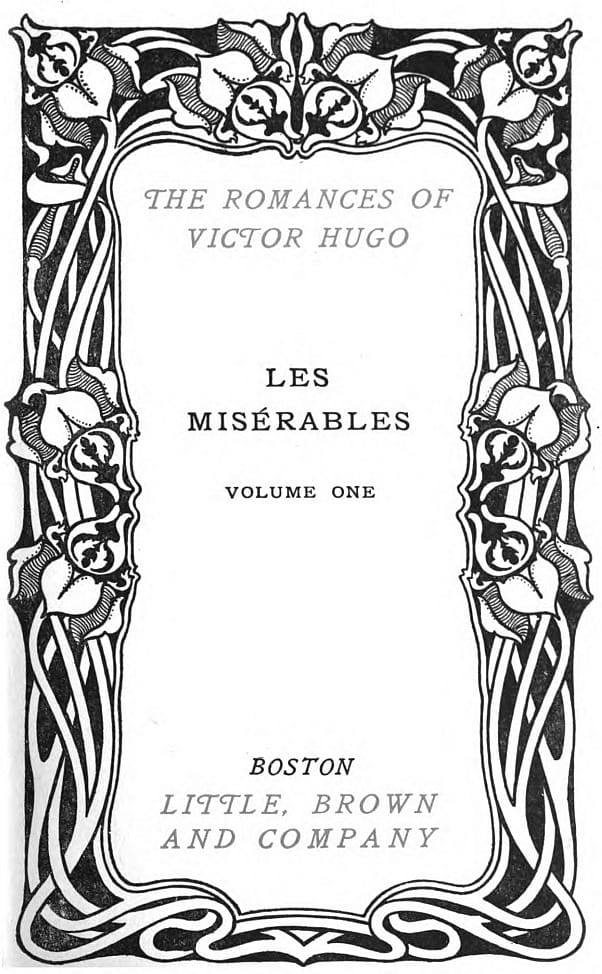
This first volume of Victor Hugo's epic opens with a theft and a lie that will echo across five volumes. Jean Valjean, nineteen years in the galleys for stealing bread, arrives at the door of Bishop Myriel of Digne, hungry and desperate. What happens next, the bishop's extraordinary mercy, the silver given freely to the man who stole it, the lie that saves Valjean's life, sets the machinery of redemption and ruin in motion. But Hugo turns next to Fantine, a woman whose beauty once drew the admiration of a provincial town and whose poverty will draw her into an abyss of sacrifice and shame. Fantine's downward spiral, her daughter pawned to strangers, her body sold for money, her teeth and hair sacrificed to respectability, Hugo presents not as personal failure but as the brutal mathematics of a society that criminalizes need. The novel announces its central argument: that mercy is stronger than law, that grace can transform the damned, and that the cost of kindness is sometimes everything.
Editions
X-Ray
“And must I now begin to doubt - who never doubted all these years? My heart is stone, and still it trembles. The world I have known is lost in the shadows. Is he from heaven or from hell? And does he know, that granting me my life today, this man has killed me, even so.- Javert””
— Victor Hugo
“A little girl without a doll is almost as unhappy, and quite as impossible, as a woman without children.””
— Victor Hugo
“Le suprême bonheur de la vie, c'est la conviction qu'on est aimé; aimé pour soi-même, disons mieux, aimé malgré soi-même.””
— Victor Hugo
“The best way to look at the soul is through closed eyes.””
— Victor Hugo
“Être aimé, c'est en effet, sur cette terre où rien n'est complet, une des formes les plus étrangement exquises du bonheur.””
— Victor Hugo
“The duty of the inn-keeper,is to sell to the first comer, stews, repose, light, fire, dirtysheets, a servant, lice, and a smile; to stop passers-by, to empty smallpurses, and to honestly lighten heavy ones; to shelter travelling familiesrespectfully: to shave the man, to pluck the woman, to pick the childclean; to quote the window open, the window shut, the chimney-corner,the arm-chair, the chair, the ottoman, the stool, the feather-bed, the mattressand the truss of straw; to know how much the shadow uses up themirror, and to put a price on it; and, by five hundred thousand devils, tomake the traveller pay for everything, even for the flies which his dogeats!””
— Victor Hugo
“There is no one for spying on people's actions like those who are not concerned in them””
— Victor Hugo
“Sad fate! he would enter into sanctity only in the eyes of God when he returned to infamy in the eyes of men.””
— Victor Hugo
“So far as Louis XVI. was concerned, I said `no.' I did not think that I had the right to kill a man; but I felt it my duty to exterminate evil. I voted the end of the tyrant, that is to say, the end of prostitution for woman, the end of slavery for man, the end of night for the child. In voting for the Republic, I voted for that. I voted for fraternity, concord, the dawn. I have aided in the overthrow of prejudices and errors. The crumbling away of prejudices and errors causes light. We have caused the fall of the old world, and the old world, that vase of miseries, has become, through its upsetting upon the human race, an urn of joy.""Mixed joy," said the Bishop."You may say troubled joy, and to-day, after that fatal return of the past, which is called 1814, joy which has disappeared! Alas! The work was incomplete, I admit: we demolished the ancient regime in deeds; we were not able to suppress it entirely in ideas. To destroy abuses is not sufficient; customs must be modified. The mill is there no longer; the wind is still there.""You have demolished. It may be of use to demolish, but I distrust a demolition complicated with wrath.""Right has its wrath, Bishop; and the wrath of right is an element of progress. In any case, and in spite of whatever may be said, the French Revolution is the most important step of the human race since the advent of Christ. Incomplete, it may be, but sublime. It set free all the unknown social quantities; it softened spirits, it calmed, appeased, enlightened; it caused the waves of civilization to flow over the earth. It was a good thing. The French Revolution is the consecration of humanity.””
— Victor Hugo
Link to this book
Add a free, dofollow link to Lex on your blog, forum, syllabus, or reading list.

<a href="https://lex-books.com/book/les-mis-rables-v-1-5-fantine-b763df7e-c79e-4767-be7a-870a4570cac7"><img src="https://lex-books.com/badges/read-on-lex.svg" alt="Read Les Misérables, V. 1/5: Fantine by Victor Hugo free on Lex" width="160" height="40"></a>[](https://lex-books.com/book/les-mis-rables-v-1-5-fantine-b763df7e-c79e-4767-be7a-870a4570cac7)[url=https://lex-books.com/book/les-mis-rables-v-1-5-fantine-b763df7e-c79e-4767-be7a-870a4570cac7][img]https://lex-books.com/badges/read-on-lex.svg[/img][/url]Read Les Misérables, V. 1/5: Fantine by Victor Hugo free on Lex: https://lex-books.com/book/les-mis-rables-v-1-5-fantine-b763df7e-c79e-4767-be7a-870a4570cac7Cite this book
Reading this edition for a paper or guide? Copy a citation.
Hugo, Victor. Les Misérables, V. 1/5: Fantine. Lex, lex-books.com/book/les-mis-rables-v-1-5-fantine-b763df7e-c79e-4767-be7a-870a4570cac7.Hugo, V. (1862). Les Misérables, V. 1/5: Fantine. Lex. https://lex-books.com/book/les-mis-rables-v-1-5-fantine-b763df7e-c79e-4767-be7a-870a4570cac7Hugo, Victor. Les Misérables, V. 1/5: Fantine. Lex. https://lex-books.com/book/les-mis-rables-v-1-5-fantine-b763df7e-c79e-4767-be7a-870a4570cac7.