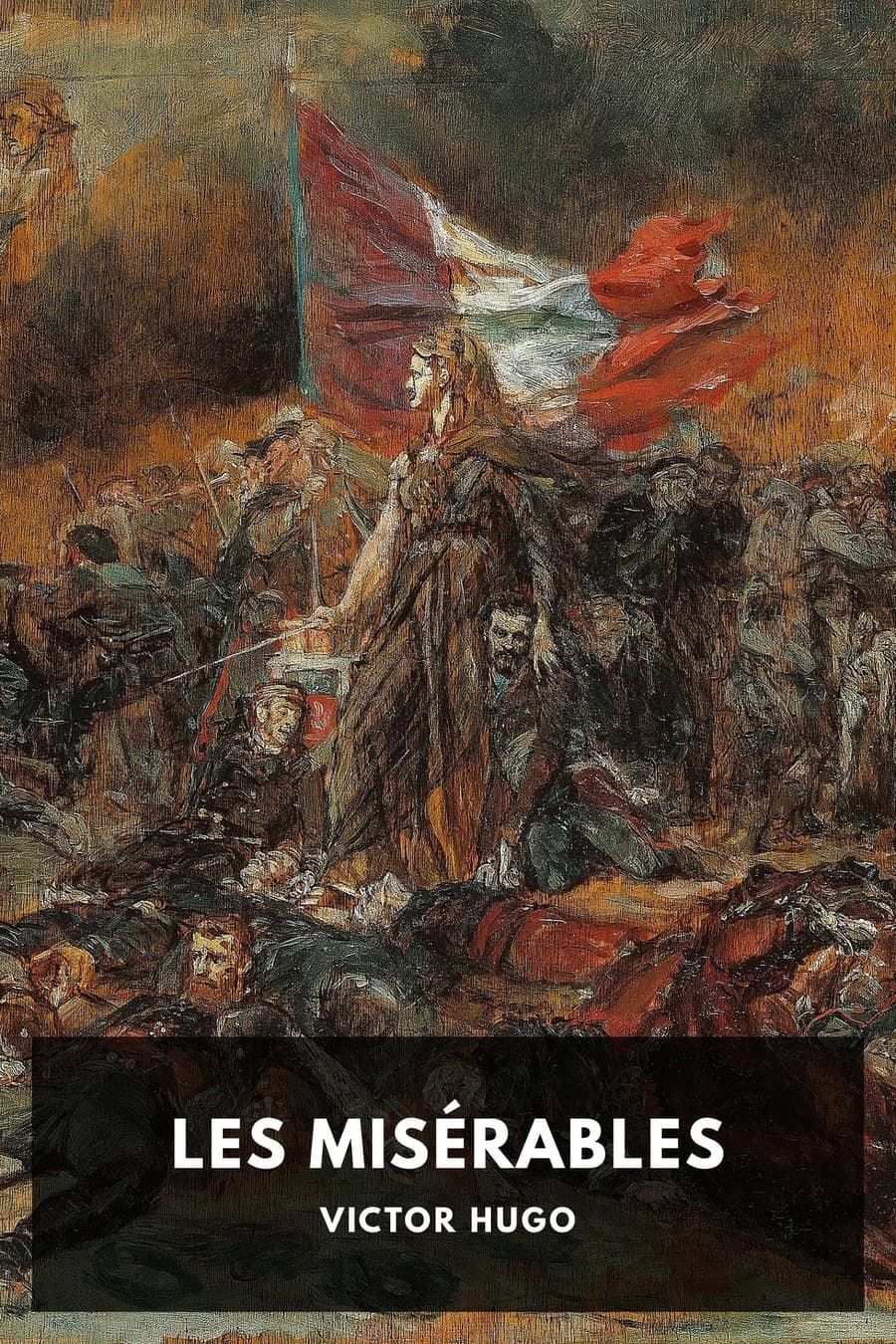
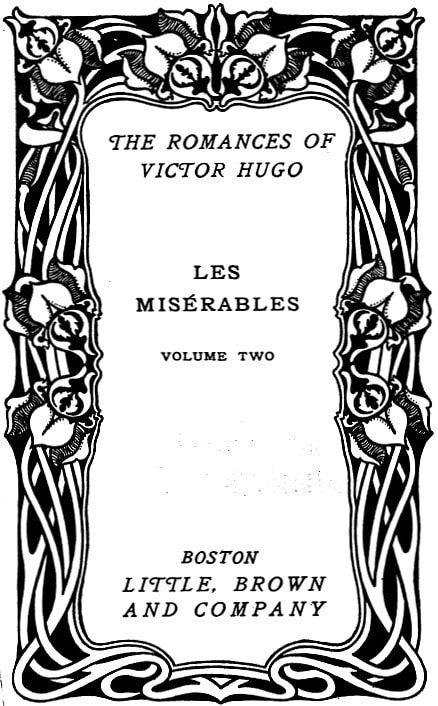
Les Misérables, V. 2/5: Cosette
1973
Les Misérables, V. 2/5: Cosette
1973
Translated by Lascelles, Sir Wraxall
Volume Two of Victor Hugo's monumental masterpiece centers on the child called Cosette, but the book opens with something seemingly unrelated: a stranger walking the road from Nivelles to La Hulpe, wandering through the quiet Belgian countryside that once ran with blood at Waterloo. The farm of Hougomont still bears its scars. This is Hugo's method, threading history into flesh, showing how the past haunts the present before we meet the man who will carry his redemption forward in the form of a frightened girl found in a dark inn, under the thumb of the Thénardiers. Jean Valjean, still fleeing his past, makes a choice that will define the rest of his life: he will take this child and raise her as his own. What follows is both a rescue and a reckoning. Hugo gives us the grim mathematics of poverty in 19th-century France, the way hunger and cruelty breed each other, but also the stubborn persistence of grace. This is the volume where love becomes possible, where a man who was nothing becomes a father to everything. The shadow of Waterloo is no coincidence; Hugo knows that every life is shaped by the battles that came before.
Editions
X-Ray
“في ما مضى سرقت رغيفا لكي أعيش ,لكنني اليوم أسرق اسما لكي اعيش .””
— Victor Hugo
“That figure stood for a long time wholly in the light; this arose from a certain legendary dimness evolved by the majority of heroes, and which always veils the truth for a longer or shorter time; but to-day history and daylight have arrived.That light called history is pitiless; it possesses this peculiar and divine quality, that, pure light as it is, and precisely because it is wholly light, it often casts a shadow in places where people had hitherto beheld rays; from the same man it constructs two different phantoms, and the one attacks the other and executes justice on it, and the shadows of the despot contend with the brilliancy of the leader. Hence arises a truer measure in the definitive judgments of nations. Babylon violated lessens Alexander, Rome enchained lessens Caesar, Jerusalem murdered lessens Titus, tyranny follows the tyrant. It is a misfortune for a man to leave behind him the night which bears his form.””
— Victor Hugo
“There can be no vacuum in the human heart. Certain demolitions take place, and it is right they should, on condition that they are followed by reconstructions.””
— Victor Hugo
“Demek insan, vicdanı karşısında her zaman sorumlu oluyor.””
— Victor Hugo
“Söz bir esintidir, o yüzden zekanın titreyişi de yaprakların titreyişine benzer.””
— Victor Hugo
“Mezara yaklaşınca insanın bakış açısı genişler; ölüme yakın olmak gerçeği görmek demektir.””
— Victor Hugo
“Okumayı öğrenmek ışığı yakmaktır, tüm hecelemeler kıvılcımlardır.””
— Victor Hugo
Link to this book
Add a free, dofollow link to Lex on your blog, forum, syllabus, or reading list.

<a href="https://lex-books.com/book/les-mis-rables-v-2-5-cosette-9ccf9f20-ff7e-4e1e-a8d7-c72cf510e66c"><img src="https://lex-books.com/badges/read-on-lex.svg" alt="Read Les Misérables, V. 2/5: Cosette by Victor Hugo free on Lex" width="160" height="40"></a>[](https://lex-books.com/book/les-mis-rables-v-2-5-cosette-9ccf9f20-ff7e-4e1e-a8d7-c72cf510e66c)[url=https://lex-books.com/book/les-mis-rables-v-2-5-cosette-9ccf9f20-ff7e-4e1e-a8d7-c72cf510e66c][img]https://lex-books.com/badges/read-on-lex.svg[/img][/url]Read Les Misérables, V. 2/5: Cosette by Victor Hugo free on Lex: https://lex-books.com/book/les-mis-rables-v-2-5-cosette-9ccf9f20-ff7e-4e1e-a8d7-c72cf510e66cCite this book
Reading this edition for a paper or guide? Copy a citation.
Hugo, Victor. Les Misérables, V. 2/5: Cosette. Lex, lex-books.com/book/les-mis-rables-v-2-5-cosette-9ccf9f20-ff7e-4e1e-a8d7-c72cf510e66c.Hugo, V. (1973). Les Misérables, V. 2/5: Cosette. Lex. https://lex-books.com/book/les-mis-rables-v-2-5-cosette-9ccf9f20-ff7e-4e1e-a8d7-c72cf510e66cHugo, Victor. Les Misérables, V. 2/5: Cosette. Lex. https://lex-books.com/book/les-mis-rables-v-2-5-cosette-9ccf9f20-ff7e-4e1e-a8d7-c72cf510e66c.