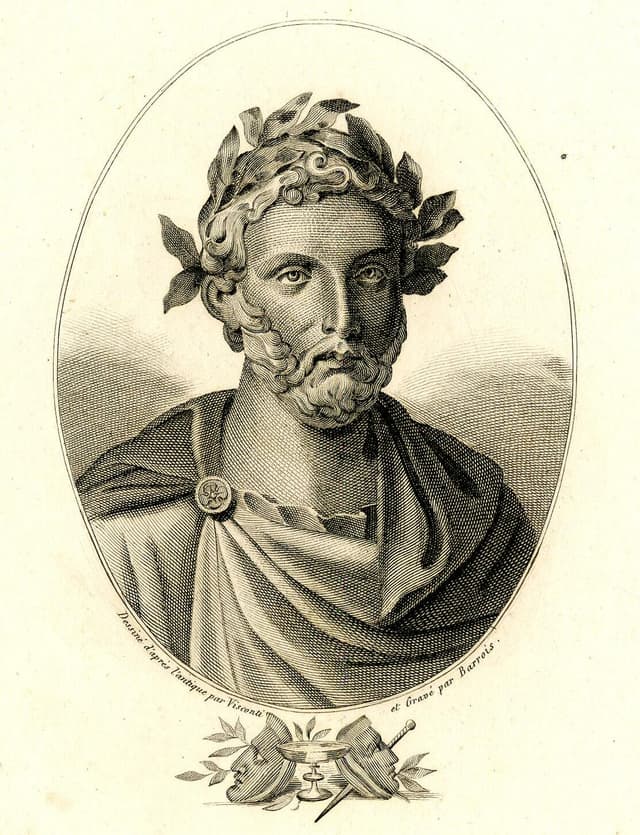
Titus Maccius Plautus
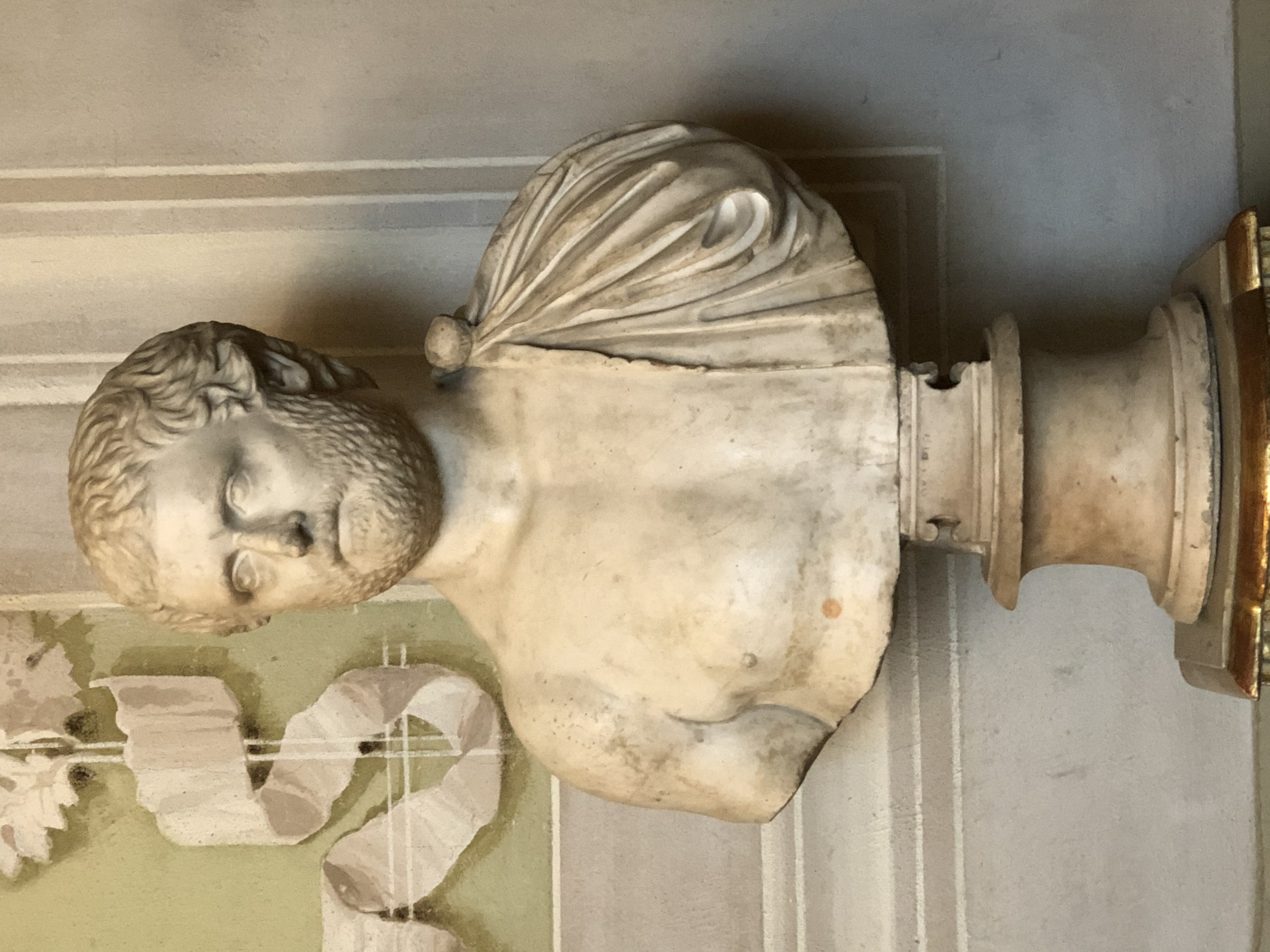
Titus Maccius Plautus was a Roman playwright whose works laid the foundation for the genre of Roman comedy. Active during the late 3rd and early 2nd centuries BC, Plautus is celebrated for his vibrant and witty adaptations of Greek New Comedy, infusing them with a distinctly Roman flavor. His plays often featured mistaken identities, clever servants, and humorous situations, showcasing the complexities of human relationships and social dynamics. Notable works such as 'Menaechmi,' which revolves around twin brothers and mistaken identities, and 'Aulularia,' centered on a greedy old man and his hidden treasure, exemplify his mastery of comedic structure and character development. Plautus's influence extended beyond his lifetime, shaping the comedic traditions of later playwrights, including Shakespeare and Molière. His ability to blend farce with deeper themes of love, greed, and deception resonated with audiences and established a template for comedic storytelling. The enduring popularity of his plays, such as 'Amphitryo' and 'Mostellaria,' reflects his skill in engaging audiences with humor while also providing social commentary. Plautus's legacy as one of the earliest and most significant figures in Western theater continues to be felt, as his works remain a vital part of the study of classical literature and drama.
Famous Quotes
View all 4 quotes“He whom the Gods love dies young.””
“No man is wise enough by himself.””
“Not by age, but by capacity, is wisdom acquired.””
Books from the author




Link to this page
Add a free, dofollow link to Lex on your blog, forum, syllabus, or reading list.

<a href="https://lex-books.com/author/titus-maccius-plautus"><img src="https://lex-books.com/badges/read-on-lex.svg" alt="Titus Maccius Plautus on Lex" width="160" height="40"></a>[](https://lex-books.com/author/titus-maccius-plautus)[url=https://lex-books.com/author/titus-maccius-plautus][img]https://lex-books.com/badges/read-on-lex.svg[/img][/url]Titus Maccius Plautus on Lex: https://lex-books.com/author/titus-maccius-plautus