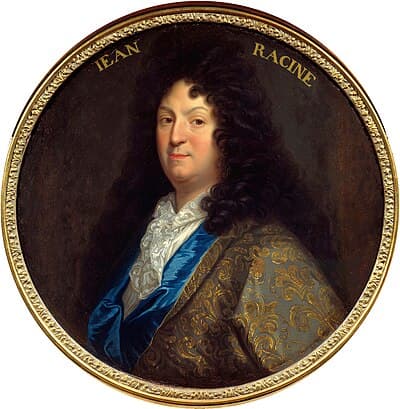
Jean Racine
Jean Racine was a prominent French dramatist of the 17th century, celebrated as one of the leading figures in classical French theatre alongside Molière and Corneille. His works are characterized by their neoclassical perfection, with a focus on tragedy that explores intense human emotions and moral dilemmas. Notable plays such as 'Phèdre', 'Andromaque', and 'Athalie' exemplify his mastery of the dodecasyllabic French alexandrine, showcasing a distinctive style marked by elegance and psychological depth. Racine's ability to convey the fury and passion of his characters has earned him a lasting place in the canon of Western literature. In addition to his tragedies, Racine also ventured into comedy with 'Les Plaideurs' and created 'Esther', a tragedy intended for young audiences. His works have been praised for their clarity and emotional intensity, with American poet Robert Lowell famously describing Racine's writing as possessing a "diamond-edge". Racine's influence on the development of drama and his exploration of the human condition have solidified his legacy as a foundational figure in the literary tradition, whose plays continue to be performed and studied for their profound insights into the complexities of human nature.
Famous Quotes
View all 3 quotes“Life is a comedy to those who think, a tragedy to those who feel.”
“A tragedy need not have blood and death; it's enough that it all be filled with that majestic sadness that is the pleasure of tragedy.”
“I have loved him too much not to hate”
Books from the author




Link to this page
Add a free, dofollow link to Lex on your blog, forum, syllabus, or reading list.

<a href="https://lex-books.com/author/jean-racine"><img src="https://lex-books.com/badges/read-on-lex.svg" alt="Jean Racine on Lex" width="160" height="40"></a>[](https://lex-books.com/author/jean-racine)[url=https://lex-books.com/author/jean-racine][img]https://lex-books.com/badges/read-on-lex.svg[/img][/url]Jean Racine on Lex: https://lex-books.com/author/jean-racine