
Francis Beaumont
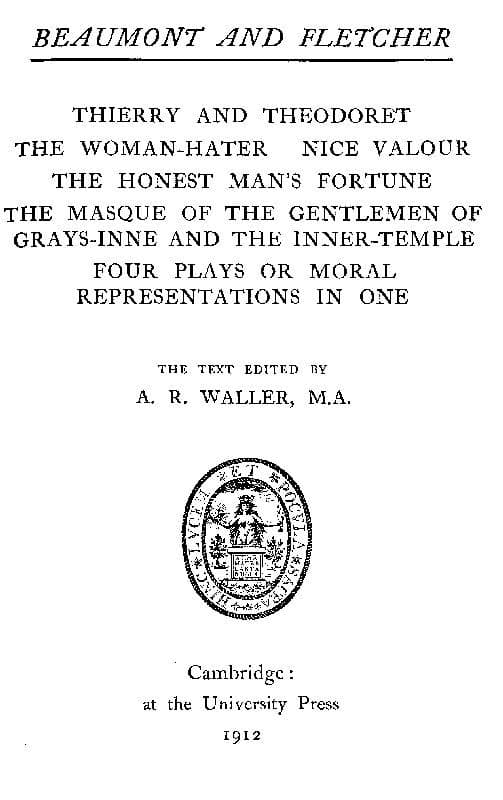
Francis Beaumont was a prominent English dramatist during the Renaissance period, renowned for his collaborative works with fellow playwright John Fletcher. Together, they created a significant body of plays that contributed to the evolution of English theatre. Beaumont's writing is characterized by its intricate characterizations and exploration of complex themes, often blending elements of tragedy and comedy. Their joint works, such as 'Philaster' and 'The Maid's Tragedy,' showcased their innovative approach to dramatic structure and character development, setting a precedent for future playwrights. Beaumont's influence extended beyond his lifetime, as his collaborations with Fletcher not only enriched the theatrical landscape of the early 17th century but also laid the groundwork for the subsequent rise of the Restoration theatre. His ability to craft engaging narratives and compelling dialogue earned him a lasting place in the canon of English literature. Beaumont's legacy is marked by his role in shaping the collaborative nature of playwriting, demonstrating the power of partnership in the creative process and leaving an indelible mark on the history of drama.
Famous Quotes
View all 3 quotes“The fool that willingly provokes a woman, has made himself another evil angel and a new hell to which all other torments are but mere pastime...”
“Interest makes some people blind and others quick-sighted.”
“The hand of Heaven is on me, be it far from me to struggle, if my secret sins have pull'd this curse upon me, lend me tears now to wash me white, that I may feel a child-like innocence within my breast; which once perform'd, O give me leave to stand as fix'd as constancy her self, my eyes set here unmov'd, regardless of the world though thousand miseries incompass me.”
Books from the author












Link to this page
Add a free, dofollow link to Lex on your blog, forum, syllabus, or reading list.

<a href="https://lex-books.com/author/francis-beaumont"><img src="https://lex-books.com/badges/read-on-lex.svg" alt="Francis Beaumont on Lex" width="160" height="40"></a>[](https://lex-books.com/author/francis-beaumont)[url=https://lex-books.com/author/francis-beaumont][img]https://lex-books.com/badges/read-on-lex.svg[/img][/url]Francis Beaumont on Lex: https://lex-books.com/author/francis-beaumont