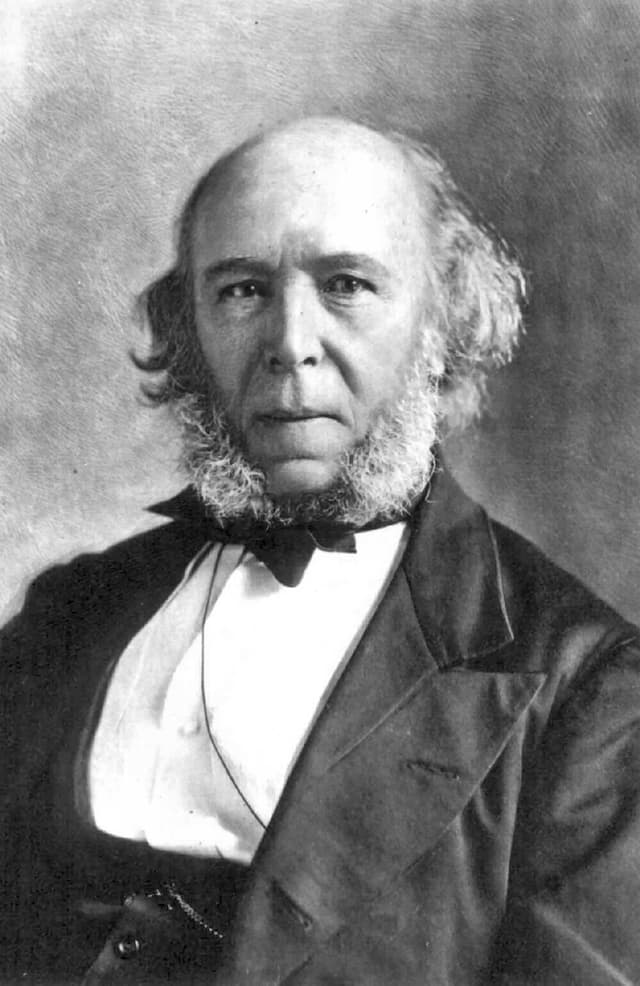
Herbert Spencer
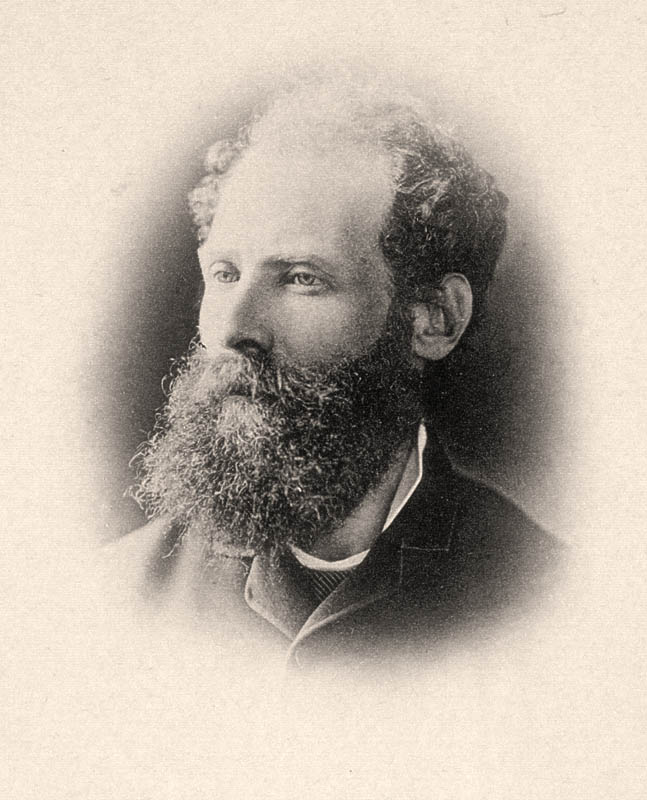
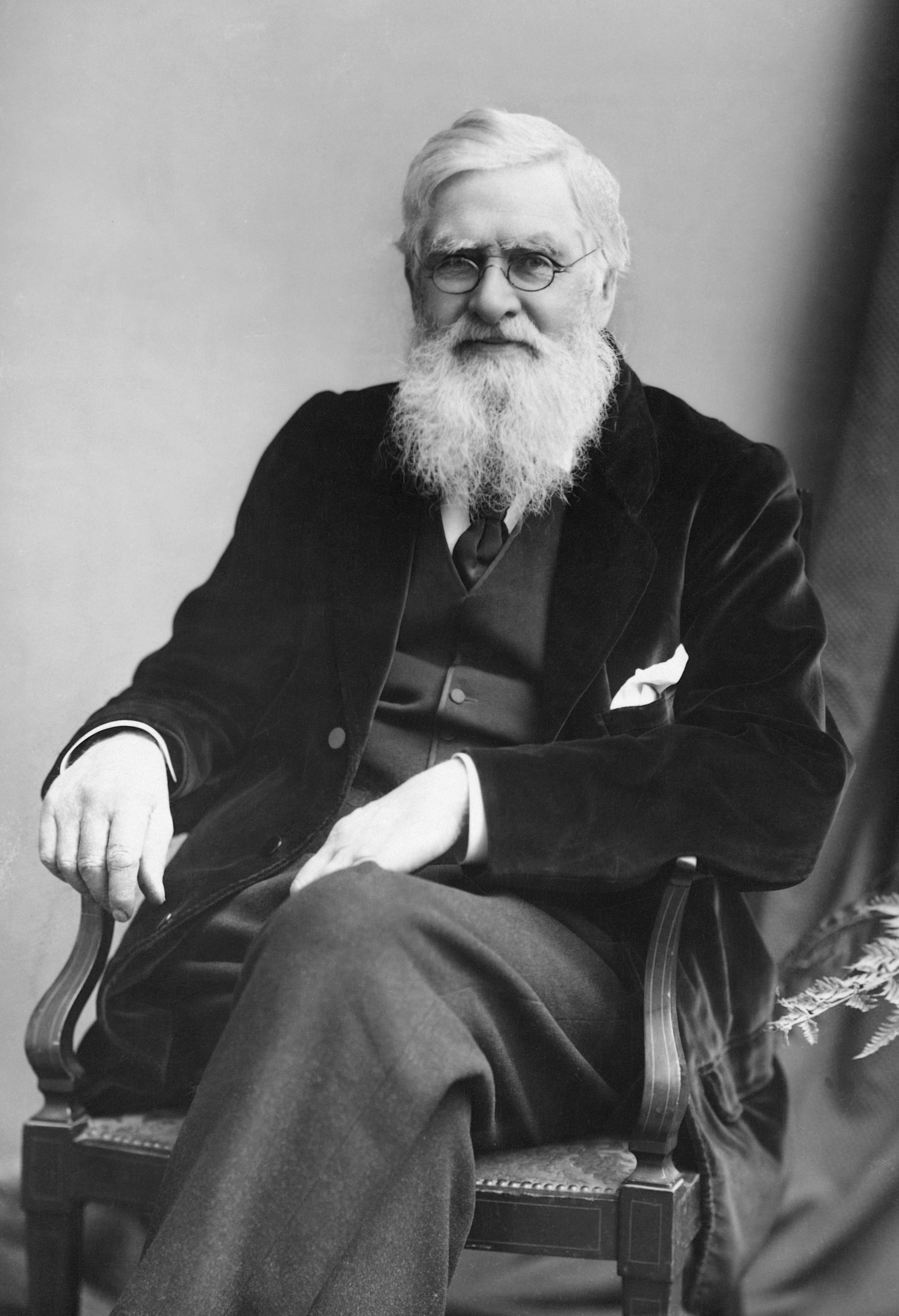
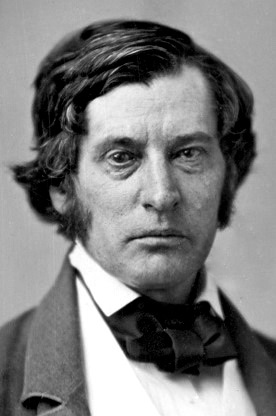
Herbert Spencer was an influential English polymath whose work spanned philosophy, sociology, biology, and psychology. He is best known for coining the phrase 'survival of the fittest' in his 1864 work, Principles of Biology, which he developed after engaging with Charles Darwin's theories on evolution. Spencer's vision of evolution extended beyond biology, encompassing the progression of human culture, ethics, and society, which he believed evolved in a manner similar to biological organisms. His ideas contributed significantly to the fields of sociology and anthropology, positioning him as a key figure in the intellectual landscape of the late 19th century. Despite his prominence during his lifetime, where he was regarded as one of the most significant European intellectuals, Spencer's influence waned in the early 20th century. His integration of evolutionary theory into social thought was both groundbreaking and controversial, as he also supported Lamarckism, which diverged from Darwinian principles. Today, while his works may not be widely read, Spencer's contributions to the understanding of evolution and social theory laid the groundwork for future discussions in sociology and philosophy, marking him as a pivotal figure in the development of social Darwinism and the broader discourse on human progress.
Famous Quotes
View all 3 quotes“The great aim of education is not knowledge but action.”
“The ultimate result of shielding men from the effects of folly is to fill the world with fools.”
“[L]et us not overlook the further great fact, that not only does science underlie sculpture, painting, music, poetry, but that science is itself poetic. The current opinion that science and poetry are opposed is a delusion. ... On the contrary science opens up realms of poetry where to the unscientific all is a blank. Those engaged in scientific researches constantly show us that they realize not less vividly, but more vividly, than others, the poetry of their subjects. Whoever will dip into Hugh Miller 's works on geology, or read Mr. Lewes 's “Seaside Studies,” will perceive that science excites poetry rather than extinguishes it. And whoever will contemplate the life of Goethe will see that the poet and the man of science can co-exist in equal activity. Is it not, indeed, an absurd and almost a sacrilegious belief that the more a man studies Nature the less he reveres it? Think you that a drop of water, which to the vulgar eye is but a drop of water, loses anything in the eye of the physicist who knows that its elements are held together by a force which, if suddenly liberated, would produce a flash of lightning? Think you that what is carelessly looked upon by the uninitiated as a mere snow-flake, does not suggest higher associations to one who has seen through a microscope the wondrously varied and elegant forms of snow-crystals? Think you that the rounded rock marked with parallel scratches calls up as much poetry in an ignorant mind as in the mind of a geologist, who knows that over this rock a glacier slid a million years ago? The truth is, that those who have never entered upon scientific pursuits know not a tithe of the poetry by which they are surrounded. Whoever has not in youth collected plants and insects, knows not half the halo of interest which lanes and hedge-rows can assume. Whoever has not sought for fossils, has little idea of the poetical associations that surround the places where imbedded treasures were found. Whoever at the seaside has not had a microscope and aquarium, has yet to learn what the highest pleasures of the seaside are. Sad, indeed, is it to see how men occupy themselves with trivialities, and are indifferent to the grandest phenomena—care not to understand the architecture of the universe, but are deeply interested in some contemptible controversy about the intrigues of Mary Queen of Scots!—are learnedly critical over a Greek ode, and pass by without a glance that grand epic... upon the strata of the Earth!”
Books from the author






Link to this page
Add a free, dofollow link to Lex on your blog, forum, syllabus, or reading list.

<a href="https://lex-books.com/author/herbert-spencer"><img src="https://lex-books.com/badges/read-on-lex.svg" alt="Herbert Spencer on Lex" width="160" height="40"></a>[](https://lex-books.com/author/herbert-spencer)[url=https://lex-books.com/author/herbert-spencer][img]https://lex-books.com/badges/read-on-lex.svg[/img][/url]Herbert Spencer on Lex: https://lex-books.com/author/herbert-spencer