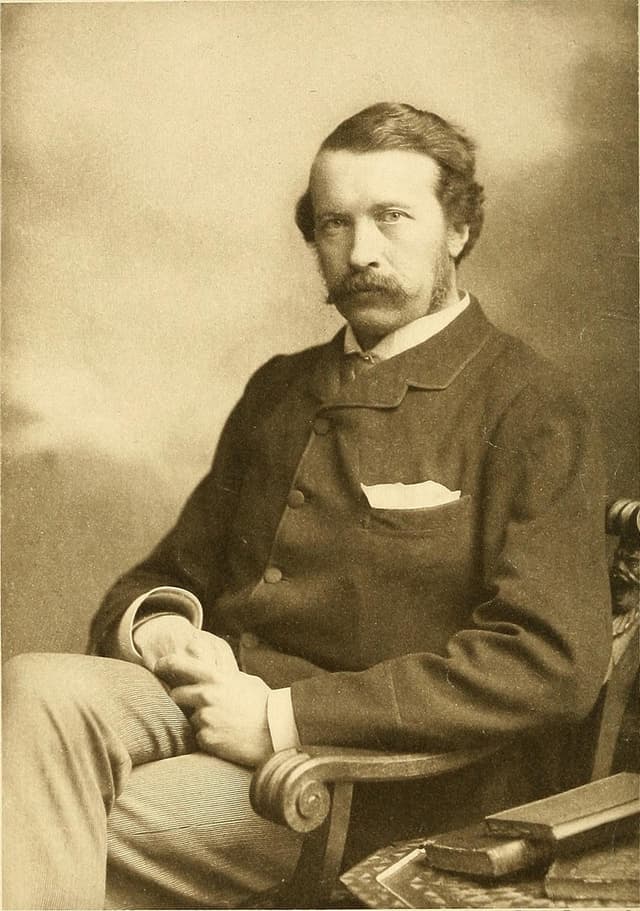
George John Romanes
George John Romanes was a Canadian-Scottish evolutionary biologist and physiologist who made significant contributions to the understanding of animal cognition and evolutionary theory. As one of the youngest associates of Charles Darwin, Romanes was instrumental in popularizing the concept of neo-Darwinism, emphasizing natural selection as the primary mechanism of evolution. His pioneering work in comparative psychology laid the groundwork for exploring the cognitive similarities between humans and other animals, a field that would later gain prominence in both psychology and biology. Romanes authored several influential works, including 'Animal Intelligence' and 'Mental Evolution in Animals,' which examined the mental capacities of various species and argued for a continuity of mental processes across the animal kingdom. His ideas sparked discussions that would shape the future of evolutionary biology, although his untimely death at the age of 46 curtailed his potential impact. Romanes' legacy endures in the realms of psychology and biology, where his insights continue to inform contemporary debates about the nature of intelligence and the evolutionary connections among species.
Famous Quotes
View all 2 quotes“Pleasures and pains must have been evolved as the subjective accompaniment of processes which are respectively beneficial or injurious to the organism, and so evolved the purpose or to the end that the organism should seek the one and shun the other.”
“Pleasures and pains must have been evolved as the subjective accompaniment of processes which are respectively beneficial or injurious to the organism, and so evolved for the purpose or to the end that the organism should seek the one and shun the other.”
Books from the author







Link to this page
Add a free, dofollow link to Lex on your blog, forum, syllabus, or reading list.

<a href="https://lex-books.com/author/george-john-romanes"><img src="https://lex-books.com/badges/read-on-lex.svg" alt="George John Romanes on Lex" width="160" height="40"></a>[](https://lex-books.com/author/george-john-romanes)[url=https://lex-books.com/author/george-john-romanes][img]https://lex-books.com/badges/read-on-lex.svg[/img][/url]George John Romanes on Lex: https://lex-books.com/author/george-john-romanes