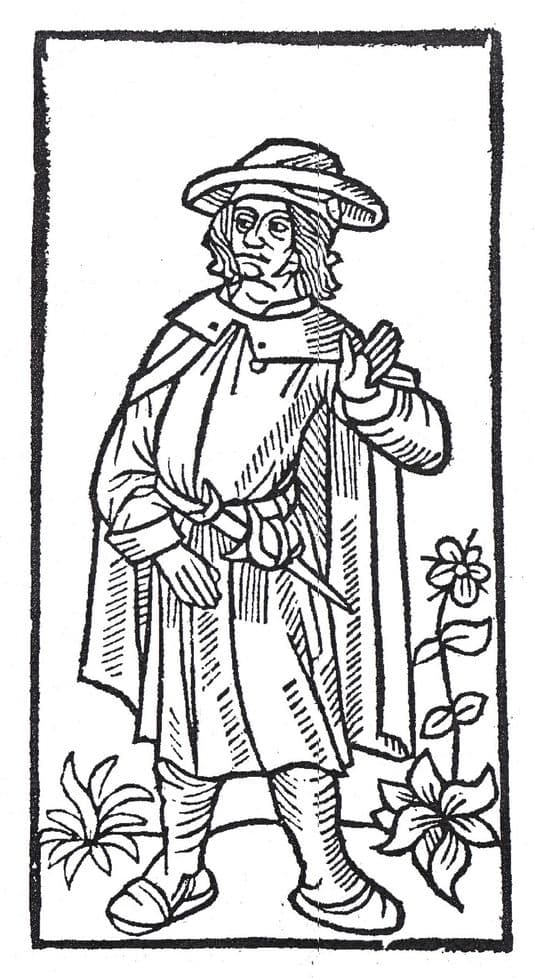
François Villon
François Villon was a French poet of the late Middle Ages, renowned for his vivid and often poignant exploration of the human condition. Born in Paris around 1431, Villon's life was marked by a tumultuous blend of literary genius and personal strife. He was orphaned at a young age and raised by a benefactor, which may have influenced his later themes of loss and longing. His most famous works, 'Le Testament' and 'Ballade des dames du temps jadis,' showcase his mastery of the ballade form and his ability to weave personal reflection with social commentary. Villon's poetry is notable for its raw emotion, dark humor, and a deep sense of mortality, reflecting the uncertainties of his time, including the aftermath of the Hundred Years' War. Villon's life was as dramatic as his poetry; he was known for his rebellious spirit and brushes with the law, which ultimately led to his exile from Paris. His work is often seen as a precursor to modern poetry, blending the personal with the universal and paving the way for future poets. Despite his relatively short life, Villon's influence on French literature is profound, as he challenged the conventions of his era and introduced a more personal and introspective style. His legacy endures, inspiring countless writers and poets who followed, and he remains a pivotal figure in the evolution of French literature.
Famous Quotes
View all 9 quotes“I know flies in milk. I know the man by his clothes. I know fair weather from foul. I know the apple by the tree. I know the tree when I see the sap. I know when all is one. I know who labors and who loafs. I know everything but myself.””
“We were two and had but one heart.””
“At break of day I say goodnight.””
Books from the author





Link to this page
Add a free, dofollow link to Lex on your blog, forum, syllabus, or reading list.

<a href="https://lex-books.com/author/françois-villon"><img src="https://lex-books.com/badges/read-on-lex.svg" alt="François Villon on Lex" width="160" height="40"></a>[](https://lex-books.com/author/françois-villon)[url=https://lex-books.com/author/françois-villon][img]https://lex-books.com/badges/read-on-lex.svg[/img][/url]François Villon on Lex: https://lex-books.com/author/françois-villon