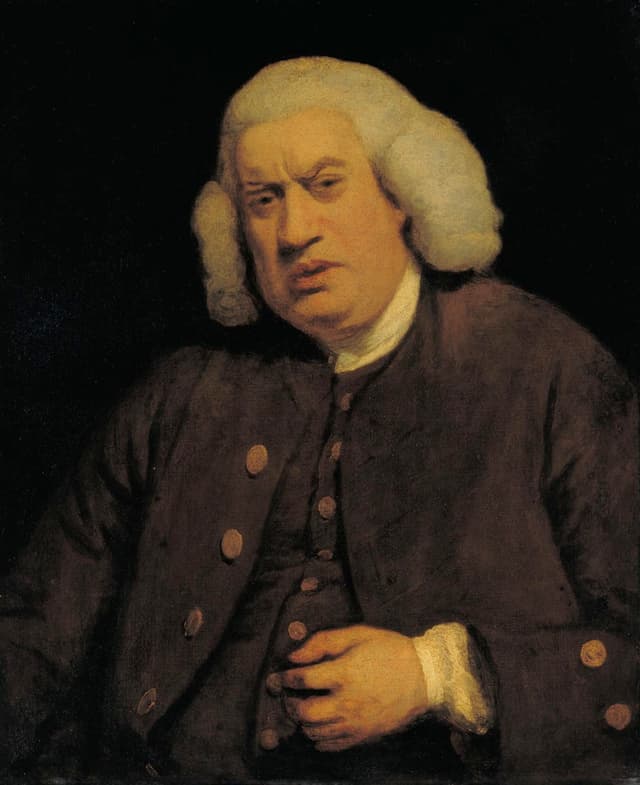
Samuel Johnson
Samuel Johnson, often referred to as Dr. Johnson, was a prolific English writer whose diverse contributions spanned poetry, drama, essays, and lexicography. Born in Lichfield, Staffordshire, he faced financial difficulties that curtailed his education at Pembroke College, Oxford. After a brief stint as a teacher, he moved to London, where he began writing for The Gentleman's Magazine. His early works included the poignant poems 'London' and 'The Vanity of Human Wishes,' as well as the play 'Irene.' However, it was his monumental 'A Dictionary of the English Language,' published in 1755 after nine years of labor, that solidified his reputation as one of the foremost scholars of his time, earning acclaim as a landmark achievement in English literature. Johnson's literary significance extended beyond his dictionary; he was a key figure in the development of English literary criticism and biography. His later works included an annotated edition of Shakespeare's plays and the philosophical tale 'The History of Rasselas, Prince of Abissinia.' His friendship with James Boswell led to the creation of 'The Life of Samuel Johnson,' which not only chronicled Johnson's life but also provided insights into his character, including his struggles with health and the tics that have led to posthumous discussions of Tourette syndrome. Johnson's influence on literature and language remains profound, and he is remembered as one of the most distinguished figures in English literary history, leaving a legacy that continues to resonate in the fields of lexicography and literary criticism.
Famous Quotes
View all 19 quotes“Curiosity is, in great and generous minds, the first passion and the last.””
“I hate mankind, for I think myself one of the best of them, and I know how bad I am.””
“He who makes a beast of himself gets rid of the pain of being a man.””
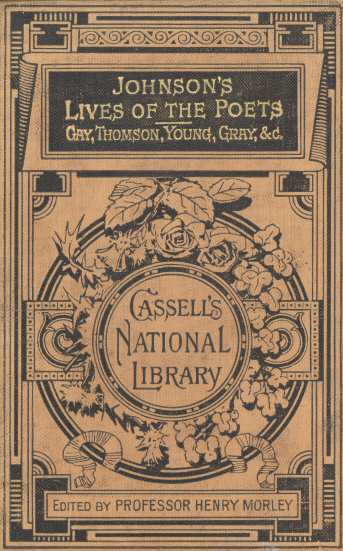
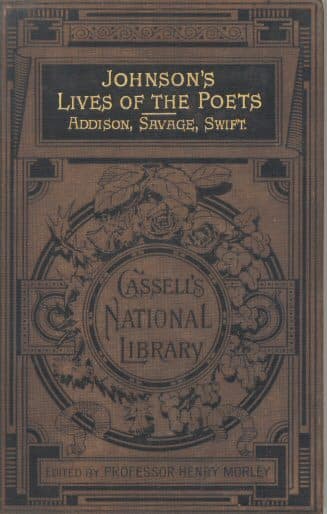
Books from the author




Link to this page
Add a free, dofollow link to Lex on your blog, forum, syllabus, or reading list.

<a href="https://lex-books.com/author/samuel-johnson"><img src="https://lex-books.com/badges/read-on-lex.svg" alt="Samuel Johnson on Lex" width="160" height="40"></a>[](https://lex-books.com/author/samuel-johnson)[url=https://lex-books.com/author/samuel-johnson][img]https://lex-books.com/badges/read-on-lex.svg[/img][/url]Samuel Johnson on Lex: https://lex-books.com/author/samuel-johnson