William Habington
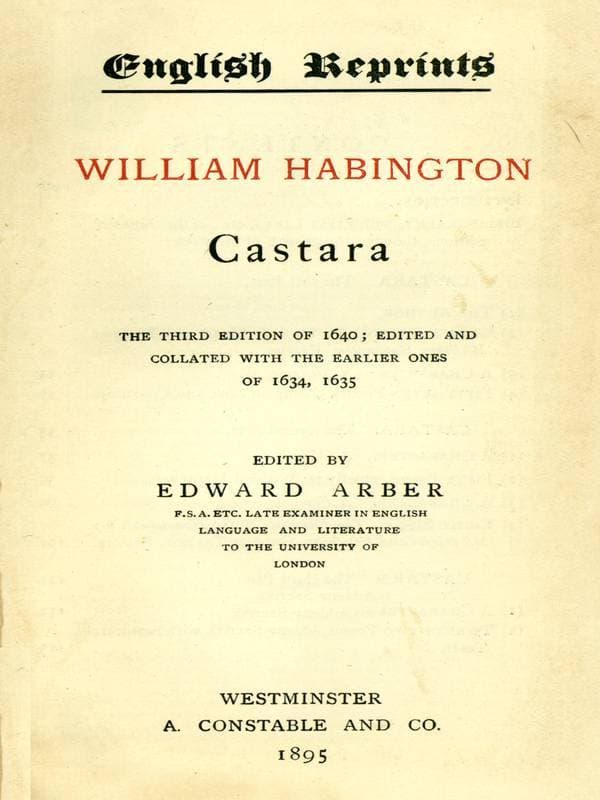
William Habington was an English poet known for his eloquent verse and exploration of themes such as love, faith, and morality. Born in 1605, he was educated at the University of Oxford, where he developed a deep appreciation for literature and the arts. His most notable works include 'Castara,' a collection of poems that reflect his admiration for the beauty of the natural world and the complexities of human emotion. This work, published in 1634, is particularly significant for its innovative use of the sonnet form and its intimate portrayal of love and devotion, which set it apart from the more conventional poetry of his time. Habington's literary significance lies not only in his poetic contributions but also in his ability to capture the essence of the human experience during a tumultuous period in English history. His writing often conveyed a sense of introspection and moral contemplation, resonating with readers who sought solace in the arts amid the political and social upheaval of the 17th century. Despite being overshadowed by contemporaries such as John Milton, Habington's work has been recognized for its lyrical beauty and emotional depth, ensuring his legacy as a noteworthy figure in early modern English poetry.
Famous Quotes
View all 1 quotes“As yourselves your empires fall, And every kingdom hath a grave.”
Books from the author

Link to this page
Add a free, dofollow link to Lex on your blog, forum, syllabus, or reading list.

<a href="https://lex-books.com/author/william-habington"><img src="https://lex-books.com/badges/read-on-lex.svg" alt="William Habington on Lex" width="160" height="40"></a>[](https://lex-books.com/author/william-habington)[url=https://lex-books.com/author/william-habington][img]https://lex-books.com/badges/read-on-lex.svg[/img][/url]William Habington on Lex: https://lex-books.com/author/william-habington