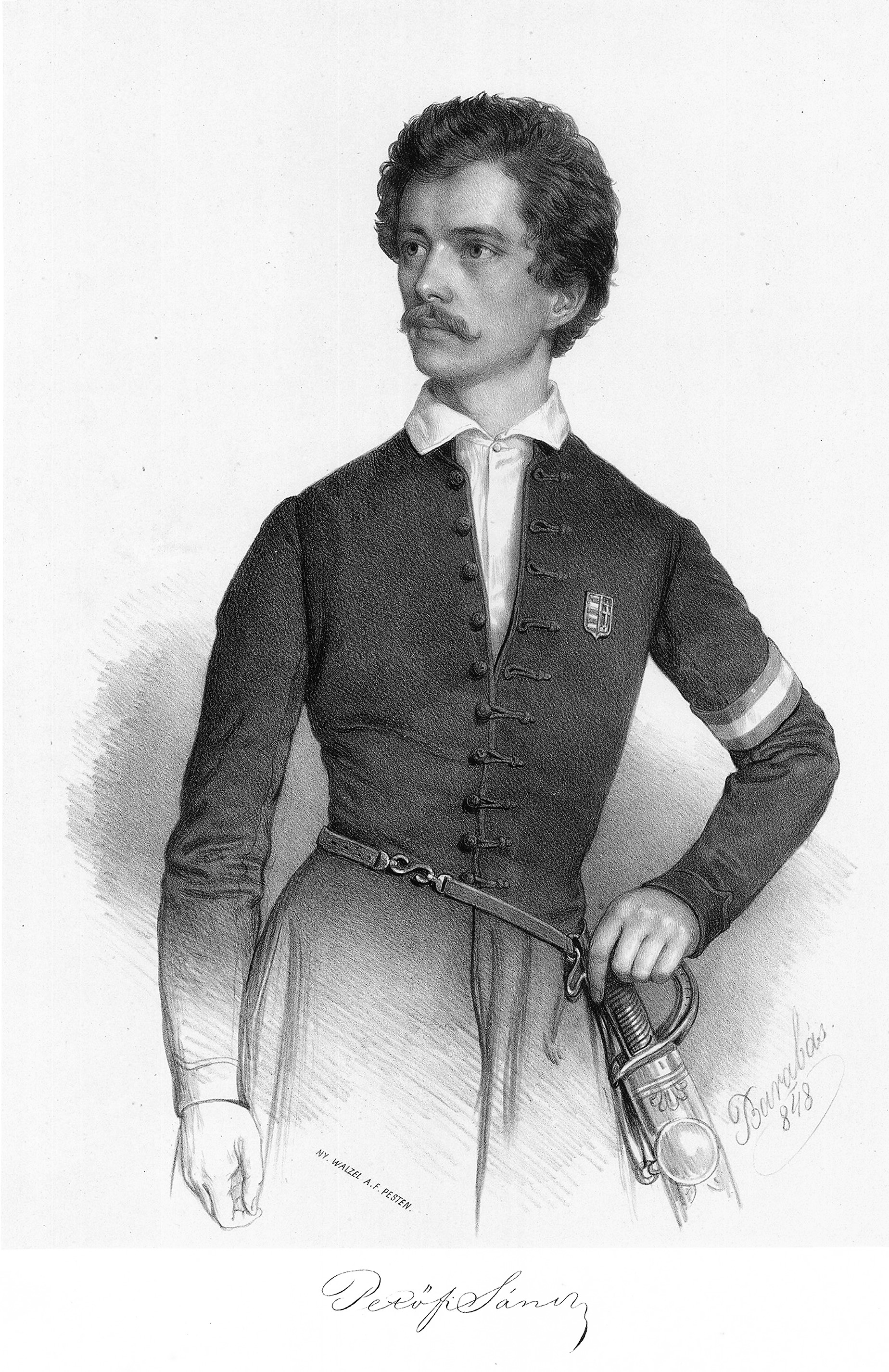
Sándor Petőfi
Sándor Petőfi was a Hungarian poet and revolutionary, widely regarded as one of the most significant figures in Hungarian literature and national identity. Born in 1823 in Kiskőrös, he emerged as a leading voice of the Hungarian Romantic movement, using his poetry to express themes of freedom, love, and national pride. His most famous work, the poem "Nemzeti dal" (National Song), became an anthem for the Hungarian Revolution of 1848, which sought independence from Habsburg rule. Petőfi's passionate and lyrical style resonated deeply with the Hungarian populace, inspiring a sense of unity and purpose during a tumultuous period in the nation's history. Tragically, Petőfi's life was cut short when he died at the young age of 26 during the revolutionary battles. Despite his brief career, his impact on Hungarian literature and culture was profound. He is celebrated not only for his poetic contributions but also for his role in the fight for national sovereignty. Petőfi's legacy endures, as he is remembered as a national hero and a symbol of the Hungarian spirit, with his works continuing to be studied and revered in Hungary and beyond.
Famous Quotes
View all 3 quotes“Zar pitoma kućna ptica da budeOrao, kojiNekad je pandžeVihoru bjesnomu leđa zarivôI jahao na njem -Pobjednik njegov?Zar vatreni mladićDa građanin bude,Što, miran i mlitav, ramenima sliježeI klima glavomU spavaćoj kapi?Ne može meneNapustiti žar,Plemenit gnjev moj.Presahnuo nijeU mojemu srcuDivlji i bučni planinski potok,A bome i ne će.Mirniji samoPosta mu tok,Jer poljima ravnimVodi ga put -Sadašnjost to jeBez brijega i dola.Al tu je budućnost!Divljih je stijenaI ponora puna!””
“Talpra magyar, hí a haza!Itt az idő, most vagy soha!Rabok legyünk vagy szabadok?Ez a kérdés, válasszatok! –A magyarok istenéreEsküszünk,Esküszünk, hogy rabok továbbNem leszünk!””
“Elhull a virág, eliramlik az élet...””
Books from the author



Link to this page
Add a free, dofollow link to Lex on your blog, forum, syllabus, or reading list.

<a href="https://lex-books.com/author/sándor-petőfi"><img src="https://lex-books.com/badges/read-on-lex.svg" alt="Sándor Petőfi on Lex" width="160" height="40"></a>[](https://lex-books.com/author/sándor-petőfi)[url=https://lex-books.com/author/sándor-petőfi][img]https://lex-books.com/badges/read-on-lex.svg[/img][/url]Sándor Petőfi on Lex: https://lex-books.com/author/sándor-petőfi