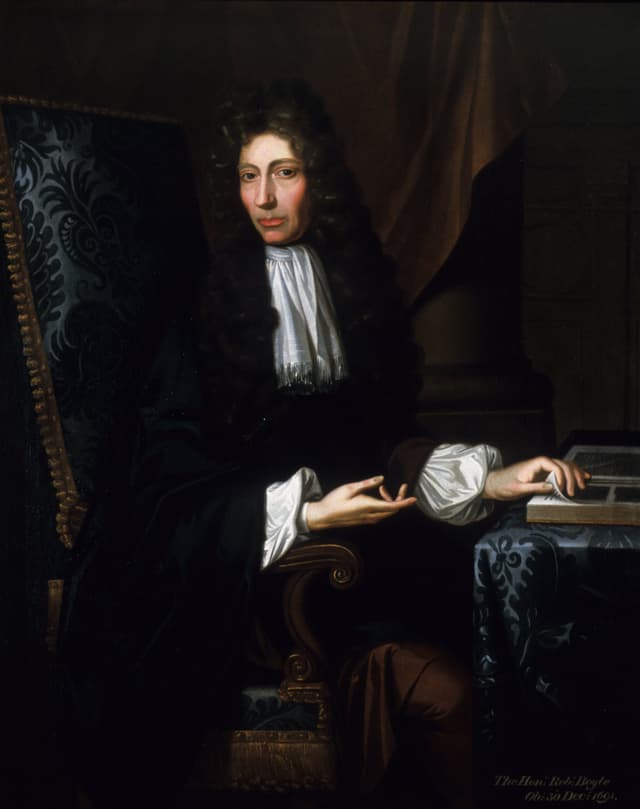
Robert Boyle
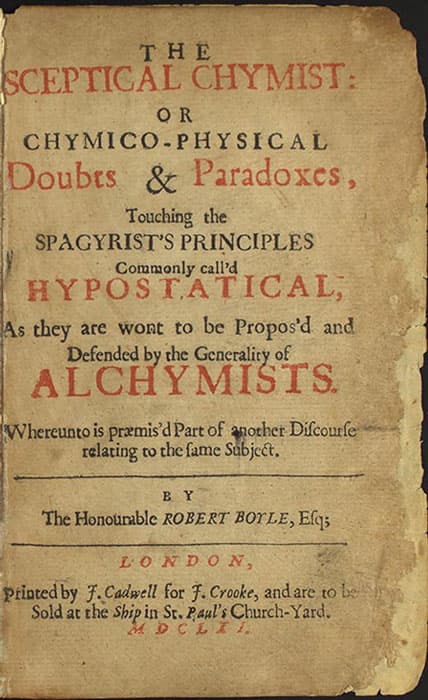
Robert Boyle was an Anglo-Irish natural philosopher and a pivotal figure in the development of modern chemistry. Often hailed as the first modern chemist, Boyle's work laid the groundwork for the scientific method as we know it today. His most famous contribution, Boyle's law, articulates the relationship between the pressure and volume of a gas, establishing a fundamental principle in physics and chemistry. His influential book, The Sceptical Chymist, challenged the traditional views of alchemy and chemistry, advocating for a more empirical approach to scientific inquiry. In addition to his scientific achievements, Boyle was a devout Anglican whose theological writings reflected his belief in the harmony between science and religion. His legacy extends beyond his discoveries; he was instrumental in promoting the experimental method and the importance of observation in scientific research. Boyle's impact on both chemistry and the philosophy of science has made him a key figure in the transition from alchemy to modern chemistry, influencing generations of scientists and thinkers.
Famous Quotes
View all 3 quotes“Those distinct substances, which concretes generally either afford, or are made up of, may, without very much inconvenience, be called the elements or principles of them.”
“Epicurus ... supposes not only all mixt bodies, but all others to be produced by the various and casual occursions of atoms, moving themselves to and fro by an internal principle in the immense or rather infinite vacuum.”
“The revealed truths, if they be burdens to reason, are but such burdens as feathers are to a hawk, which, instead of hindering his flight by their weight, enable him to soar toward heaven and take a larger prospect, than if he had no feathers, he could possibly do.”
Books from the author


Link to this page
Add a free, dofollow link to Lex on your blog, forum, syllabus, or reading list.

<a href="https://lex-books.com/author/robert-boyle"><img src="https://lex-books.com/badges/read-on-lex.svg" alt="Robert Boyle on Lex" width="160" height="40"></a>[](https://lex-books.com/author/robert-boyle)[url=https://lex-books.com/author/robert-boyle][img]https://lex-books.com/badges/read-on-lex.svg[/img][/url]Robert Boyle on Lex: https://lex-books.com/author/robert-boyle