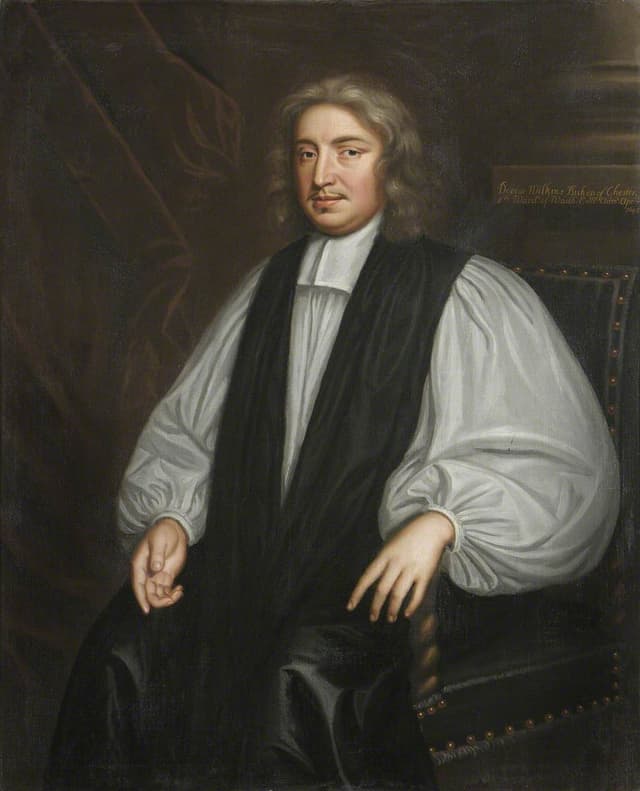
John Wilkins
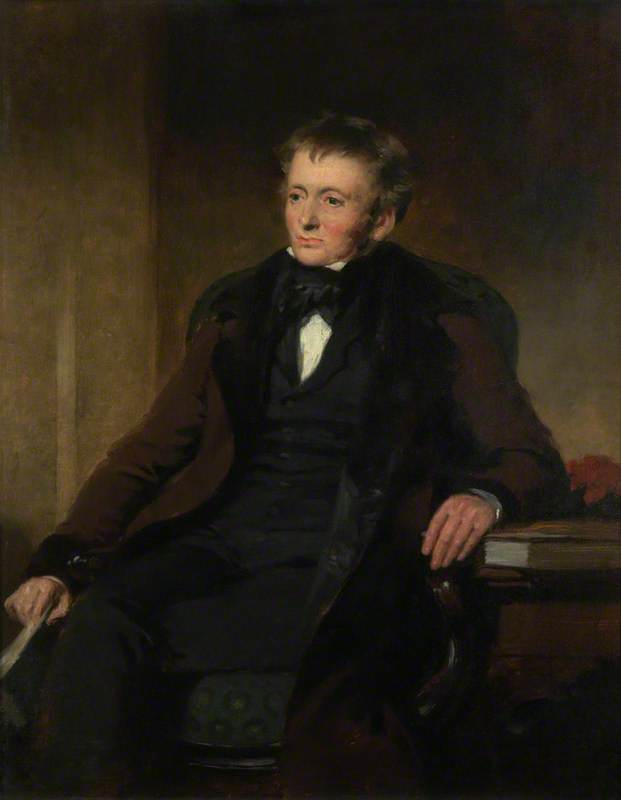
John Wilkins was an English Anglican clergyman, natural philosopher, and a pivotal figure in the early scientific community, best known as one of the founders of the Royal Society. Serving as Bishop of Chester from 1668 until his death, Wilkins was a polymath who held leadership roles at both the University of Oxford and the University of Cambridge. His ability to navigate the complex political and religious landscape of his time allowed him to foster dialogue among diverse groups, including Protestant Nonconformists, and to advocate for a more inclusive Church of England. His contemporaries recognized him for his wisdom and commitment to the common good, with Gilbert Burnet describing him as 'the wisest clergyman I ever knew.' Wilkins's literary contributions include 'An Essay towards a Real Character and a Philosophical Language,' published in 1668, where he proposed a universal language and a systematic approach to measurement akin to the metric system. Although not a leading scientific innovator, his work laid important groundwork for the integration of natural theology with contemporary science, reflecting a progressive vision for the relationship between faith and reason. His legacy endures through his efforts to promote tolerance and understanding in a time of great strife, marking him as a significant figure in the evolution of scientific thought and religious discourse in England.
Famous Quotes
View all 8 quotes“There is a terrible truthfulness about photography. The ordinary academician gets hold of a pretty model, paints her as well as he can, calls her Juliet, and puts a nice verse Shakespeare underneath, and the picture is admired beyond measure. The photographer finds the same pretty girl, he dresses her up and photographs her, and calls her Juliet, but somehow it is no good – it is still Miss Wilkins, the model. It is too true to be Juliet.George Bernard ShawWilson’s Photographic Magazine, LVI, 1909””
“It was now pointed out that the black male child, even in a black school using white textbooks, could early come to the conclusion that all the heroes in history were white men. Furthermore, with the exception of nationally known black civil rights leaders like Martin Luther King, Roy Wilkins, James Farmer, and others, the black male child frequently saw the adult black male as ineffectual and defeated. The old picture of the white man leading the black man by the hand toward the solution to his problems again gave the black male child a view of the adult black male as something not worth becoming, and killed his spirit and his will to become an adult, problem-solving individual.””
“As wee now wonder at the blindnesse of our Ancestors, who were not able to discerne such things as seeme plaine and obvious unto us. So will our posterity admire our ignorance in as perspicuous matters.””
Books from the author


Link to this page
Add a free, dofollow link to Lex on your blog, forum, syllabus, or reading list.

<a href="https://lex-books.com/author/john-wilkins"><img src="https://lex-books.com/badges/read-on-lex.svg" alt="John Wilkins on Lex" width="160" height="40"></a>[](https://lex-books.com/author/john-wilkins)[url=https://lex-books.com/author/john-wilkins][img]https://lex-books.com/badges/read-on-lex.svg[/img][/url]John Wilkins on Lex: https://lex-books.com/author/john-wilkins