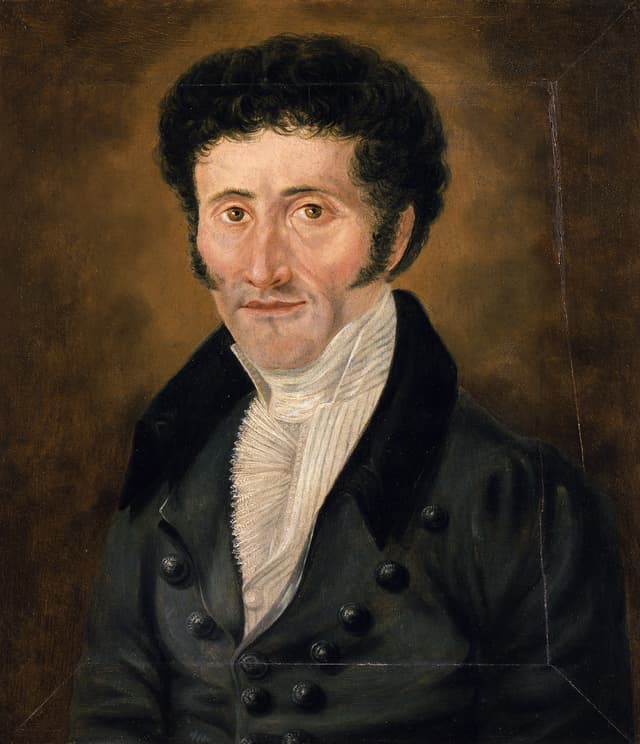
E. T. A. Hoffmann
E. T. A. Hoffmann was a German writer, composer, and music critic, known for his influential contributions to the early Romantic movement. Born in Königsberg, Hoffmann's early life was marked by a passion for music and literature, which he pursued alongside his legal studies. His unique blend of fantasy and psychological insight found expression in his short stories and novellas, with notable works such as 'The Nutcracker and the Mouse King,' 'The Sandman,' and 'The Life and Opinions of the Tomcat Murr.' Hoffmann's narratives often explored the boundaries between reality and imagination, incorporating elements of the supernatural and the grotesque, which would later inspire the likes of Edgar Allan Poe and Franz Kafka. Hoffmann's literary significance lies not only in his innovative storytelling but also in his ability to weave music into his narratives, reflecting his dual career as a composer. His works often featured themes of duality and the uncanny, challenging the conventions of his time. As a pioneer of the Gothic and fantastical genres, Hoffmann's influence extended beyond literature into the realms of opera and ballet, with his stories adapted into various musical forms, most famously by Tchaikovsky. His legacy endures as a foundational figure in the Romantic literary tradition, celebrated for his imaginative prowess and psychological depth.
Books from the author







Link to this page
Add a free, dofollow link to Lex on your blog, forum, syllabus, or reading list.

<a href="https://lex-books.com/author/e-t-a-hoffmann"><img src="https://lex-books.com/badges/read-on-lex.svg" alt="E. T. A. Hoffmann on Lex" width="160" height="40"></a>[](https://lex-books.com/author/e-t-a-hoffmann)[url=https://lex-books.com/author/e-t-a-hoffmann][img]https://lex-books.com/badges/read-on-lex.svg[/img][/url]E. T. A. Hoffmann on Lex: https://lex-books.com/author/e-t-a-hoffmann