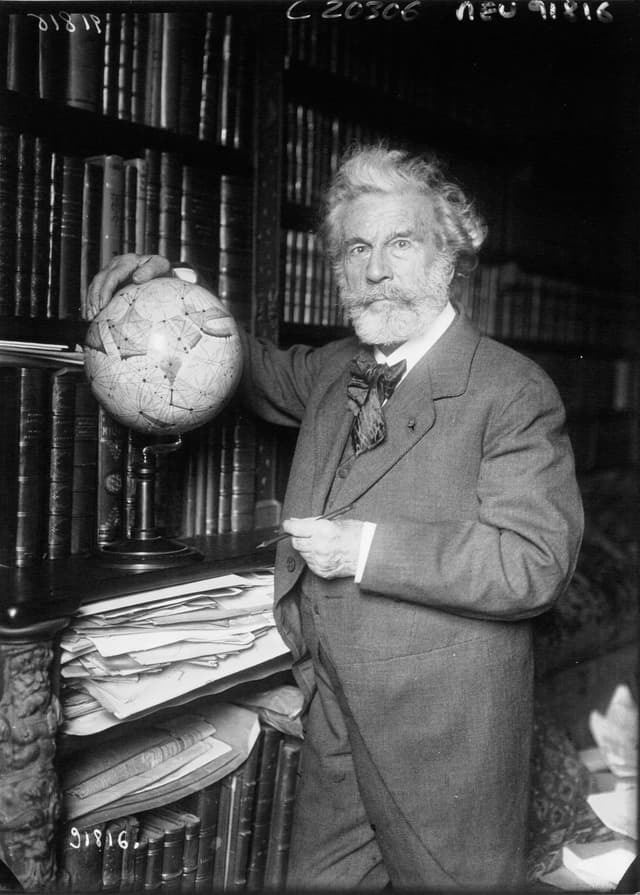
Camille Flammarion
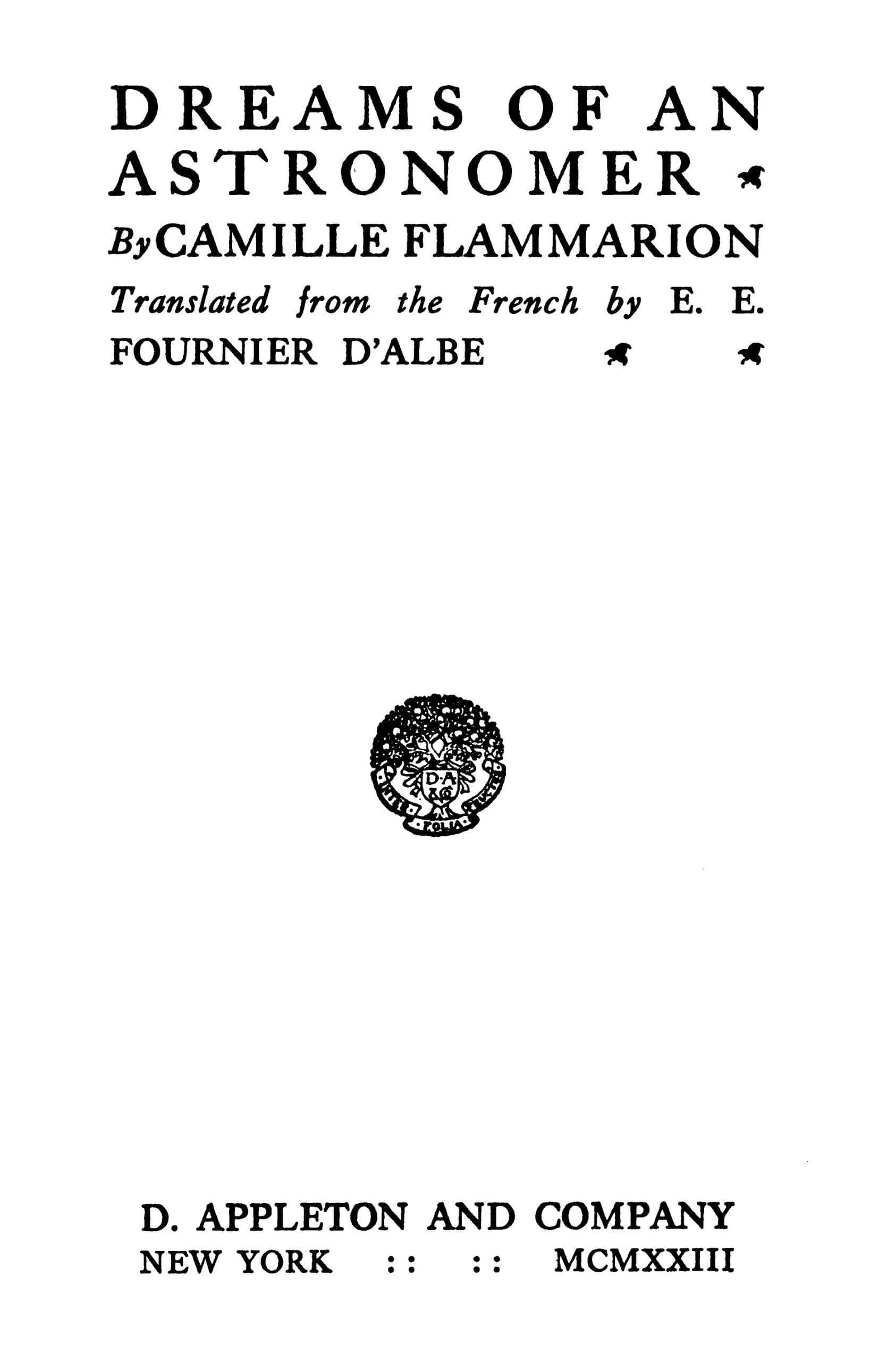
Nicolas Camille Flammarion was a prominent French astronomer and author, renowned for his extensive contributions to both popular science and early science fiction. Over his prolific career, he wrote more than fifty titles, blending scientific inquiry with imaginative storytelling. His notable works include 'La Fin du Monde' (The End of the World), which explored apocalyptic themes through a scientific lens, and 'L'Atmosphère,' a comprehensive study of the Earth's atmosphere that showcased his ability to communicate complex scientific ideas to the general public. Flammarion's writings not only advanced public understanding of astronomy but also laid the groundwork for future science fiction narratives. In addition to his literary achievements, Flammarion was a key figure in the field of psychical research, delving into topics such as spiritualism and the afterlife. He founded and edited the magazine 'L'Astronomie' in 1882, which served as a platform for disseminating astronomical knowledge and fostering public interest in the cosmos. Flammarion's legacy endures as a bridge between science and literature, influencing both the scientific community and the burgeoning genre of science fiction, while his imaginative explorations of the universe continue to inspire curiosity about the unknown.
Famous Quotes
View all 3 quotes“Men... have had the vanity to pretend that the world creation was made for them, whilst in reality the whole creation does not suspect their existence.”
“Le Verrier —without leaving his study, without even looking at the sky—had found the unknown planet [Neptune] solely by mathematical calculation, and, as it were, touched it with the tip of his pen!”
“Always preoccupied with his profound researches, the great Newton showed in the ordinary-affairs of life an absence of mind which has become proverbial. It is related that one day, wishing to find the number of seconds necessary for the boiling of an egg, he perceived, after waiting a minute, that he held the egg in his hand, and had placed his seconds watch (an instrument of great value on account of its mathematical precision) to boil! This absence of mind reminds one of the mathematician Ampere , who one day, as he was going to his course of lectures, noticed a little pebble on the road; he picked it up, and examined with admiration the mottled veins. All at once the lecture which he ought to be attending to returned to his mind; he drew out his watch; perceiving that the hour approached, he hastily doubled his pace, carefully placed the pebble in his pocket, and threw his watch over the parapet of the Pont des Arts.”
Books from the author

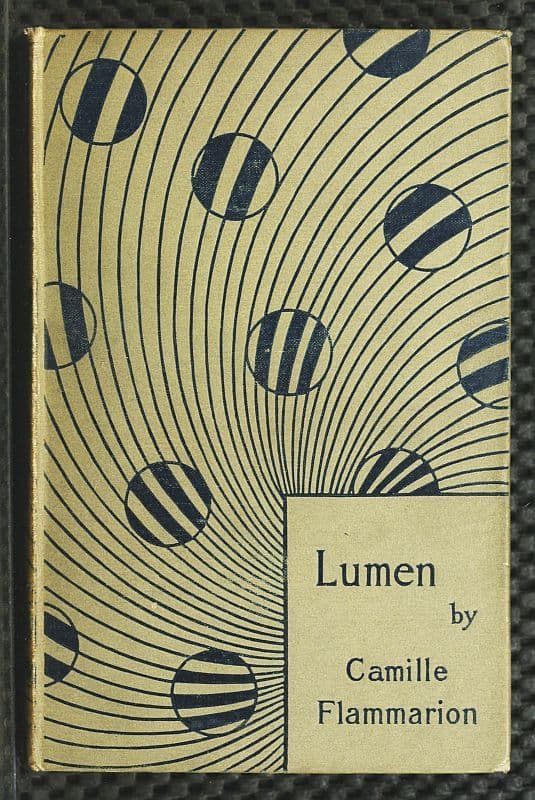
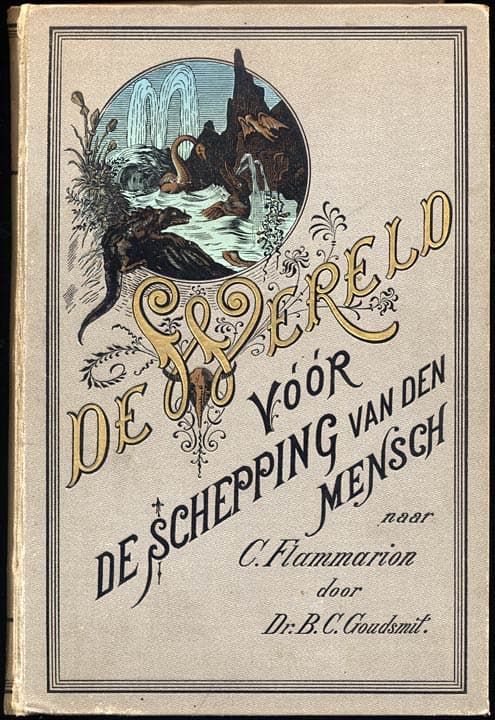
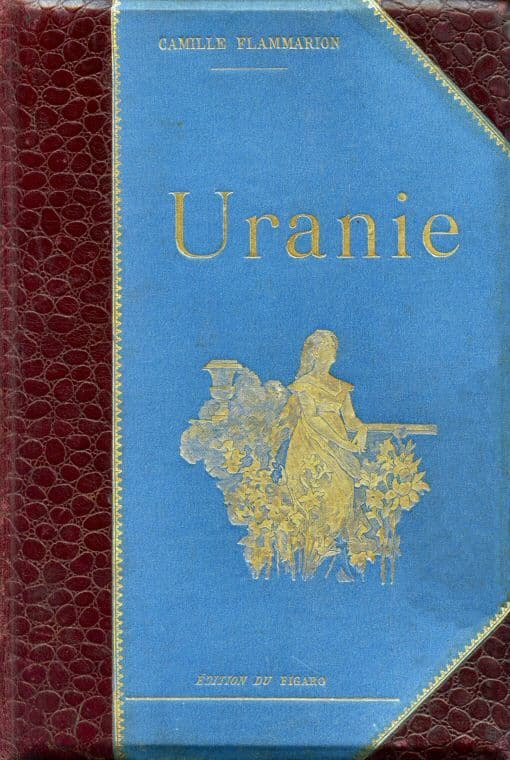




Link to this page
Add a free, dofollow link to Lex on your blog, forum, syllabus, or reading list.

<a href="https://lex-books.com/author/camille-flammarion"><img src="https://lex-books.com/badges/read-on-lex.svg" alt="Camille Flammarion on Lex" width="160" height="40"></a>[](https://lex-books.com/author/camille-flammarion)[url=https://lex-books.com/author/camille-flammarion][img]https://lex-books.com/badges/read-on-lex.svg[/img][/url]Camille Flammarion on Lex: https://lex-books.com/author/camille-flammarion