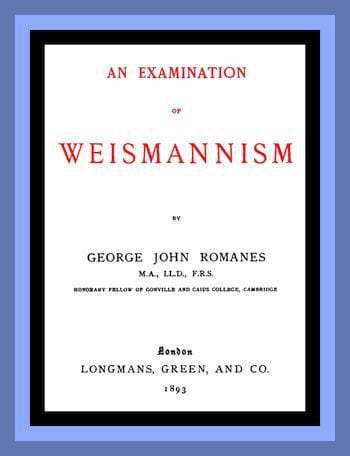
An Examination of Weismannism
1893
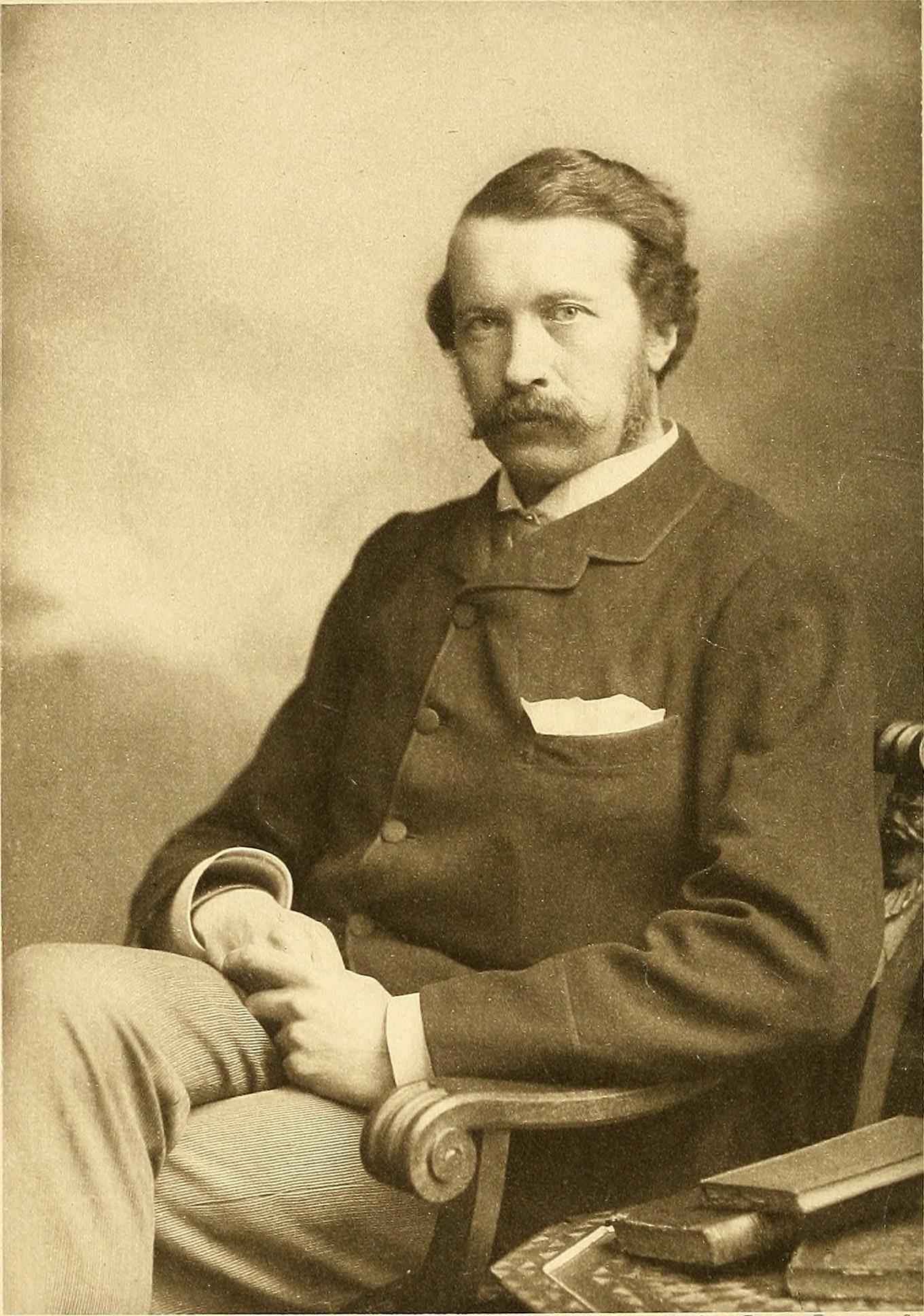
In 1893, a quiet revolution is sweeping through biology. August Weismann has made a radical claim: the traits an organism acquires during its lifetime cannot be passed to offspring. Only the germ line carries hereditary information; the body is evolutionarily isolated. This theory, Weismannism, threatens to overturn the Lamarckian inheritance that Darwin himself quietly accepted. George John Romanes, the eminent evolutionary biologist who once stood beside Darwin, refuses to accept this doctrine without scrutiny. In this rigorous examination, he systematically dismantles Weismann's logical architecture, interrogating whether the German naturalist has truly proven his case or merely asserted it with confidence. The book captures a pivotal moment in biological history, when the foundations of heredity were being contested. Weismann would ultimately prevail, his germ-plasm theory foreshadowing the central dogma of molecular biology. But Romanes's critique reveals how these debates were settled not with final evidence, but with persuasive force. For anyone curious about how modern genetics emerged from Victorian argument, this is a front-row seat to the fight.
Editions
Link to this book
Add a free, dofollow link to Lex on your blog, forum, syllabus, or reading list.

<a href="https://lex-books.com/book/an-examination-of-weismannism-1cbe7eac-1d9f-46f2-aaad-66227a57533c"><img src="https://lex-books.com/badges/read-on-lex.svg" alt="Read An Examination of Weismannism by George John Romanes free on Lex" width="160" height="40"></a>[](https://lex-books.com/book/an-examination-of-weismannism-1cbe7eac-1d9f-46f2-aaad-66227a57533c)[url=https://lex-books.com/book/an-examination-of-weismannism-1cbe7eac-1d9f-46f2-aaad-66227a57533c][img]https://lex-books.com/badges/read-on-lex.svg[/img][/url]Read An Examination of Weismannism by George John Romanes free on Lex: https://lex-books.com/book/an-examination-of-weismannism-1cbe7eac-1d9f-46f2-aaad-66227a57533cCite this book
Reading this edition for a paper or guide? Copy a citation.
Romanes, George John. An Examination of Weismannism. Lex, lex-books.com/book/an-examination-of-weismannism-1cbe7eac-1d9f-46f2-aaad-66227a57533c.Romanes, G. J. (1893). An Examination of Weismannism. Lex. https://lex-books.com/book/an-examination-of-weismannism-1cbe7eac-1d9f-46f2-aaad-66227a57533cRomanes, George John. An Examination of Weismannism. Lex. https://lex-books.com/book/an-examination-of-weismannism-1cbe7eac-1d9f-46f2-aaad-66227a57533c.