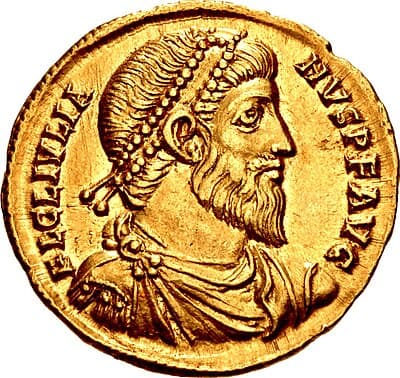
Emperor of Rome Julian
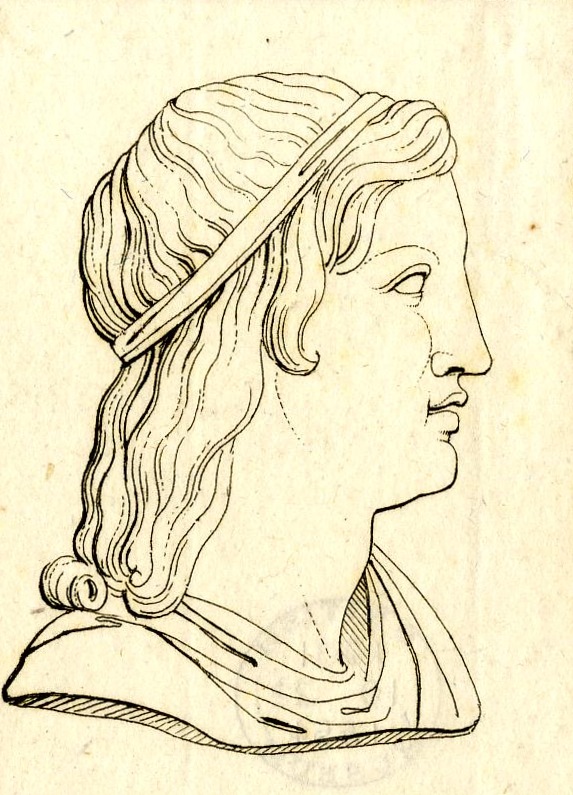
Emperor Julian, often referred to as Julian the Apostate, was a Roman Emperor known for his attempts to restore paganism in a rapidly Christianizing empire. Born in 331 AD into the Constantinian dynasty, he was raised in a Christian environment but later became a staunch advocate for the traditional Roman religions. His reign from 361 to 363 AD was marked by significant military campaigns, philosophical writings, and religious reforms. Julian's most notable works include 'Against the Galileans,' a critique of Christianity, and 'The Caesars,' a historical account of Roman emperors that reflects his philosophical views on leadership and governance. Julian's legacy is complex; he is often seen as a symbol of the struggle between paganism and Christianity in late antiquity. His efforts to revive ancient Roman religious practices and his philosophical writings contributed to the intellectual discourse of his time, influencing later thinkers. Despite his relatively short reign, Julian's impact on the cultural and religious landscape of the Roman Empire was profound, making him a significant figure in both history and literature. His life and works continue to be studied for their insights into the tensions of religious identity and the nature of power in the ancient world.
Famous Quotes
View all 5 quotes“A year before Bramante’s death, in 1513, Pope Julius II commissioned Raphael to decorate the Vatican apartments and Michaelangelo to paint the Sistine chapel. In 1527 Rome was sacked by the army of the holy Roman empire led by the Holy Roman Emperor Charles V and the work once again ground to a halt. Over the next twenty years very little was done and then in 1546 Pope Paul II persuaded an elderly Michaelangelo to complete the building. Michaelangelo reverted back to the original plan of Bramante’s to create a church of Greek style cross plan.””
“Next the spear passed to the Roman Emperor Constantine who carried the spear into battle against the rival Emperor Maxentius on the Milvian bridge over the Tiber in Rome. Losing the battle Maxentius fled with his army and the bridge collapsed and Maxentius drowned. His body was recovered and decapitated Constantine became the sole ruler of the West. Founding the city of Constantinople on the older city of Byzantium Constantine kept the ‘holy lance’ or as it is now known the ‘spear of destiny’ there.””
“church was built surrounding part of the imperial palace of St Helena which she converted to a place of worship around the year 320AD. She was the mother of the Roman emperor Constantine who became the great. In 325AD the church was converted to a basilica and the floor was covered with soil from Jeruslaem. This is why the church has the name Holy cross in Jerusalem even though we are standing in Rome.””
Books from the author

Link to this page
Add a free, dofollow link to Lex on your blog, forum, syllabus, or reading list.

<a href="https://lex-books.com/author/emperor-of-rome-julian"><img src="https://lex-books.com/badges/read-on-lex.svg" alt="Emperor of Rome Julian on Lex" width="160" height="40"></a>[](https://lex-books.com/author/emperor-of-rome-julian)[url=https://lex-books.com/author/emperor-of-rome-julian][img]https://lex-books.com/badges/read-on-lex.svg[/img][/url]Emperor of Rome Julian on Lex: https://lex-books.com/author/emperor-of-rome-julian