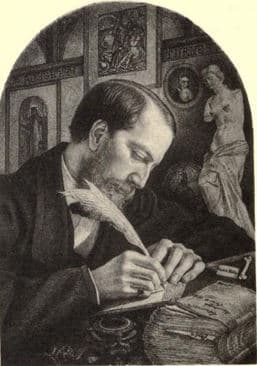
Clarence Cook
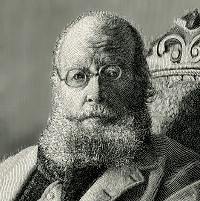
Clarence Cook was a prominent 19th-century American author and art critic, known for his insightful writings on art and archaeology. Born in Dorchester, Massachusetts, he graduated from Harvard University in 1849 and initially pursued a career in teaching. His passion for art led him to contribute a series of influential articles on American art to The New York Tribune between 1863 and 1869, where he established himself as a knowledgeable voice in the field. In 1869, Cook moved to France, becoming the Paris correspondent for the same publication until the outbreak of the Franco-Prussian War, during which he continued to explore and critique European art and culture. Cook's expertise extended beyond mere criticism; he was particularly noted for his knowledge of archaeology and antiquities. His critical analysis of General di Cesnola's collection highlighted issues of authenticity and the ethics of art collection, marking him as a significant figure in the discourse surrounding art provenance. Through his writings, Cook contributed to the understanding of American art's place in a broader cultural context, influencing both contemporary and future generations of artists and critics. His legacy lies in his role as a bridge between American and European art scenes, as well as his commitment to elevating the standards of art criticism in America.
Famous Quotes
View all 3 quotes“Many of the women I met there (Yale) had come from the most privileged of circumstances, yet they often referred to themselves as "oppressed." I found it hard to take their "oppression" seriously, since I'd spent the first part of my life living among black women who cooked and kept house for the middle and upper class whites of Savannah. They never talked about being oppressed. What right, then, did the elite white women of Yale have to complain about their lot?””
“Each volcano is an independent machine”
“Something About Cooking Cooking is sometimes a pleasure, sometimes a duty, sometimes a burden and sometimes a martyrdom, all according to the point of view. The extremes are rarities, and sometimes duty and burden are synonymous. In ordinary understanding we have American cooking and Foreign cooking, and to one accustomed to plain American cooking, all variants, and all additions of spices, herbs, or unusual condiments is classed under the head of Foreign. In the average American family cooking is a duty usually considered as one of the necessary evils of existence, and food is prepared as it is usually eaten”
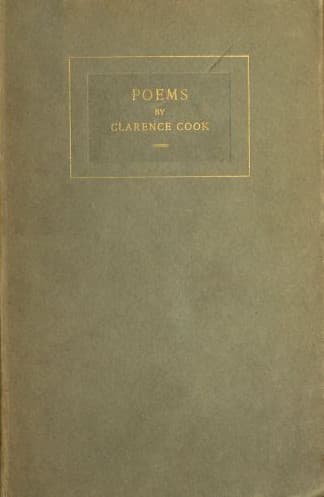
Books from the author


Link to this page
Add a free, dofollow link to Lex on your blog, forum, syllabus, or reading list.

<a href="https://lex-books.com/author/clarence-cook"><img src="https://lex-books.com/badges/read-on-lex.svg" alt="Clarence Cook on Lex" width="160" height="40"></a>[](https://lex-books.com/author/clarence-cook)[url=https://lex-books.com/author/clarence-cook][img]https://lex-books.com/badges/read-on-lex.svg[/img][/url]Clarence Cook on Lex: https://lex-books.com/author/clarence-cook