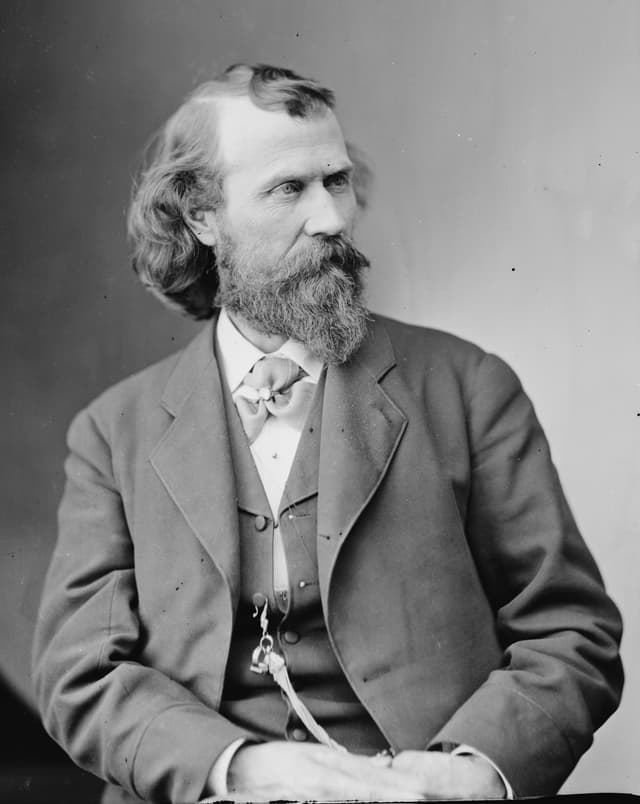
Joaquin Miller
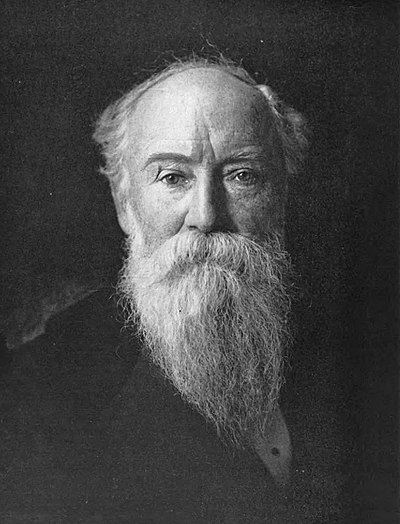
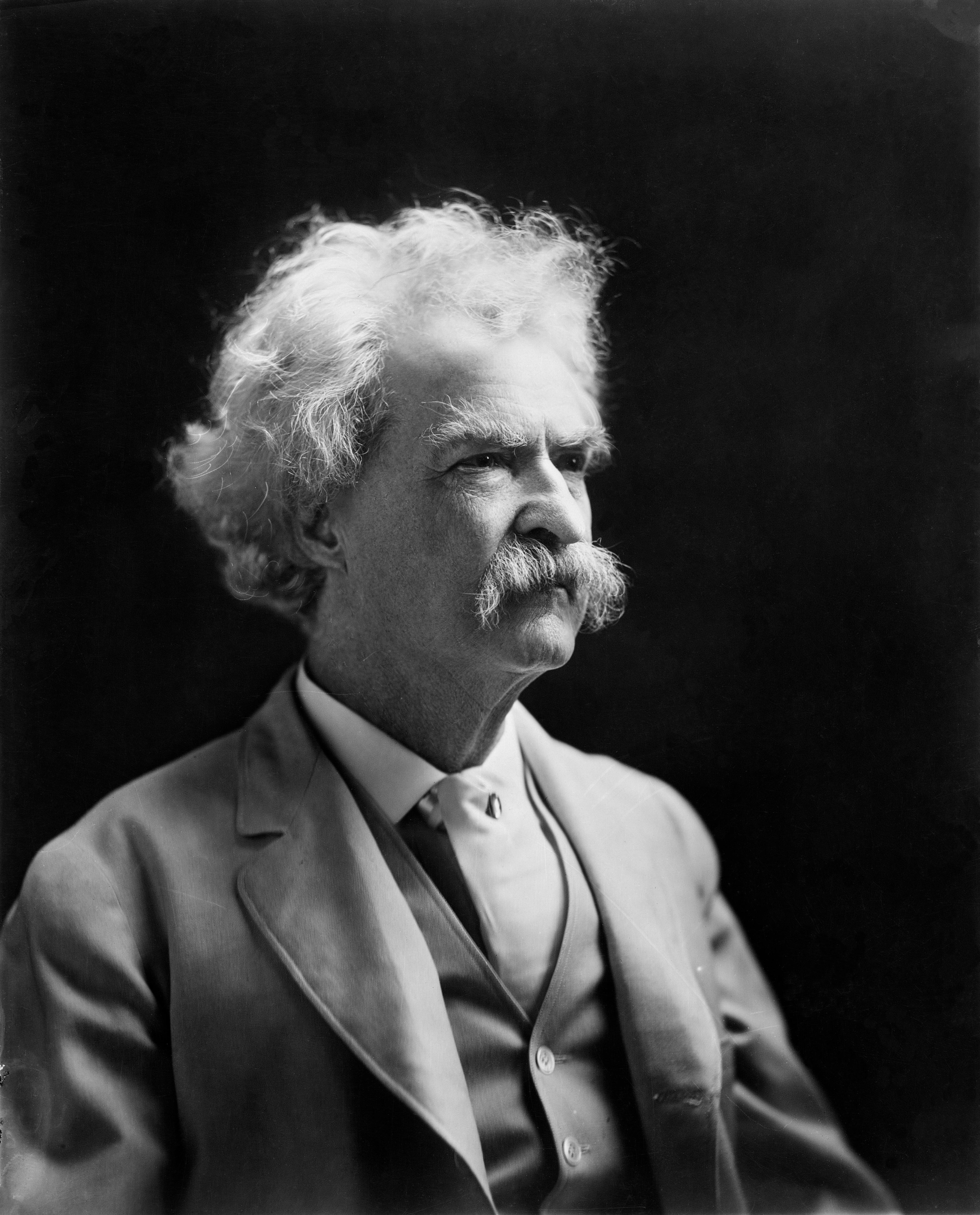
Joaquin Miller, known as the "Poet of the Sierras," was an influential American poet and author whose works captured the essence of the American West. Born Cincinnatus Heine Miller, he spent much of his life in California, where the majestic Sierra Nevada mountains inspired much of his poetry. His notable collection, "Songs of the Sierras," published in 1871, celebrated the natural beauty and rugged spirit of the region, establishing him as a significant literary figure of his time. Miller's writing often blended romanticism with themes of adventure and the frontier experience, reflecting his own life as a frontiersman and gold miner during the California Gold Rush. Miller's literary contributions extended beyond poetry; he also wrote plays and prose, including his autobiographical work, "The Life of the Poet". His style was characterized by vivid imagery and a deep appreciation for nature, which resonated with the American public and influenced later generations of writers. Despite facing criticism for his unconventional style and themes, Miller's legacy as a pioneer of Western literature endures, and he remains a key figure in the exploration of American identity through poetry. His life and work continue to be studied for their cultural significance and their reflection of the American spirit during a transformative era in the nation's history.
Famous Quotes
View all 2 quotes“Tis midnight now. The bend and broken moon, Batter'd and black, as from a thousand battles, Hangs silent on the purple walls of Heaven.”
“Give a man five years, and, with unfortunate exceptions of course, he will find his level on the Pacific, and his place, whether high or low, as naturally as a stream of water.”
Books from the author
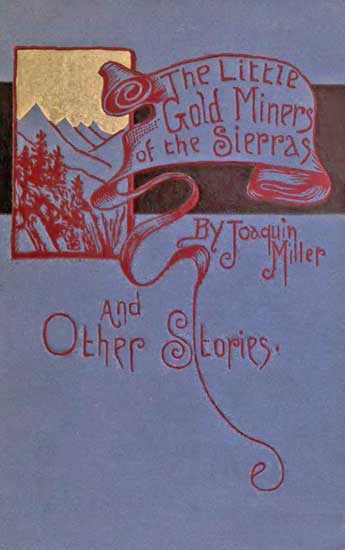


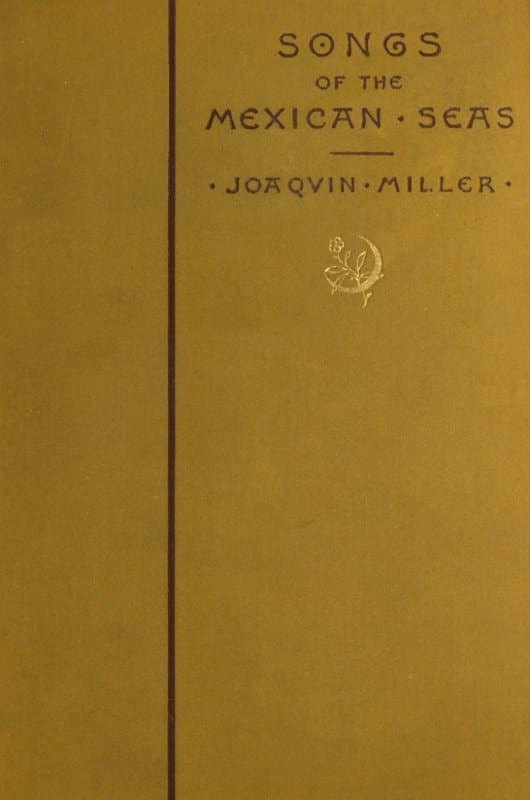

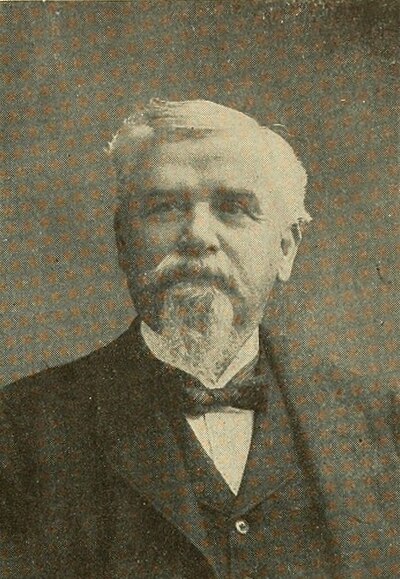


Link to this page
Add a free, dofollow link to Lex on your blog, forum, syllabus, or reading list.

<a href="https://lex-books.com/author/joaquin-miller"><img src="https://lex-books.com/badges/read-on-lex.svg" alt="Joaquin Miller on Lex" width="160" height="40"></a>[](https://lex-books.com/author/joaquin-miller)[url=https://lex-books.com/author/joaquin-miller][img]https://lex-books.com/badges/read-on-lex.svg[/img][/url]Joaquin Miller on Lex: https://lex-books.com/author/joaquin-miller